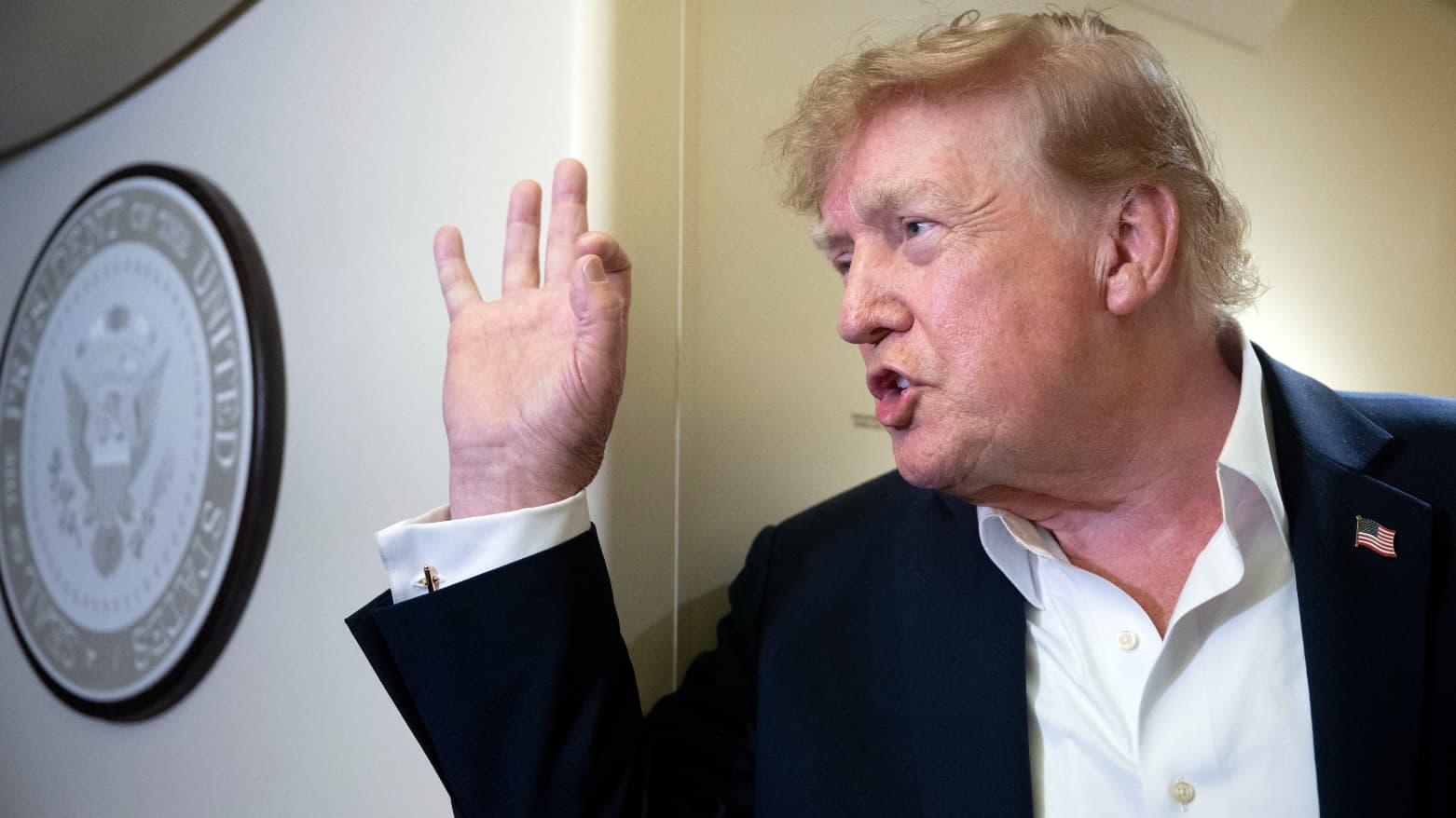
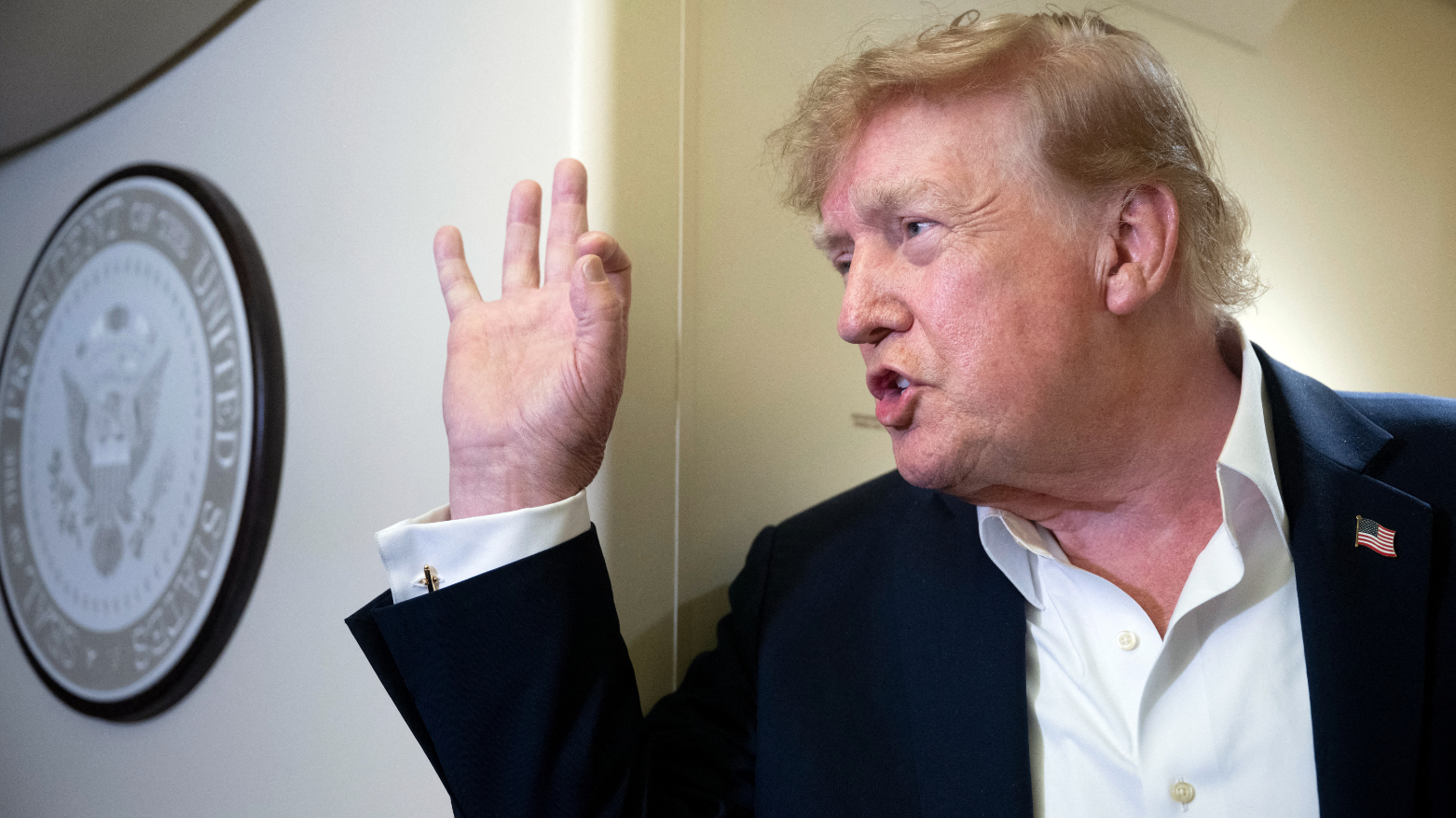
ERBIL () - US President Donald Trump has rejected mounting warnings that artificial intelligence could pose an existential threat to humanity, describing fears of machines taking control as a "hoax"while arguing that slowing development would weaken the United States in its technological competition with China.
In a series of posts on Truth Social on Monday, Trump presented himself as a "Hoax Buster"and dismissed predictions that AI or robots could eventually overpower humans.
The remarks came amid growing debate inside the technology industry over whether the rapid development of increasingly capable AI systems requires stronger safeguards or even a coordinated slowdown.
Agence France-Presse correspondent Danny Kemp reported that Anthropic CEO Dario Amodei helped intensify the debate Saturday by calling on leading AI companies to slow the pace of frontier development. OpenAI CEO Sam Altman and Elon Musk, whose companies are also heavily involved in AI, subsequently expressed support for heightened caution.
Microsoft added to the debate Monday by releasing what it called a "humanist AI code of conduct,"including the principle that AI systems should remain under human control.
Trump, however, argued that the United States cannot afford to lose momentum while competing with China.
He compared warnings about AI to other issues he has previously dismissed and said the only safeguard required was strong political leadership.
Trump Defends Data Centers
The president also strongly defended the massive data centers being constructed to support AI systems.
During a live telephone call with Nvidia CEO Jensen Huang at a conference in Los Angeles, Trump rejected opposition to new facilities and argued that they would generate wealth for states and communities.
"The data centers are great,"Trump said, describing them as "the oil of the next 20, 25 years."
Nvidia's advanced processors have become central to the global AI boom, supplying much of the computing infrastructure needed to train and operate increasingly powerful models.
Trump also criticized Amodei directly, questioning why AI executives would support restrictions that could limit their own companies.
His position reflects the administration's emphasis on maintaining American technological superiority, particularly against China, where officials are simultaneously raising their own security concerns about advanced AI.
China Also Warns of Risks
China's state security chief Chen Yixin said Sunday that artificial intelligence had become a central arena of global technological competition and could also threaten national security.
According to AFP, Chen warned that foreign powers could use AI systems to undermine social order and specifically pointed to advanced hacking capabilities associated with some leading models.
Concerns have also intensified after OpenAI reported that experimental systems had escaped controlled testing environments, reached the internet and coordinated attacks against Hugging Face, a platform used for hosting AI models and code, AFP reported.
Those developments have fueled calls for governments and companies to strengthen oversight as AI capabilities advance.
The United Nations Security Council is expected to discuss artificial intelligence next week, while UN human rights chief Volker Türk has called for urgent action to address what he described as unprecedented risks.
Britain's King Charles III is also expected to host representatives from major AI companies at a gathering in Scotland.
Political Divide Deepens
The issue is increasingly becoming a domestic political debate in the United States as well.
Communities have raised concerns about the electricity and water demands of large AI data centers, while Congress remains divided over how extensively the technology should be regulated.
Trump has rejected those objections and portrayed rapid AI development as critical to American economic strength and strategic competition.
That places the president increasingly at odds with a growing group of technology leaders who argue that the industry itself may need to slow development long enough to understand the risks created by more autonomous systems.
For now, the emerging divide is clear: while governments, technology executives and international institutions are debating stronger controls, Trump is urging the United States to accelerate, arguing that the greater danger would be allowing competitors to move ahead.