ERBIL () - Around 150 Kurdish candidates are contesting Sweden's parliamentary, regional and municipal elections on Sunday, placing Kurdish political representation in focus as voters decide whether the country's center-right government remains in power or the center-left opposition returns.
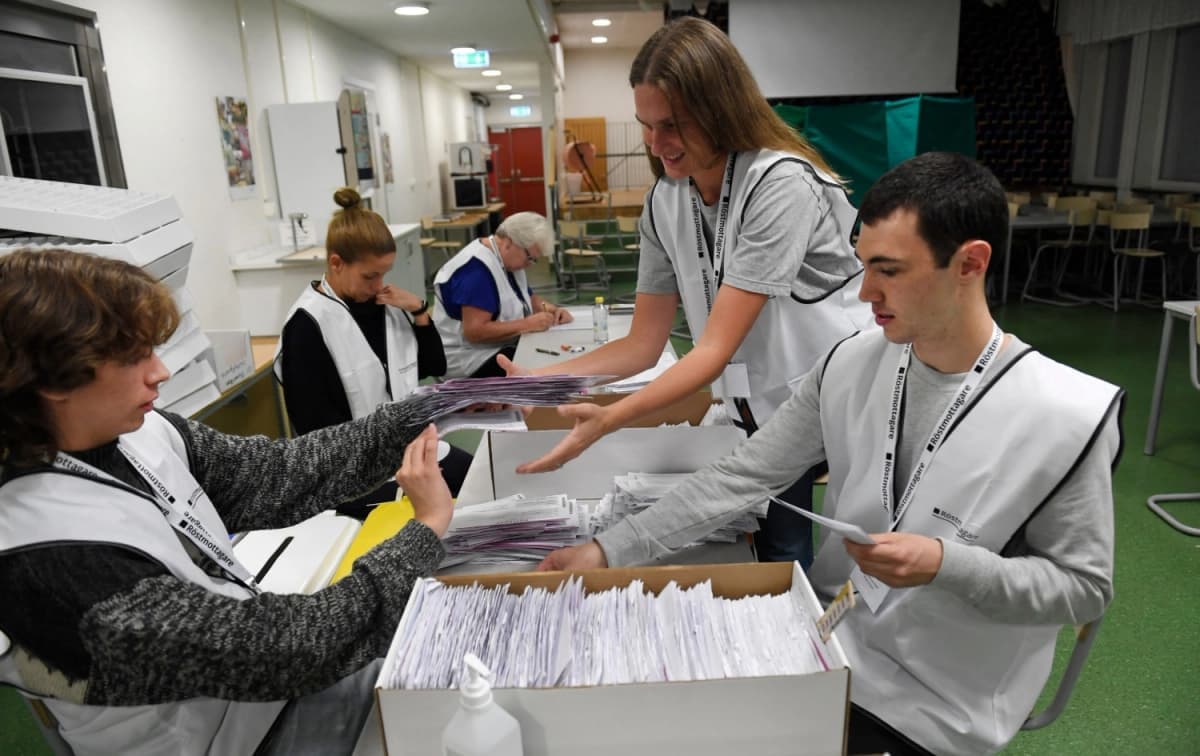
Polling stations opened at 8 a.m. local time on Sept. 13, with voting underway at 6,312 locations across Sweden, according to correspondent Awara Hawrami, reporting from the country.
Approximately 8.6 million people are eligible to participate across Sweden's 21 regions.
Hawrami reported that around 150 Kurdish candidates are standing on party lists at different levels of government, reflecting the community's increasingly established role in Swedish political life.
Two of the most prominent Kurdish candidates are Lawen Redar and Kadir Kasirga, both running for the Social Democratic Party.
Redar is ranked second and Kasirga fifth on their respective party lists, positions that Hawrami reported make their reelection highly likely. Both have served in Sweden's parliament during the past eight years.
Six Kurdish lawmakers served in the Swedish parliament during the previous parliamentary period, according to's investigation, representing an unusually high level of Kurdish representation in a European national legislature.
Kurdish Candidates Across Party Politics
Kurdish candidates are running with several Swedish political parties, although Hawrami reported that many Kurdish voters and politicians have historically gravitated toward the Social Democrats.
The party has maintained longstanding connections with sections of Sweden's Kurdish community, and most Kurdish members of parliament in previous years have been affiliated with it.
The Social Democrats currently hold 107 seats in Sweden's 349-seat parliament, the Riksdag.
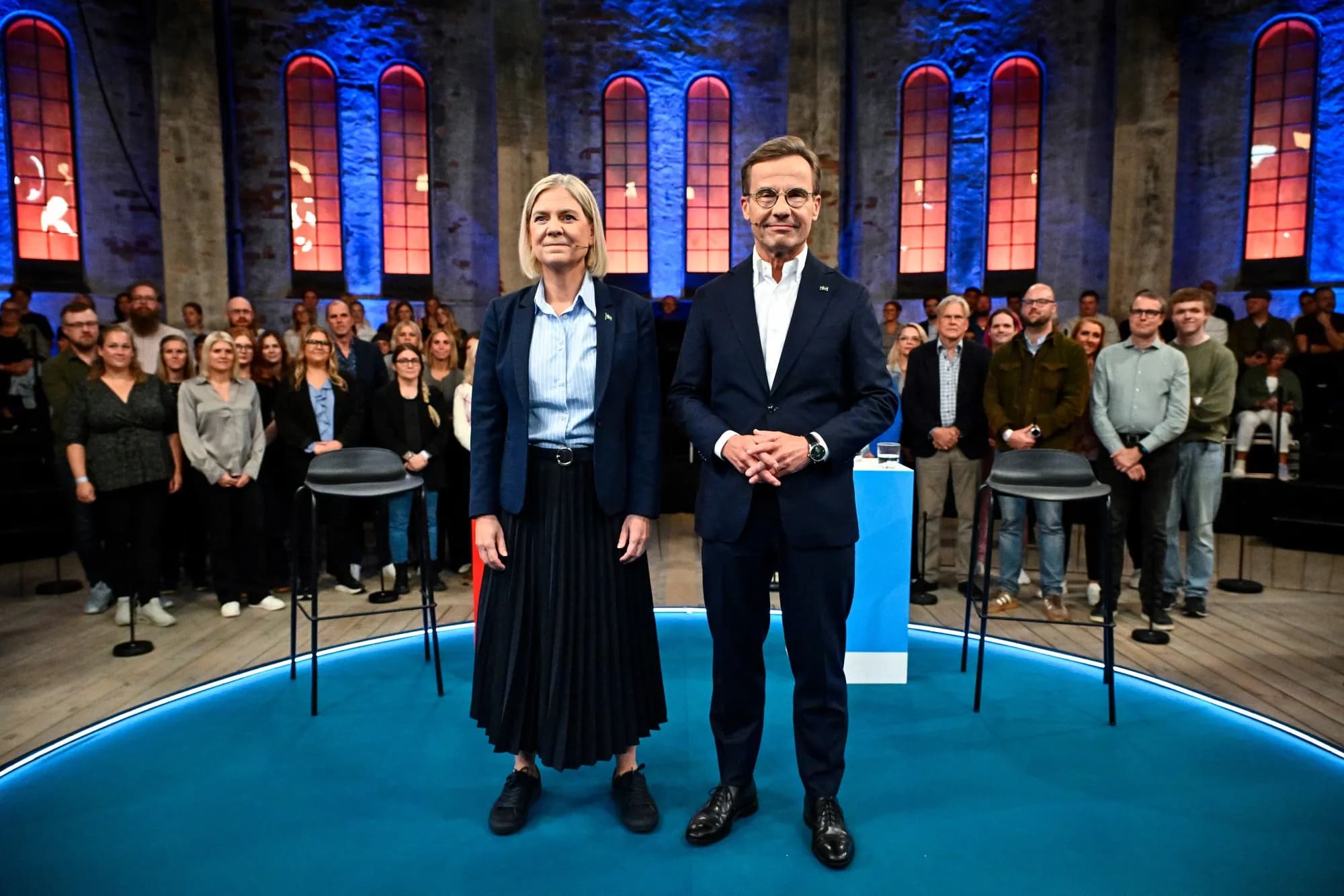
Their leader, former Prime Minister Magdalena Andersson, is seeking to return the center left to power after losing office in the 2022 election.
The election is nevertheless expected to be exceptionally close.
Agence France-Presse reported Sunday that opinion polls had previously given the four-party left-wing bloc a comfortable advantage, but that the race narrowed to a dead heat during the closing days of the campaign.
Outgoing Prime Minister Ulf Kristersson of the Moderate Party is seeking a second term.
His three-party government, composed of the Moderates, Christian Democrats and Liberals, has governed with parliamentary support from the Sweden Democrats.
The Sweden Democrats, an anti-immigration party with far-right roots, could enter government formally for the first time if the right-wing bloc secures another majority.
Representation Matters Beyond Parliament
For Kurdish candidates, Sunday's vote is not limited to national politics.
Swedes are voting simultaneously for the national parliament as well as regional and municipal councils, giving candidates from diaspora communities several routes into political decision-making.
Sweden's official public information platform, Sweden.se, notes that eligibility rules differ between parliamentary and local elections.
Only Swedish citizens aged 18 or older who currently live or previously lived in Sweden can vote for parliament. Local and regional elections are also open to eligible residents from other European Union countries, Iceland and Norway, as well as certain other foreign nationals who have lived in Sweden for at least three years.
Sweden traditionally records high electoral participation. According to Sweden.se, turnout in the 2022 parliamentary election reached 84.21%.
The country uses proportional representation, and parties normally need at least 4% of the national vote to enter parliament, although they can also qualify through strong support in an individual constituency.
A Close Contest for Government
Associated Press correspondent Kostya Manenkov reported ahead of the election that the central question of the campaign has increasingly become which political bloc will be able to assemble a governing majority.
The Social Democrats lead the opposition, while Kristersson's Moderates head the right-wing bloc.
A major difference from the previous election is the prospect of the Sweden Democrats receiving Cabinet posts if the right retains power.
Kristersson has said he would remain prime minister even if the Sweden Democrats emerge as the largest party within the right-wing bloc.
The Sweden Democrats won 20.5% of the vote in 2022, becoming the largest party on the right, according to AP.
At the same time, broader policy differences remain over welfare, immigration, organized crime and the economy.
Sweden's support for Ukraine, however, has remained broadly bipartisan, according to experts cited by AP.
Early Voting Already Extensive
Early voting began on Aug. 26.
According to Hawrami, around 3.5 million people had already cast early ballots by 2 p.m. Saturday, underscoring the scale of participation before election day itself.
Polling stations are due to close at 8 p.m. local time, with exit polls expected immediately afterward.
Preliminary results are expected later Sunday night.
For Sweden's Kurdish community, the results will determine not only which political bloc governs the country, but also whether the unusually strong Kurdish representation achieved in recent years can be maintained or expanded.
With around 150 Kurdish candidates appearing across party lists and levels of government, the election represents another test of how deeply a diaspora community that has grown over decades has become embedded in Sweden's political institutions.