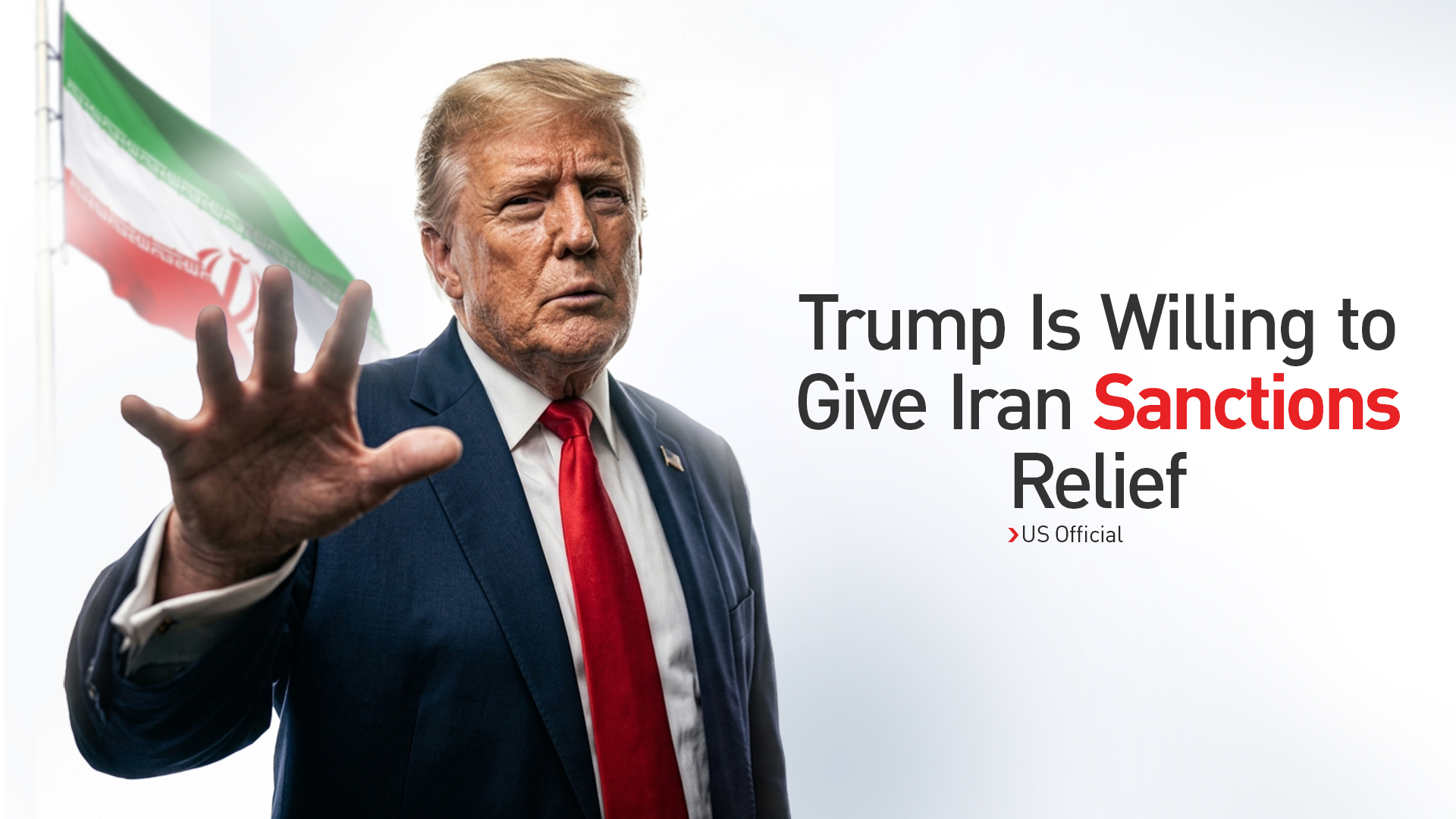
ERBIL () - A US official confirmed on Monday that President Donald Trump is willing to give Iran sanctions relief and the release of frozen funds in exchange for concrete progress on the nuclear file, while simultaneously expressing doubt about Iranian promises following Tehran's violation of the June memorandum of understanding, demanding guarantees of Iranian seriousness, and identifying a remaining gap over who takes the first step, as indirect discussions through intermediaries continue and are described as positive.
Axios reports:
President Trump is willing to give Iran sanctions relief and release of frozen funds for concrete progress on nuclear.
The same US official told that indirect discussions with Iran through intermediaries are ongoing and positive, and that without addressing the nuclear issue no agreement will be reached. The official confirmed Trump's readiness to ease sanctions and release blocked assets in exchange for nuclear progress, but added a direct expression of American skepticism. "Washington has doubts about Iran's promises after it violated the memorandum of understanding by firing on commercial ships,"the official said. "We need guarantees this time that Iran is serious and is not only seeking relief from the difficult situation it is facing."
The official also identified the specific negotiating gap that remains. "Iran says it is flexible on the nuclear issue, but there is a gap about who takes the first step,"the official said, in the clearest public articulation yet of the sequencing dispute at the heart of the stalled negotiations. Iran's seven-day Hormuz proposal requires Washington to lift the naval blockade, remove sanctions on oil sales, and release frozen assets before Iran takes concrete steps. Washington wants verifiable nuclear progress before it provides that relief. Neither side currently accepts moving second.
The reference to the MOU violation is central to Washington's demand for guarantees. The June 17, 2026, memorandum of understanding established a 60-day ceasefire framework designed to buy time for nuclear negotiations. Iran resumed targeting commercial shipping vessels, the US responded with military strikes, and the MOU collapsed in July. From Washington's perspective, Iran accepted the MOU to relieve pressure and then violated it when conditions allowed. The demand for guarantees this time reflects the institutional memory of that sequence.
Iran's flexibility on the nuclear issue, as cited by the US official, aligns with Iranian President Pezeshkian's confirmation to CBS News on September 25 that Iran would allow UN nuclear inspectors into the country if an agreement framework is established, and with IAEA Director General Rafael Grossi's September 13 offer to return to Iran and take its security concerns into account when resuming activities. The gap is therefore not about whether Iran will engage on nuclear issues but about the sequence and simultaneity of steps.
The combination of Trump's concrete offer of sanctions relief and frozen fund release for nuclear progress and the identification of the first-step gap as the remaining obstacle defines the current negotiating space with unusual precision. Money is not the obstacle. Sequencing and trust are.