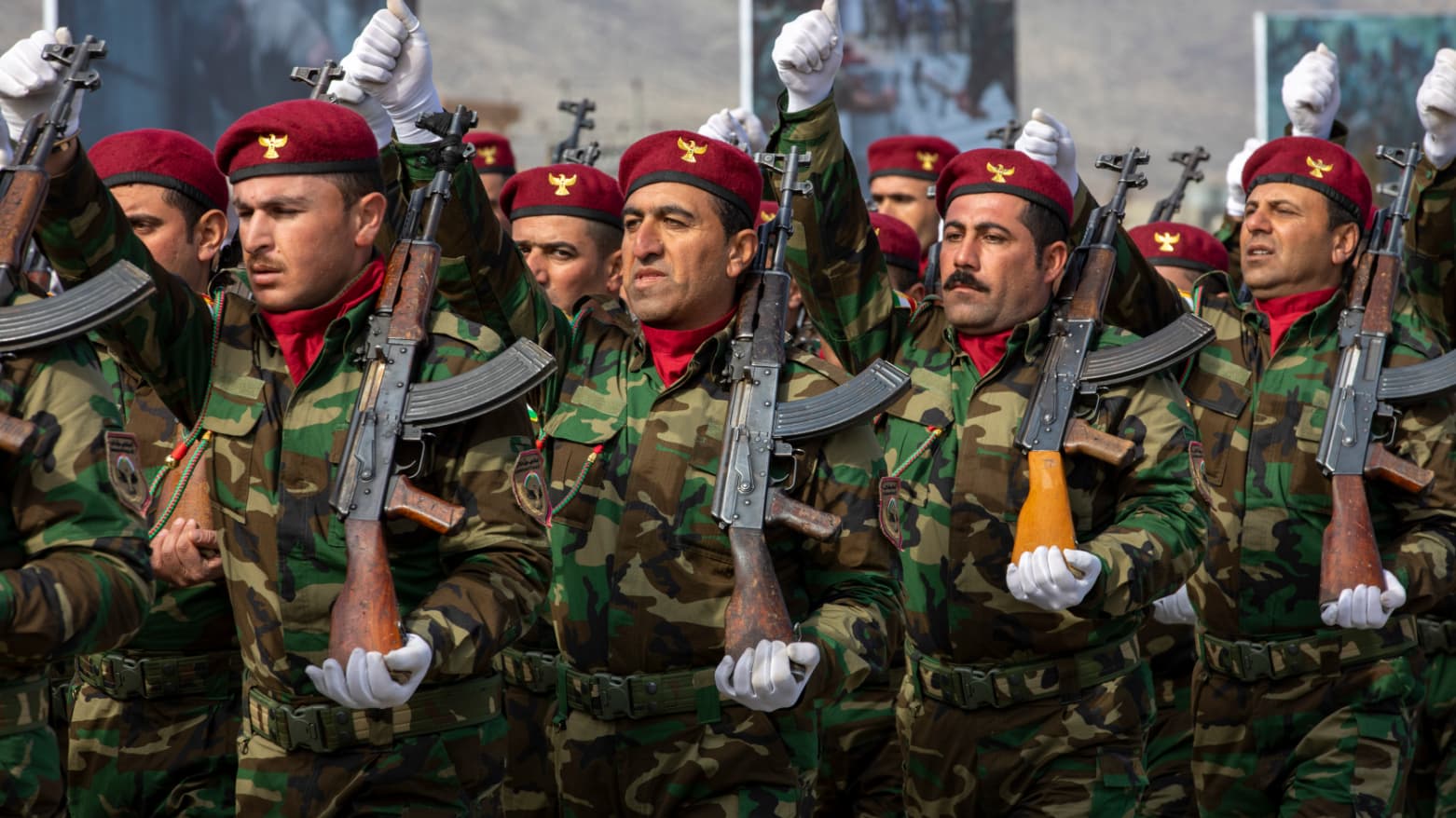
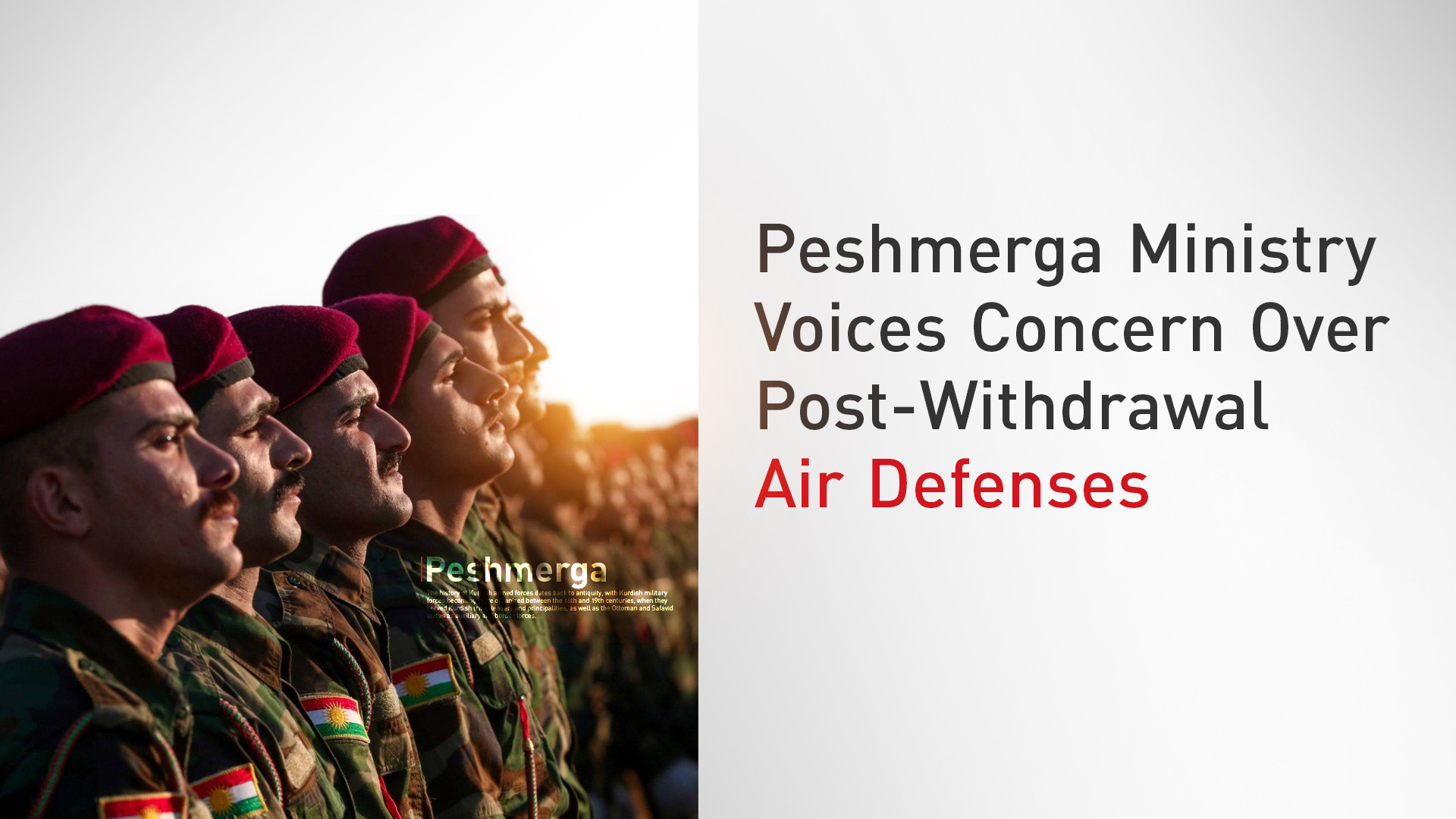
ERBIL () - The Kurdistan Regional Government's Ministry of Peshmerga has expressed concern over the planned withdrawal of U.S. and coalition forces from Iraq on Sept. 30 without an air-defense system being provided to the Kurdistan Region, while stressing that Peshmerga forces remain prepared and that Baghdad bears responsibility for protecting the Region’s airspace.
In a statement dated Sept. 27, the ministry said U.S. forces would withdraw from Iraqi territory, including the Kurdistan Region, under arrangements reached among the Iraqi federal government, the United States and members of the international coalition.
The ministry said the transition was taking place at a particularly sensitive moment because of continuing instability in Iraq and the broader Middle East.
It called for vigilance and "sound political decision-making,"warning that instability in the region could have consequences beyond individual states.
The ministry placed particular emphasis on the Kurdistan Region's exposure to aerial attacks during the conflict between the United States and Iran in recent months.
According to the statement, more than 1,000 drones and ballistic missiles have targeted the Kurdistan Region during the conflict, with some striking civilian areas and causing deaths, injuries and material damage.
Against that background, the ministry said the prospect of U.S. forces leaving without a defensive system in place was a source of concern.
At the same time, it stressed that responsibility for protecting the Kurdistan Region's airspace ultimately rests with Iraq's federal authorities because the Region's airspace forms part of the country's sovereign airspace.
The ministry said Baghdad therefore must assume responsibility for defending the Kurdistan Region whenever required.
Prime Minister Masrour Barzani has raised similar concerns in recent months, saying the Kurdistan Region lacks adequate air-defense systems despite repeated requests and discussions with both Washington and Baghdad. In July, he said the KRG was trying to determine what protective arrangements would follow the end of the coalition mission.
In remarks published on Sunday, Prime Minister Barzani again said leaving the Kurdistan Region without an appropriate defense system as American forces depart was a matter of serious concern, citing the scale of recent missile and drone attacks.
The Ministry of Peshmerga nevertheless sought to reassure the public that its forces were prepared for changes in the security environment.
"Just as the Peshmerga forces have protected the land and people of Kurdistan in the past, they remain prepared for any possibility or new development in the future,"the ministry said.
It added that the forces were capable of adapting to changing circumstances and confronting potential threats.
The statement also emphasized continued cooperation with Iraq's federal security institutions.
As part of Iraq's defense system, the ministry said it maintains strong constitutional and security relations with the Iraqi Army and would continue coordination and joint work after the coalition transition.
That position reflects the broader security framework under which the Peshmerga remain constitutionally recognized forces while security cooperation between Erbil and Baghdad has expanded in recent years.
The ministry also thanked the United States and other coalition members for their past support and cooperation with both the Kurdistan Region and the Peshmerga.
U.S. assistance to the Peshmerga has included support for reform and unification efforts under existing bilateral arrangements. The ministry reaffirmed in May that such cooperation remained in place under a joint memorandum of understanding.
The Sept. 30 transition follows the security roadmap announced by Baghdad and Washington in September 2024.
Under that framework, the coalition's military mission in Iraq was scheduled to conclude by the end of September 2025, while coalition operations supporting the fight against ISIS in Syria from an Iraqi platform were permitted to continue through September 2026, subject to conditions and consultations.
The approaching end of that phase has revived debate over whether Iraqi forces can prevent new security gaps after the departure of foreign troops.
President Masoud Barzani has warned that a withdrawal could recreate circumstances similar to those following the departure of U.S. forces in 2011.
In an interview with Al Sharqiya TV, President Barzani recalled questioning Iraqi security officials at the time about whether the country possessed sufficient capabilities to protect itself.
"I am afraid of the same scenario,"he said, while acknowledging that current conditions differ from 2011.
President Barzani argued that the subsequent rise of ISIS demonstrated the danger of leaving a security vacuum, noting that Baghdad later requested assistance from the United States, NATO members and other international partners after the group seized large areas of Iraq in 2014.'s reporting on the interview similarly recorded his warning against a repeat of the earlier scenario.
Prime Minister Masrour President Barzani has also stressed that the Kurdistan Region seeks balanced relations during the transition.
He has said the KRG considers the United States an ally while also seeking good relations with neighboring states, including Iran, and has maintained that the Kurdistan Region does not want to become part of regional conflicts.
The Ministry of Peshmerga's statement follows the same broader approach: acknowledging the risks created by the coalition's departure while emphasizing cooperation with Baghdad rather than presenting the transition solely as a loss of international support.
Its immediate concern is air defense.
With the Kurdistan Region having faced repeated missile and drone attacks, the ministry argues that the federal government must now ensure that the end of the U.S. military presence does not leave a gap in protection.
At the same time, it sought to reassure residents that the Peshmerga would continue fulfilling its security role.
"Kurdistan is in safe and peace-loving hands,"the ministry concluded.