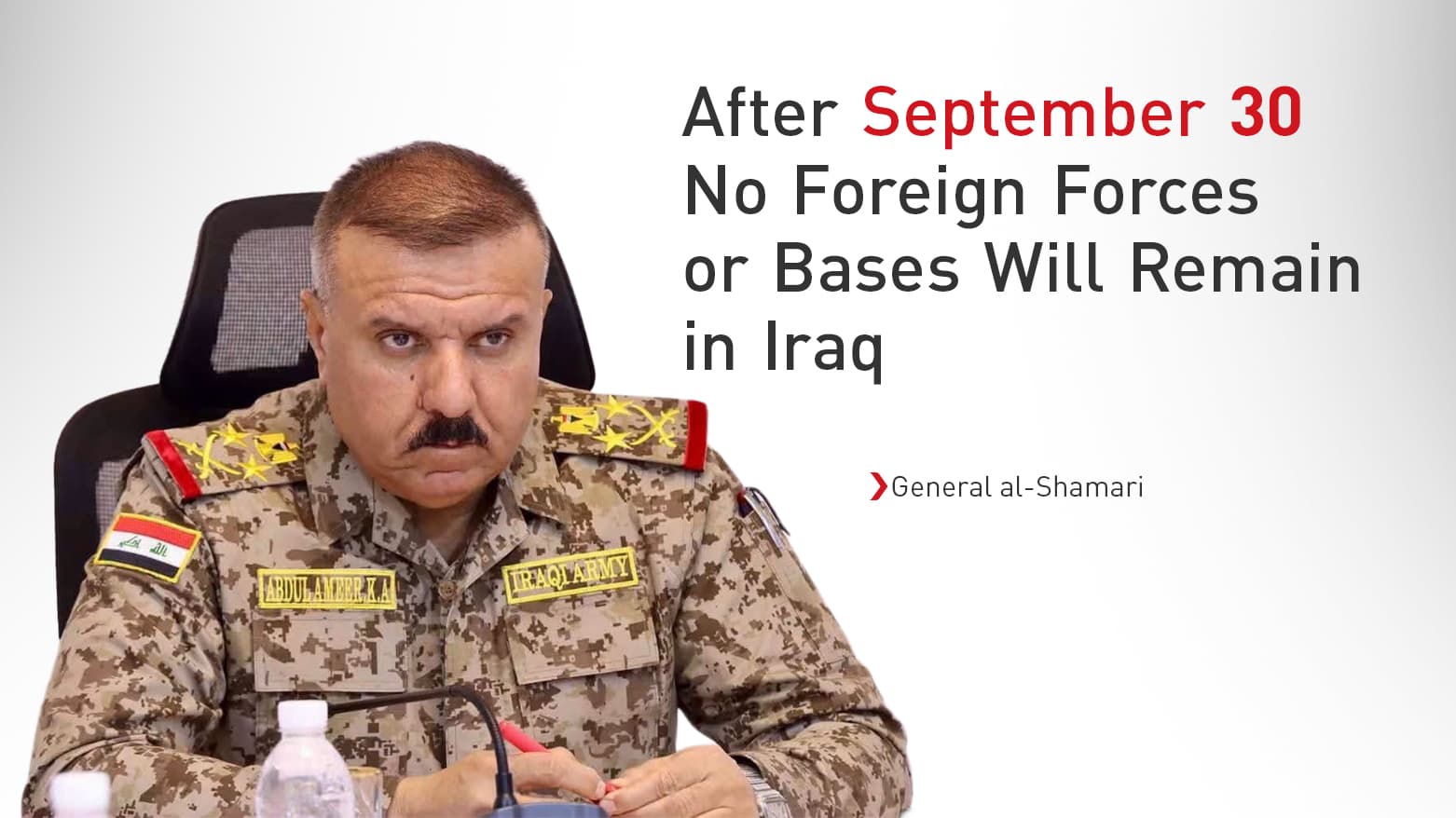
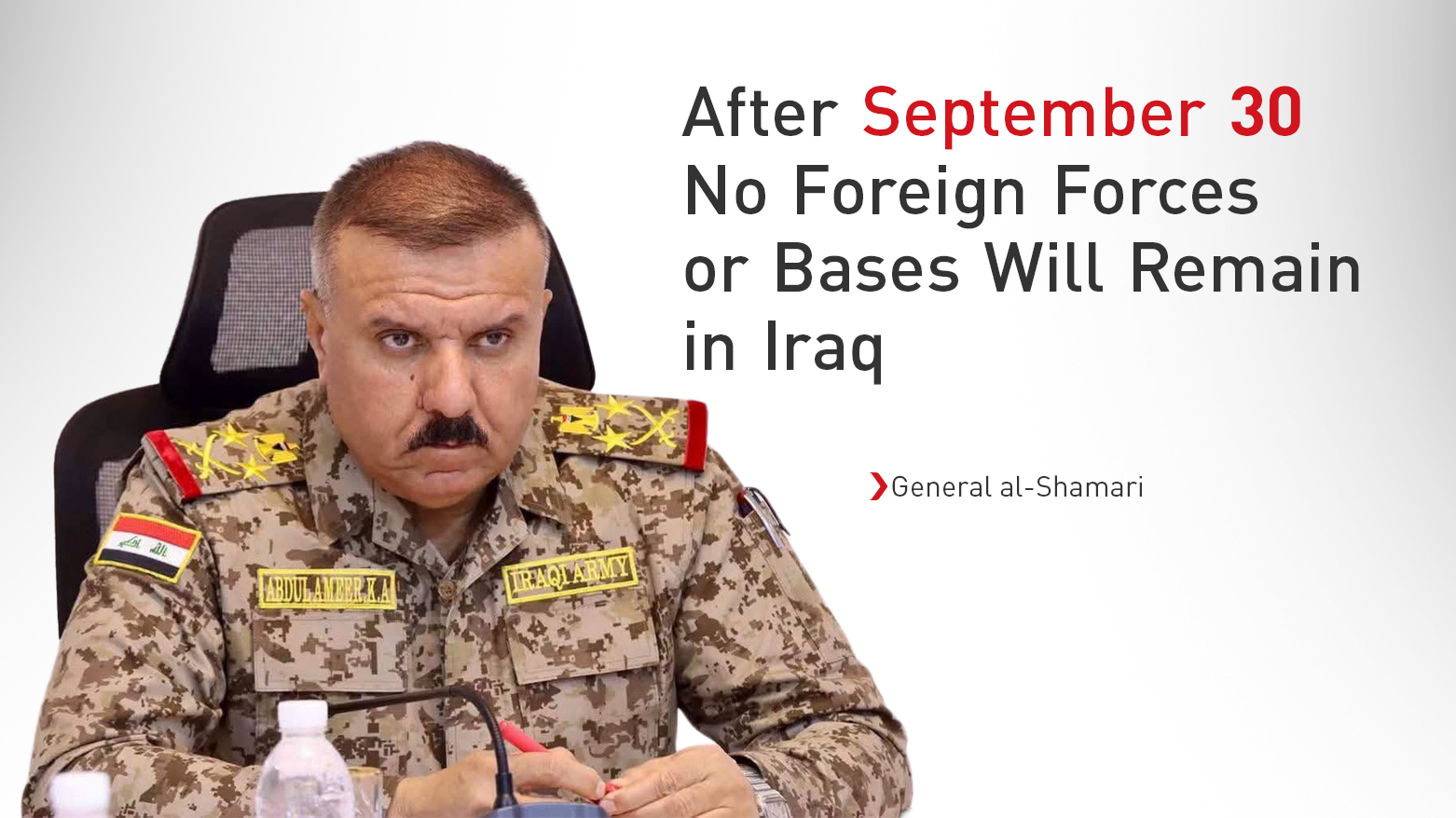
ERBIL () - Lieutenant General Abdul Amir al-Shamari, director of the office of Iraq's Commander-in-Chief of the Armed Forces, confirmed on Sunday that September 30 will be the final date for the end of American military presence in Iraq, stating that after that date there will be no foreign combat forces or military bases remaining inside the country.
"September 30 will be the final deadline for the end of American military presence in Iraq,"al-Shamari said. "After this date, there will be no foreign combat forces or military bases inside the country."
Al-Shamari confirmed that Victoria Base has been completely vacated of all American presence and will be converted into a center for receiving diplomatic missions, marking one of the most visible physical transformations of the post-coalition era as a major American military installation transitions directly into a diplomatic facility.
On the Turkish military presence, al-Shamari disclosed that Bashiqa base will be evacuated within a maximum period of 60 days, in line with the agreement reached between Iraqi Prime Minister Ali al-Zaidi and Turkish President Recep Tayyip Erdogan on the sidelines of the UN General Assembly in New York last week, under which Türkiye agreed to the gradual handover of the base to Iraqi state authority alongside a commitment to establish state control in Sinjar and end the presence of outlawed foreign armed elements.
The September 30 deadline marks the conclusion of the international anti-ISIS coalition's military mission in Iraq, which began in 2014 following the fall of Mosul to ISIS and the subsequent request for international military assistance from Baghdad. The coalition at its peak involved forces from more than 60 countries and played a decisive role in the military defeat of ISIS's territorial caliphate. Its departure on September 30 closes a twelve-year chapter of foreign military presence in Iraq that reshaped the country's security architecture, its political relationships with the United States and its regional neighbors, and its constitutional debate over the boundaries of state sovereignty.
The transition carries direct implications for the Kurdistan Region, whose Peshmerga forces trained closely with American and coalition advisers throughout the anti-ISIS campaign and whose security relationship with Washington has been a foundational element of the Region's political stability and international standing. Prime Minister Masrour Barzani has met repeatedly with US officials to discuss the post-coalition security framework, and the State Department confirmed this week that the Kurdistan Region remains a foundational pillar of the broader US-Iraq relationship.
The confirmation that no foreign combat forces or bases will remain in Iraq after September 30 also sets the stage for the next phase of the militia disarmament process, with al-Zaidi's June 2027 phased plan now the primary framework for bringing Iran-aligned armed groups under state control in an Iraq where the American military umbrella has formally concluded.