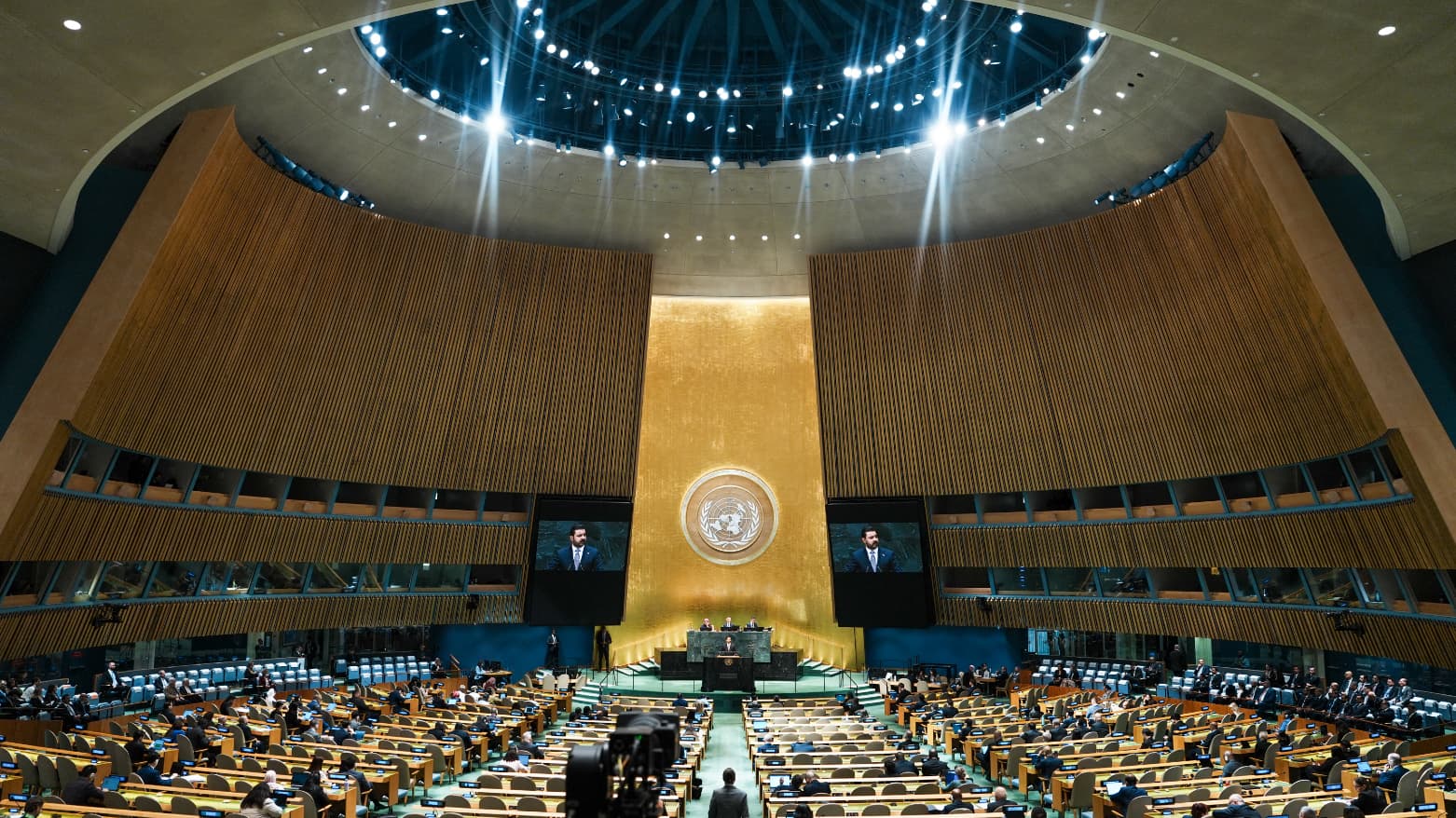
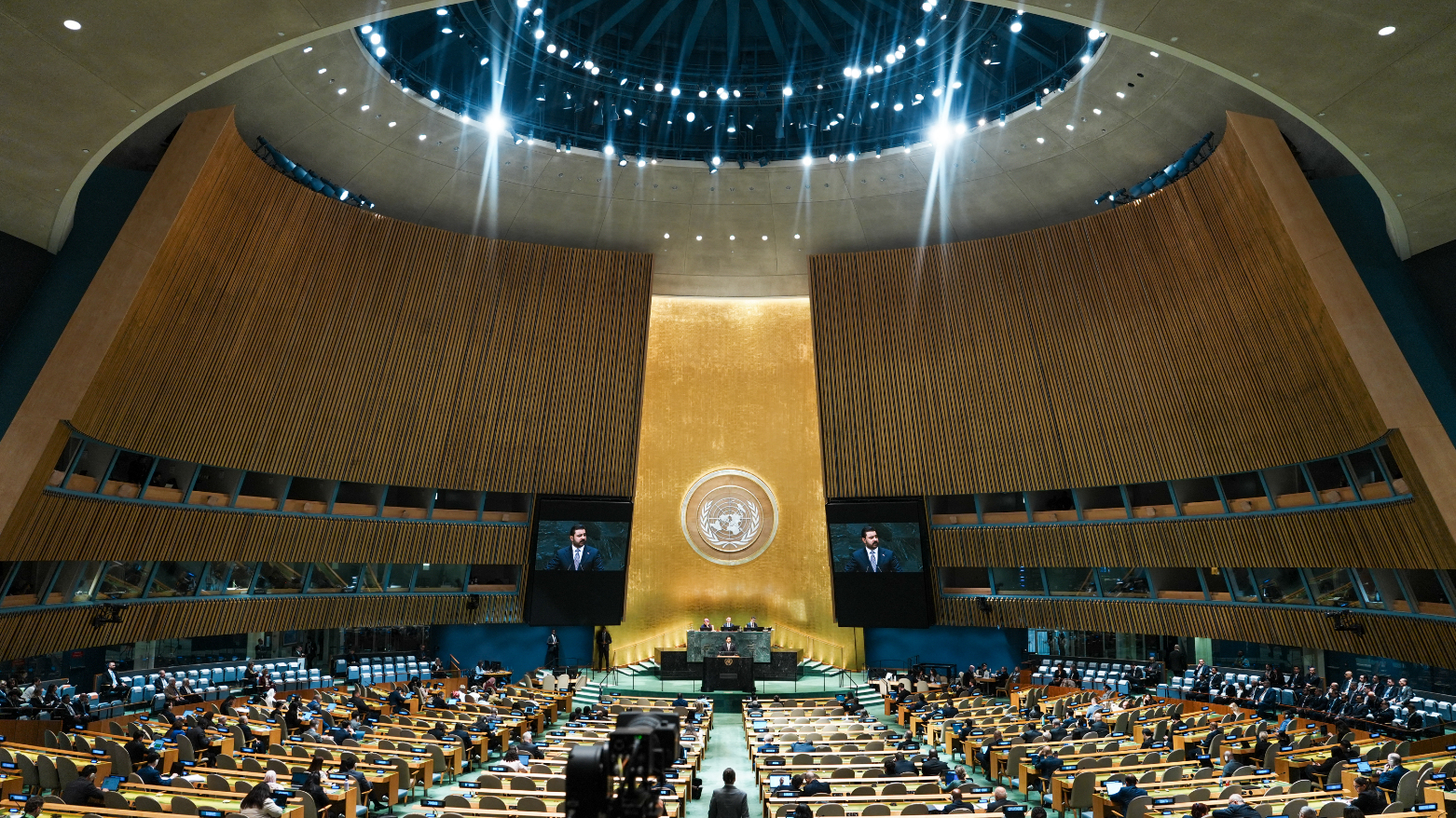
ERBIL () - Former European leaders and senior officials attending the 81st United Nations General Assembly in New York spoke to about relations with Kurdish people, Türkiye's approach to the Kurdish question, Russia's war in Ukraine, NATO and the role of diplomacy in resolving conflicts.
Washington Bureau Chief Rahim Rashidi conducted the interviews on the sidelines of the gathering, continuing a series of conversations with political leaders and officials during the UN's high-level week.
Former Swedish Prime Minister Stefan Löfven, who now chairs the Governing Board of the Stockholm International Peace Research Institute (SIPRI), said relations with Kurdish people should continue, while cautioning that he was not sufficiently involved in current developments to comment on specific Swedish government positions.
"We should have a relation, of course, with the Kurdish people, no doubt,"Löfven said.
He was more categorical on Ukraine, saying Sweden, Europe and other partners should continue supporting Kyiv.
"There is no alternative because Russia cannot win this war,"he said.

Former Turkish Prime Minister Binali Yıldırım, meanwhile, addressed Türkiye's relationship with its Kurdish population and the country's current peace initiative.
"We don't have any problem with the Kurdish people whatsoever,"Yıldırım said, adding that the issue, from his perspective, concerned terrorism rather than Kurdish identity.
Asked by about Kurdish rights in Türkiye, Yıldırım rejected framing citizenship rights along ethnic lines. He argued that Turks and Kurds possess equal rights under the constitution and pointed to Kurdish politicians having previously served as president and ministers.
"They didn't choose to be Kurd, I didn't choose to be Turk,"he said. "We have a constitution; under this constitution we are equal."
Yıldırım also referred to what he called Türkiye's "new era without terror,"saying those who do not support armed activity should not face problems because of their identity. He cited the PKK's decision to lay down arms as evidence that an armed approach had failed to produce results.
His remarks follow comments by Mehdi Eker, a member of Türkiye's delegation in New York, who told during the same UN gathering that the peace process was continuing and described President Masoud Barzani's role as important because of his relations with the different sides.

Read More: World Leaders Speak to on Kurdistan and Middle East
Ukraine and European security featured prominently in's interview with Slovenian Minister of Foreign and European Affairs Tone Kajzer.
Kajzer said the war was entering its fifth year and argued that Russia could end it, while stressing that Ukraine should retain the ability to defend itself.
"We don't want to have escalation, we want to have de-escalation,"he said, calling for a path toward ending the conflict.
Kajzer described Slovenia as firmly supportive of Ukraine rather than neutral. He said Ljubljana was providing humanitarian and development assistance and helping strengthen Ukraine's ability to defend itself, particularly as another winter approaches.
He also defended the use of sanctions, saying the United States and Europe should continue restricting the financial resources supporting Russia's war effort. Discussions during the General Assembly, he said, had included ways to limit Russia's use of the so-called shadow fleet to export oil and other energy products.
Kajzer warned that further provocations would lead European countries toward additional sanctions rather than a reduction in their support for Ukraine.
"We are going to support Ukraine as long as it takes,"he said.
At the same time, the Slovenian minister argued that diplomatic channels should remain available. He said he had recently spoken with Cardinal Pietro Parolin at the Holy See and suggested that the Vatican's moral authority could potentially contribute to peace efforts.
Kajzer also said Slovenia would be prepared to provide a venue for dialogue, recalling the 2001 meeting between Russian President Vladimir Putin and U.S. President George W. Bush at Brdo pri Kranju in Slovenia.

Serbian First Lady Tamara Vučić approached the UN gathering from a different perspective, speaking about New York and the role of women.
Vučić described the city as energizing and said she enjoyed returning to it. On women's role in society, she argued that women possessed inherent strength and questioned the common language of "empowerment."
"Women are powerful by nature,"she said, describing women as "builders of society"and arguing that the discussion should be about "re-empowerment."

The latest interviews expand's conversations during UN General Assembly week, which have also included Armenian Prime Minister Nikol Pashinyan, U.S. Congressman Joe Wilson, senior UN officials and representatives from the UAE, Romania, Estonia and Türkiye.
Those earlier discussions ranged from deeper cooperation with the Kurdistan Region and Peshmerga unification to Syria, Iran, regional diplomacy and European defense.
The latest round added more direct discussion of Kurdish identity and Türkiye's peace process while placing the continuing war in Ukraine, European security and diplomatic efforts firmly within the wider agenda surrounding this year's General Assembly.