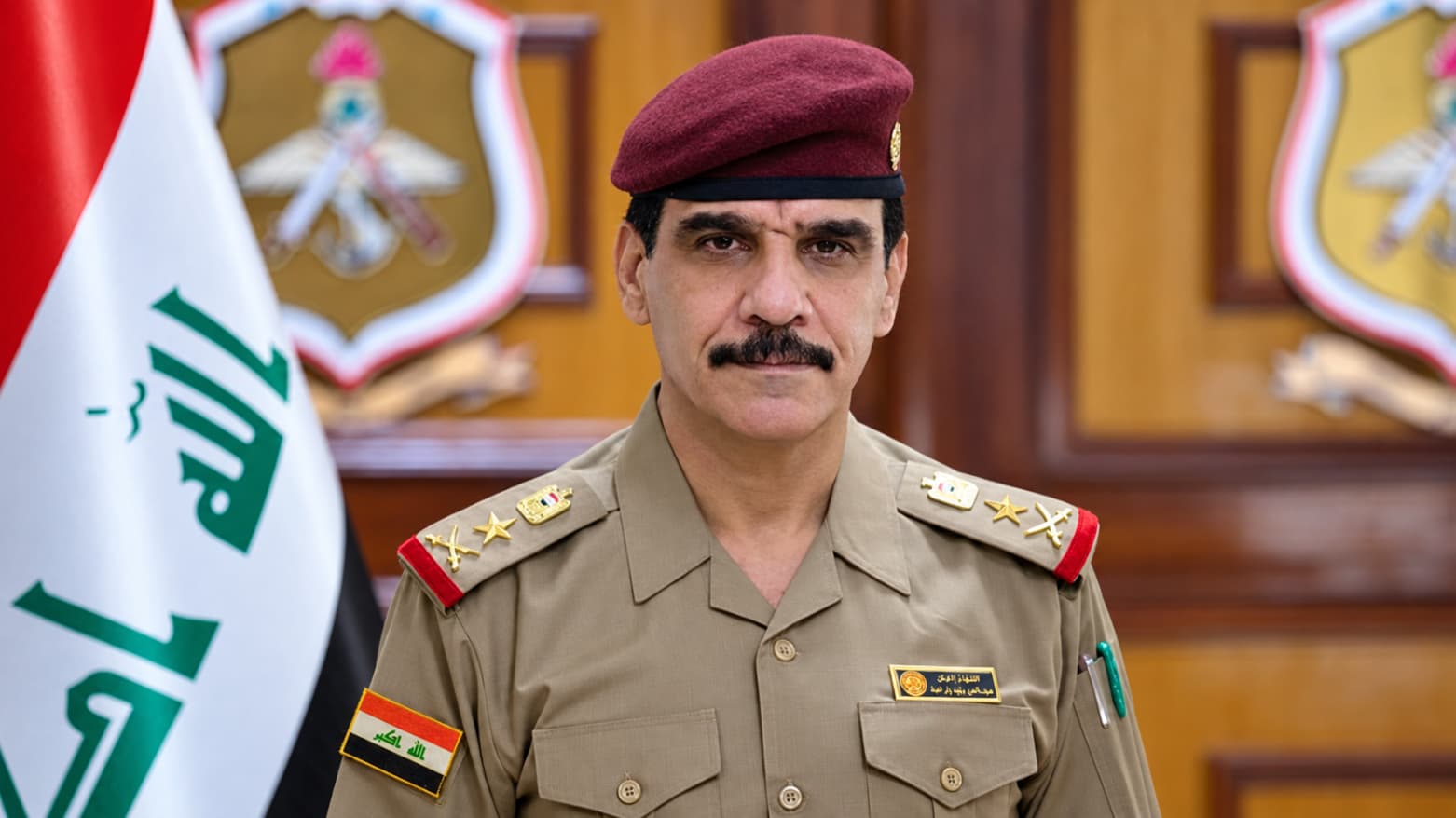
ERBIL () - Iraqi Army Chief of Staff Staff Lieutenant General Abdul Amir Rashid Yarallah on Tuesday congratulated the commanders, officers and members of the Peshmerga forces on their unification, describing the move as an important step toward consolidating military efforts and strengthening Iraq's security system.
In a statement issued on Tuesday, Yarallah said bringing the Peshmerga under a unified institutional framework would strengthen readiness and defense capabilities while reinforcing coordination among Iraq's military and security institutions.
The statement places the Iraqi military leadership among a growing number of federal and international actors that have publicly welcomed the completion of the long-running Peshmerga reform process. The significance now shifts from structural unification to how the reorganized force operates within the Ministry of Peshmerga Affairs and coordinates with the Iraqi Armed Forces.
Yarallah said the Iraqi Ministry of Defense remained committed to continued coordination and cooperation between the Iraqi Armed Forces and the Peshmerga, describing the latter as an integral part of the national defense system.
He pointed to the two forces' cooperation during the battles against terrorism, saying they had stood together in defense of Iraq's territory and population.
The Army chief also praised the political and military leadership in the Kurdistan Region for its role in completing the unification process. He named President Masoud Barzani, Kurdistan Region President Nechirvan Barzani, Prime Minister Masrour Barzani, Deputy Prime Minister Qubad Talabani, Peshmerga Affairs Minister Shorsh Ismail and Staff Lieutenant General Issa Aziz among those whose efforts contributed to the reform.
Yarallah expressed hope that coordination between the federal forces and the Peshmerga would deepen further in support of security and stability.
His remarks followed Monday's formal announcement that the Peshmerga unification process had been completed under the Ministry of Peshmerga Affairs.
At the ceremony, Prime Minister Masrour Barzani said all Peshmerga forces had been brought under the ministry's authority and organized through a single military structure covering operations, training, command and control, communications and accounting.
"Today is a historic day for Kurdistan and the Peshmerga,"Barzani said, while stressing that structural unification was only the first stage of a longer reform process.
He said the next phase would focus on professionalization, training and capacity-building in line with international military standards. The Prime Minister also called for stronger cooperation with the Iraqi Army and said the Peshmerga's constitutional position within Iraq's defense system should be reflected in salaries and financial entitlements.
Kurdistan Region President Nechirvan Barzani likewise described the unification as a national institution-building step rather than a simple organizational change.
"For years, we have said that Kurdistan needs one force, one ministry and one command,"he said at Monday's ceremony, adding that the next stage must translate unification into common standards of leadership, orders, training, promotions, service and discipline.
Peshmerga Affairs Minister Shorsh Ismail said the completed structure places the force under one ministry and command system. Under the new organization described by the ministry, the Peshmerga are arranged into 11 military divisions, alongside two support forces, one commando unit and two military regional commands. The wider structure places units within a hierarchy of brigades, divisions and regional commands operating through unified command and control.
The federal response has extended beyond the Army leadership. Iraqi Prime Minister Ali al-Zaidi on Monday congratulated the people of the Kurdistan Region and the Peshmerga, saying the unification would strengthen national security and institutional work.
Al-Zaidi said bringing security and military forces together within constitutional and legal frameworks, while improving coordination among Iraq's armed forces, would help consolidate national security and unity in defense decision-making.
International partners have also welcomed the reform. In reporting by journalist Dler Mohammed, the German Consulate General in Erbil said Germany welcomed efforts to unify and professionalize the Peshmerga under the Ministry of Peshmerga Affairs and regarded further consolidation of the process as important.
The consulate said Germany would remain closely engaged with its partners in support of regional stability and security, while noting that Berlin's cooperation with the Kurdistan Region extends beyond the security sector.
The United States has also reiterated its support for strong institutions in the Kurdistan Region. In reporting by White House Correspondent Sangar Akrayi, a State Department spokesperson said the United States supports "a strong and resilient Iraqi Kurdistan Region"and encouraged parties to work constructively on matters that strengthen the Region's institutions.
The completion of unification therefore closes one phase of a reform process and opens another centered on implementation. For Baghdad and Erbil, Yarallah's statement places continued Army-Peshmerga coordination at the center of that next phase, alongside the task of turning a unified structure into a fully functioning military institution.