ERBIL () - Zakho is preparing to break ground on what its top administrator described as the largest tourism project in Iraq and the Kurdistan Region, part of a broader investment drive that has accompanied extensive changes to roads, health care, education and public spaces during the Kurdistan Regional Government's Ninth Cabinet.
Gohdar Shekho, supervisor of the Zakho Independent Administration, told's Basi Roj program on Monday, Sept. 21, that investors had been given broad support to develop the tourism sector and that another 20 tourism projects were already under construction.
"The foundation stone for the largest tourism project in Iraq and the Kurdistan Region will soon be laid in Zakho,"Shekho said. Details on the project's cost, location, size or developer were not provided.
He said the 20 other projects would collectively generate thousands of employment opportunities for young people.
Tourism has become an increasingly visible part of Zakho's development strategy. Shekho said more than one million tourists visited last year, while the city now has 45 hotels.
Despite that capacity, he said demand remained high enough that Zakho still needed additional hotels and tourism facilities.
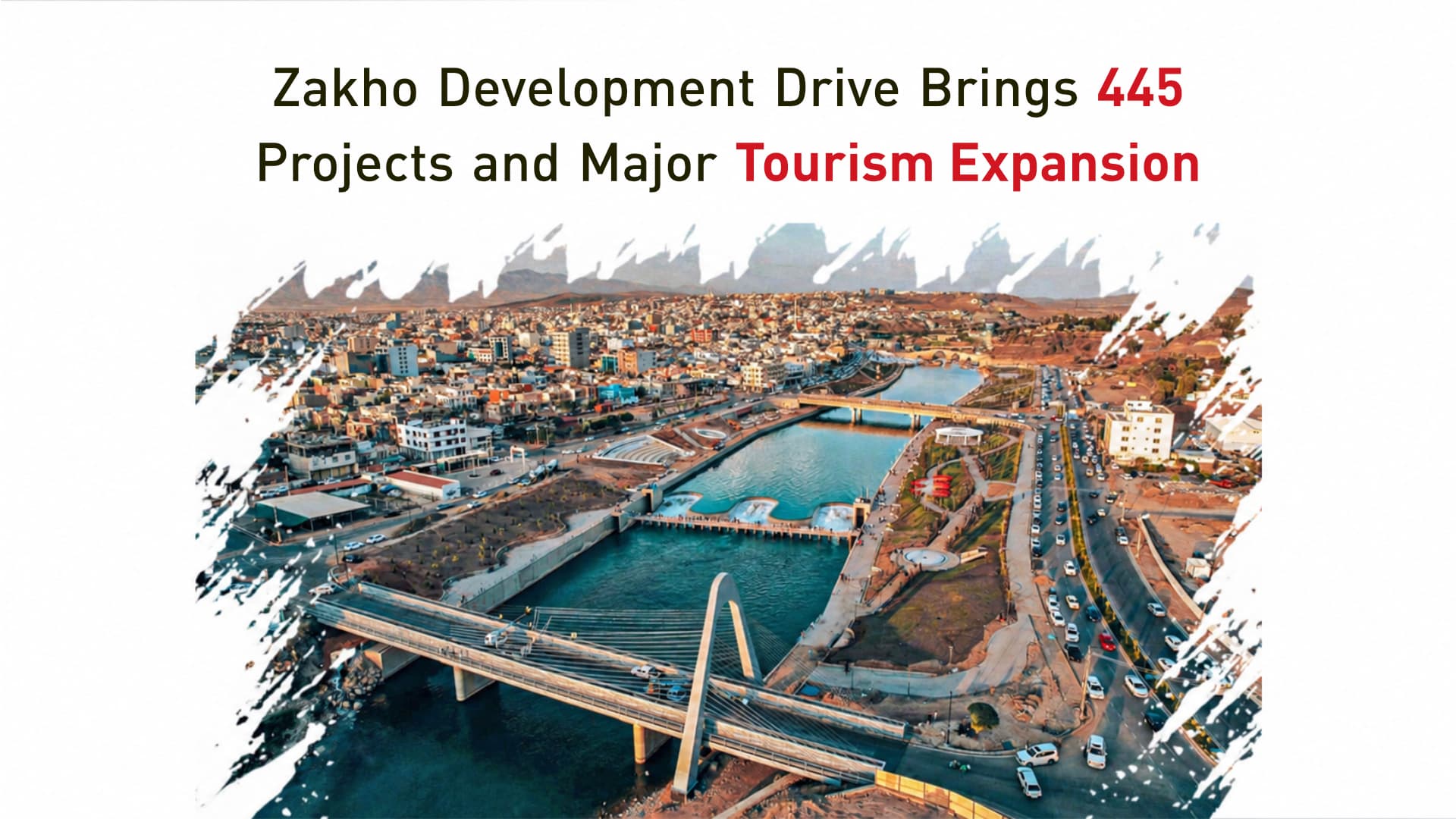
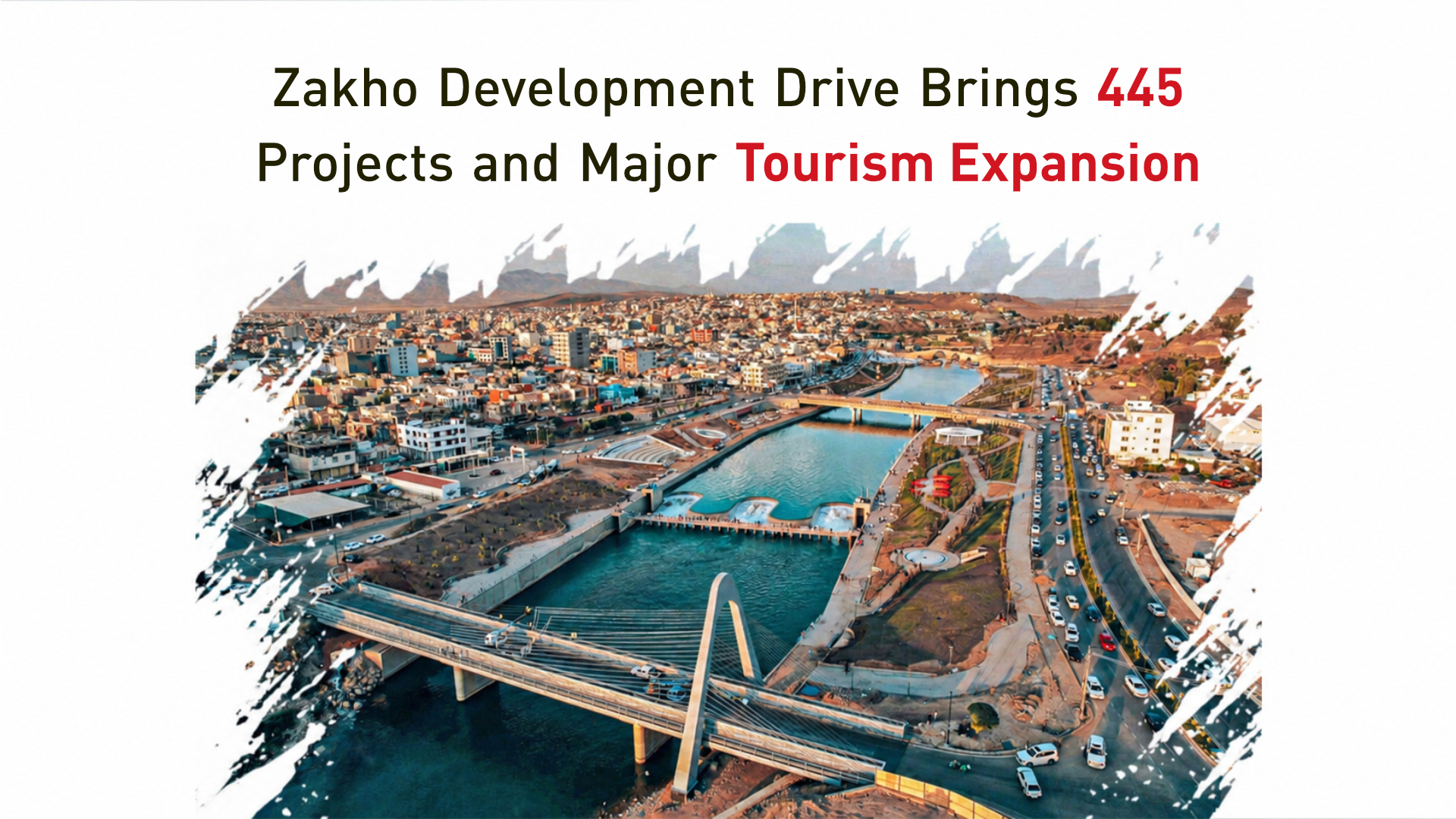
Among projects already reshaping the city are the first and second phases of the Zakho Corniche, six suspension bridges over the Khabur River, renovation of the old bazaar and ancient citadel, and development of the Zakho Museum, Dirabun resort and Dalal Bridge Square.
The area has also developed what officials describe as the region's largest advanced laser fountain.
Roads and Services Expand
Shekho linked Zakho's transformation to attention from Kurdistan Regional Government Prime Minister Masrour Barzani early in the Ninth Cabinet's term.
He said Prime Minister Barzani's first visit to Zakho gave him a direct view of local needs, after which an initial 50 billion dinars was allocated for urgent projects.
"Previously, 65% of Zakho's roads were unpaved, but today we are pleased that 95% have been paved,"Shekho said.
Official administration figures provide further detail. They show 282 kilometers of streets and main roads paved, 134 kilometers of drainage and sewerage networks constructed, and 355 kilometers of rural roads repaired and paved.
Traffic accidents have fallen by 60%, according to the figures.
Road improvements have also included markings across 494 kilometers, more than 13,000 traffic signs, underpasses and intersections, modern street lighting and 15,000 square meters allocated for pedestrian crossings.
Overall, the Zakho Independent Administration says 445 projects have been implemented, with another 90 under construction. It also reports 34 major investment projects licensed across several sectors, while separate figures list 25 new private-sector licenses in tourism, education, industry and agriculture.
Health and Education
Shekho said health services had improved to the point that patients generally no longer needed to leave Zakho for treatment, except for rare and highly specialized cases.
The investment includes a new 90-bed children's hospital in Zakho, a 40-bed hospital in Batifa and health centers in Darkar and Semelka.
Zakho General Hospital and local health centers have also been renovated and supplied with equipment including MRI and CT scanners, digital X-ray systems, dialysis and emergency-care equipment and new ambulances.
In education, Shekho said 107 schools had been renovated and 18 new schools built, with another five opening at the start of the current academic year.
Other official figures detail the construction of six 18-classroom schools, four 12-classroom schools and two six-classroom schools, alongside renovations and classroom expansions at 70 schools and kindergartens. Schools have also received desks and other supplies.
Water, Electricity and Villages
Water infrastructure has expanded through the Batifa, Fishkhabur and Dirabun projects, while 38 drinking-water wells have been drilled and 236 kilometers of water networks installed or renovated. A large reservoir has also been built, alongside the provision of pumps, generators and water-treatment materials.
In electricity, 92 kilometers of streets and major roads now have round-the-clock lighting. Continuous power has also been extended to 33 drinking-water wells, while 19 villages and Peshmerga positions have been connected to the electricity network. More than 75 transformers were installed to ease pressure and address low voltage.
Shekho said services had also reached villages previously abandoned because of fighting and tensions between the PKK and Turkish military.
Some villages that lacked paved roads even during the Baathist era now have roads and essential services, he said.
Agricultural projects include seven irrigation wells, nine kilometers of concrete irrigation channels serving 120 dunams of farmland, cleaning a 3.2-kilometer stretch of the Khabur River and constructing a pond in Zindok village. Farmers have also received 20 greenhouses, a pesticide sprayer and a rock-breaking excavator.
Public Spaces and Heritage
Eight new parks have been constructed and another 10 renovated, while Zakho International Stadium, Dalal Stadium and Batifa Stadium have also undergone improvements.
The administration has placed particular emphasis on cleanliness, Shekho said, including banning smoking along the Zakho Corniche except in designated areas.
Heritage preservation has accompanied the newer development. The Haji Ibrahim Mosque, Zakho's second-oldest mosque, has undergone a two-year renovation coordinated by the administration and Directorate of Endowments with support from philanthropists.
Built between 1968 and 1971 on the banks of the Khabur River, the mosque now features updated lighting, Islamic architectural details produced using CNC technology, improved ablution facilities and expanded prayer and rest areas.
The 2,861-square-meter mosque accommodates more than 2,000 worshippers and houses the Joudi Islamic School, which opened in 1993 and remains active.
As Zakho expands its tourism ambitions, Shekho said commercial activity is also strong, highlighting close trade relations with neighboring Şırnak province.
The planned flagship tourism development, together with the 20 projects already under construction, signals that the administration now intends to build on the infrastructure expansion by drawing more visitors, private investment and employment to Zakho.