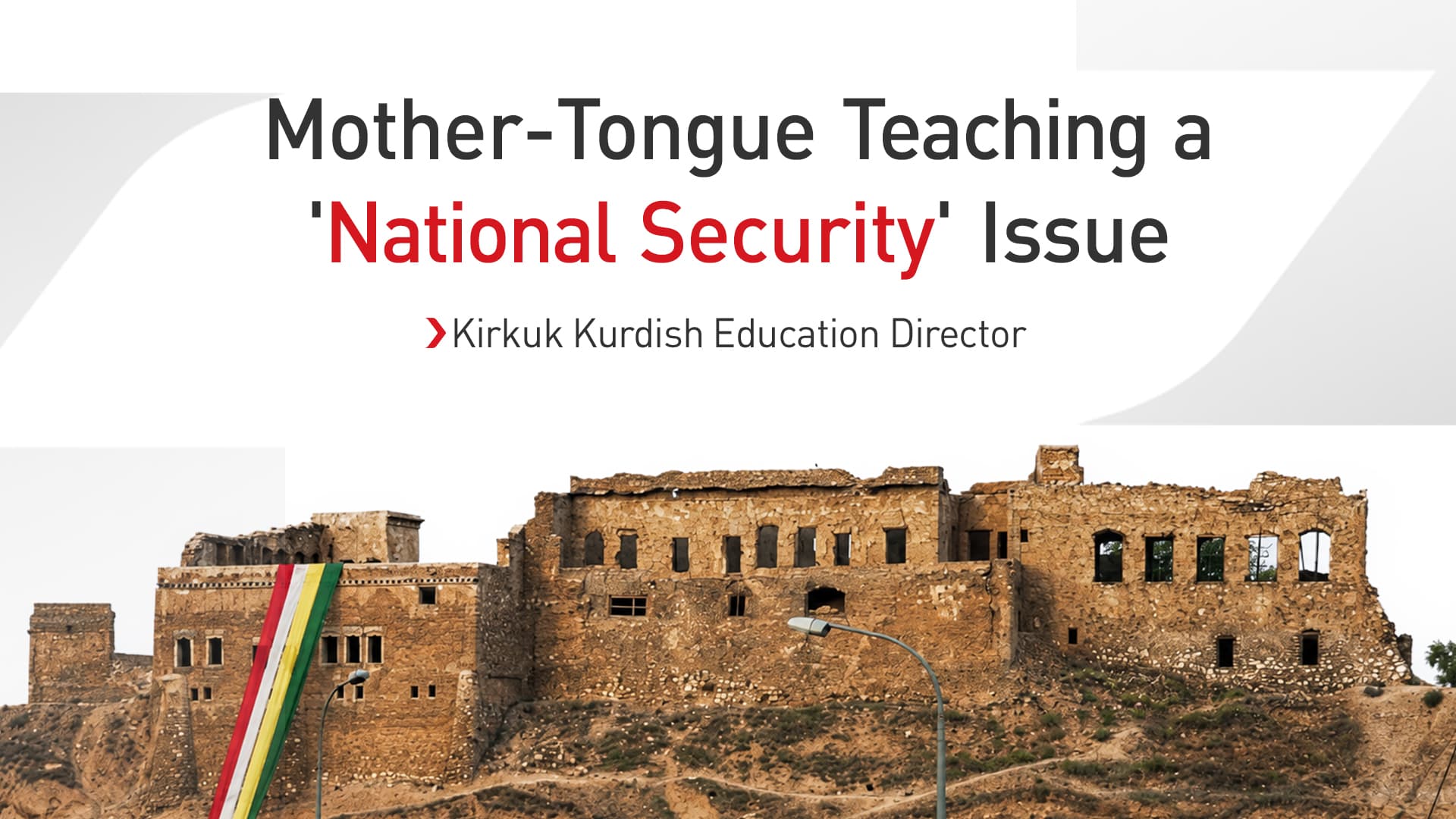
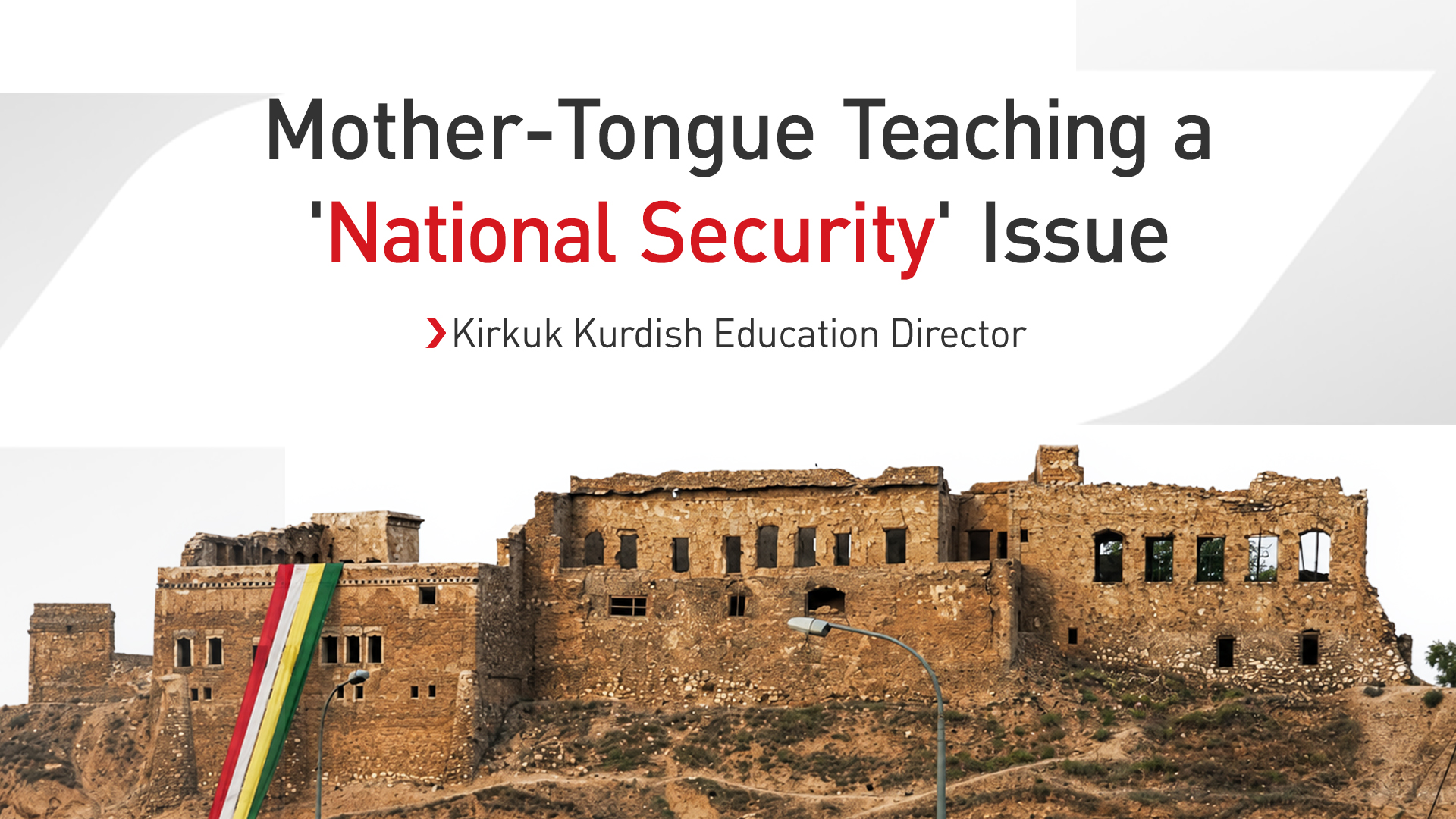
ERBIL () - As students return to classrooms for a new academic year, Kirkuk's director of Kurdish education is arguing that mother-tongue schooling in the city carries a significance far beyond ordinary classroom instruction, describing the preservation of Kurdish-language education as a matter of identity and "Kurdistan's national security."
Kamaran Ali, director of Kurdish education in Kirkuk, told on Saturday that Kurdish schools in the city should be understood against a history in which the language and Kurdish identity faced policies of Arabization and suppression.
For that reason, Ali said, education in Kurdish has become a means of preserving both language and community presence in Kirkuk.
"Mother-tongue education is a fundamental right in every country,"he said, while arguing that the issue assumes particular importance in Kirkuk because of its history.
Ali said successive Iraqi governments had pursued Arabization policies against Kurds in the city and sought to restrict the Kurdish language. Despite those pressures, he said Kurdish residents had continued to protect and pass on their mother tongue.
His remarks come as the 2026-2027 academic year begins across the Kurdistan Region and amid renewed attention from Kurdistan Region Prime Minister Masrour Barzani to Kurdish-language education in Kirkuk.
Speaking Sunday after officially ringing the school bell at Global School in Erbil, Prime Minister Barzani described Kurdish as fundamental to national identity.
"Education in our cherished Kurdish language is more important to us than anything else because our language defines our national identity and our homeland,"he said.
Turning directly to Kirkuk, Prime Minister Barzani called the city "the heart of Kurdistan"and said its Kurdistani character formed part of its identity. He called for Kurdish-language education to be promoted wherever Kurdish communities live.
That description represents Prime Minister Barzani's political position on Kirkuk, a city whose identity and status remain politically contested. Kurdish officials commonly include Kirkuk among the Kurdistani Territories outside the Kurdistan Region's Administrative control.
A Constitutional Basis for Kurdish Education
Ali also pointed to the changes that followed the fall of the former Iraqi regime in 2003.
Iraq's 2005 Constitution recognizes Arabic and Kurdish as the country's two official languages and guarantees the right of Iraqis to educate children in their mother tongue under applicable educational guidelines.
For Kurdish students in Kirkuk, Ali said, that constitutional recognition established a legal foundation for formal Kurdish-language schooling.
All teachers and employees working through Kirkuk's Directorate of Kurdish Education are affiliated with the Kurdistan Regional Government while officially serving in Kirkuk, according to Ali.
He argued that maintaining those institutions is essential to safeguarding Kurdish cultural and linguistic continuity in the city.
Ali also asserted that Kurds historically and demographically constituted Kirkuk's largest community, citing the 1957 census and elections held after 2003. Those demographic claims reflect Ali's assessment in the supplied reporting and remain part of the broader political debate surrounding Kirkuk.
For Ali, however, the central argument is that language is inseparable from the future of the Kurdish community.
He called on institutions and citizens to support the continued development of Kurdish education, describing Kurdish-language classes as one of the pillars protecting Kurdish identity and presence.
A New School Year Across Kurdistan
The comments coincide with the return of more than 1.7 million students to schools across the Kurdistan Region.
According to Education Ministry figures supplied to, the 2026-2027 academic year includes 7,590 schools, more than 123,000 children entering first grade, and approximately 168,000 teachers and employees.
The ministry has prepared 19 million new textbooks and revised 110 textbooks and curricula.
Education infrastructure has also been a major part of the Ninth Cabinet's program. Figures provided in the supplied reporting show hundreds of schools and kindergartens constructed and thousands renovated, alongside the addition of new classrooms.
At Sunday's school-opening ceremony, Prime Minister Barzani said the government would continue supporting students and teachers while working to improve schools, curricula and educational standards.
His speech also placed language within a broader message about education, coexistence and identity.
Prime Minister Barzani urged students to respect differences among religions and nationalities, telling them that the Kurdistan Region's diversity had made the country more beautiful. He also asked them to care for their environment, respect their teachers and devote themselves to their studies.
For Kirkuk, Ali's message was narrower but more urgent.
He sees Kurdish-language education not simply as one available form of schooling, but as a link between generations in a city where language has long carried political as well as cultural meaning.
As another academic year begins, his argument places the classroom at the center of a larger question: how Kurdish identity and language are preserved in Kirkuk through institutions that teach the next generation in its mother tongue.