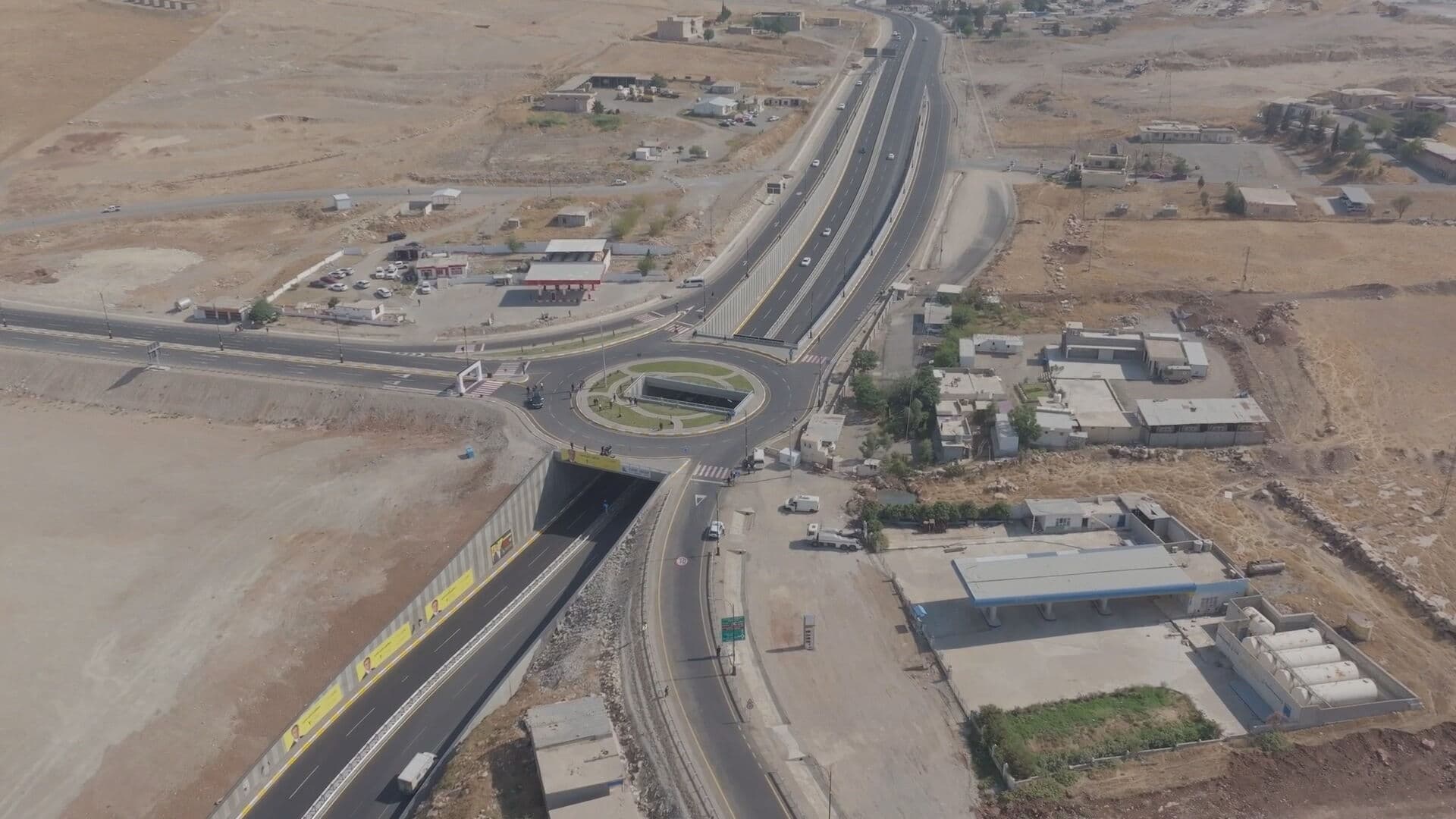
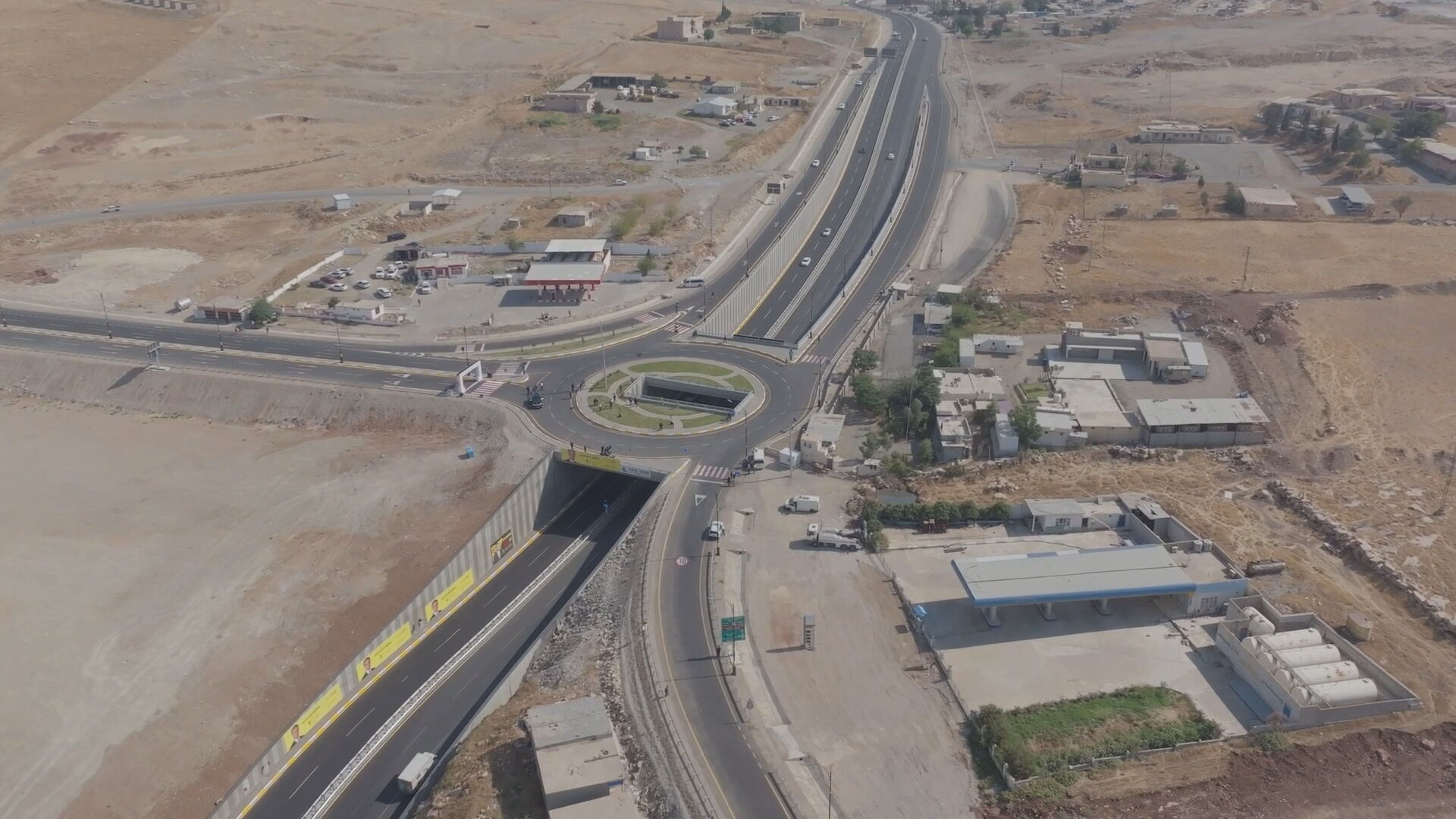
ERBIL () - The Kurdistan Regional Government is preparing to move ahead with another major component of its expanding road network, with the Spilk-Qandil route set to be transformed into a highway linking Erbil more efficiently with the Soran Independent Administration and border crossings with Iran.
Erbil Governor Omed Xoshnaw announced on Saturday, Sept. 19, that the strategically important project will enter the implementation phase under a modern design intended to eliminate one of the route's most persistent problems: its winding mountain sections.
The road is expected to become a principal transport artery between Erbil province, Soran and the eastern border, improving travel for passengers while creating a more efficient route for commercial traffic.
According to Xoshnaw's statement, construction will begin after completion of the Mirawa-Mawaran tunnel and road, with the Spilk-Qandil project then proceeding in several separate phases.
The project represents the latest piece of a much larger infrastructure program that has reshaped the Kurdistan Region's road-building agenda under the Ninth Cabinet. The government's so-called "Road Revolution"has combined major highways, tunnels and bridges with hundreds of smaller construction, rehabilitation and paving projects aimed at improving connections between cities, rural districts, agricultural areas and border routes.
The scale of that work has grown considerably since 2019.

According to figures published by the KRG Department of Media and Information, the government completed 810 road and highway projects between 2019 and June 2026, covering 3,055 kilometers and costing more than IQD 1.057 trillion.
A further 227 strategic road projects were under implementation by mid-2026, covering another 2,239 kilometers with a combined value of approximately IQD 4.179 trillion.
Those figures illustrate a policy that stretches beyond expanding urban roads. The government has increasingly treated transport infrastructure as a way to connect economic centers, tourist destinations, farming areas and international trade routes.
Several of the Ninth Cabinet's flagship projects are designed around that wider regional approach.
The Erbil-Koya highway, Kalar-Darbandikhan road and Dukan-Chwarqurna route are among the schemes intended to strengthen intercity movement.
The Bestana-Khalakan-Dukan project, valued at IQD 243 billion, is designed to improve connectivity among Sulaimani, Raparin and Dukan. Its construction includes a 380-meter bridge along with extensive drainage infrastructure.
Farther north, the Shaqlawa-Harir project incorporates tunnels and overpasses as part of efforts to ease traffic pressure and improve the wider Erbil-Soran-Iran transportation corridor.
That same corridor provides the context for the Spilk-Qandil project.
reported in July that the wider Kore-Shaqlawa-Qandil highway and the Mirawa and Mawaran tunnels were approaching completion. Together, those projects are intended to create a more continuous connection between Erbil, Soran, tourism areas and international border crossings.

Once the Mirawa-Mawaran section is finished, attention is expected to move toward Spilk, where the terrain has long required vehicles to navigate tight and winding sections.
Converting that route into a highway would separate opposing traffic and modernize a stretch that officials regard as essential to the broader transport network.
The government's road program is also closely connected to trade.
A more efficient route between Erbil and border crossings can shorten travel for commercial vehicles while improving the movement of passengers and goods through the mountainous northeast of the Kurdistan Region.
That places Spilk-Qandil within a broader infrastructure strategy in which roads are not treated simply as transport projects but as economic links connecting markets, agricultural production, tourism areas and border commerce.
The same logic applies to smaller projects.
In 2025 alone, the KRG reported completing 172 road projects worth IQD 92.46 billion. The work included new roads, rehabilitation and asphalt paving across Erbil, Sulaimani, Duhok and Halabja, as well as the Soran, Garmian, Raparin and Zakho administrations.
By spreading road investment across both major corridors and local networks, the government has sought to improve access beyond the largest cities.
Road safety has become another stated part of the program.
By mid-2026, KRG figures showed that 2,723 kilometers of roads had been marked, while authorities had installed 19,342 traffic signs, 62 kilometers of guardrails and 59 pedestrian bridges.
Those measures complement the larger engineering projects by addressing road conditions after construction as well as the physical layout of routes themselves.
In the case of Spilk-Qandil, the planned redesign directly addresses safety by replacing or restructuring winding sections and providing separate carriageways for traffic moving in opposite directions.
For motorists traveling through steep mountainous terrain, that could be as consequential as the reduction in travel time.

The emerging network therefore combines several types of infrastructure at once: highways to increase capacity, tunnels to overcome difficult terrain, bridges to connect divided routes and upgraded local roads to feed communities into the larger system.
The Spilk-Qandil project brings those elements together.
Once construction begins, it will extend the modernization already taking place along the wider Erbil-Soran-Qandil corridor, connecting previous investments in tunnels and highways with another key section leading toward the border.
For the Ninth Cabinet, the project is part of a broader effort to turn road construction into a regional network rather than a collection of isolated schemes, one built around safer travel, stronger links between communities and more direct connections between the Kurdistan Region's economic centers and external markets.