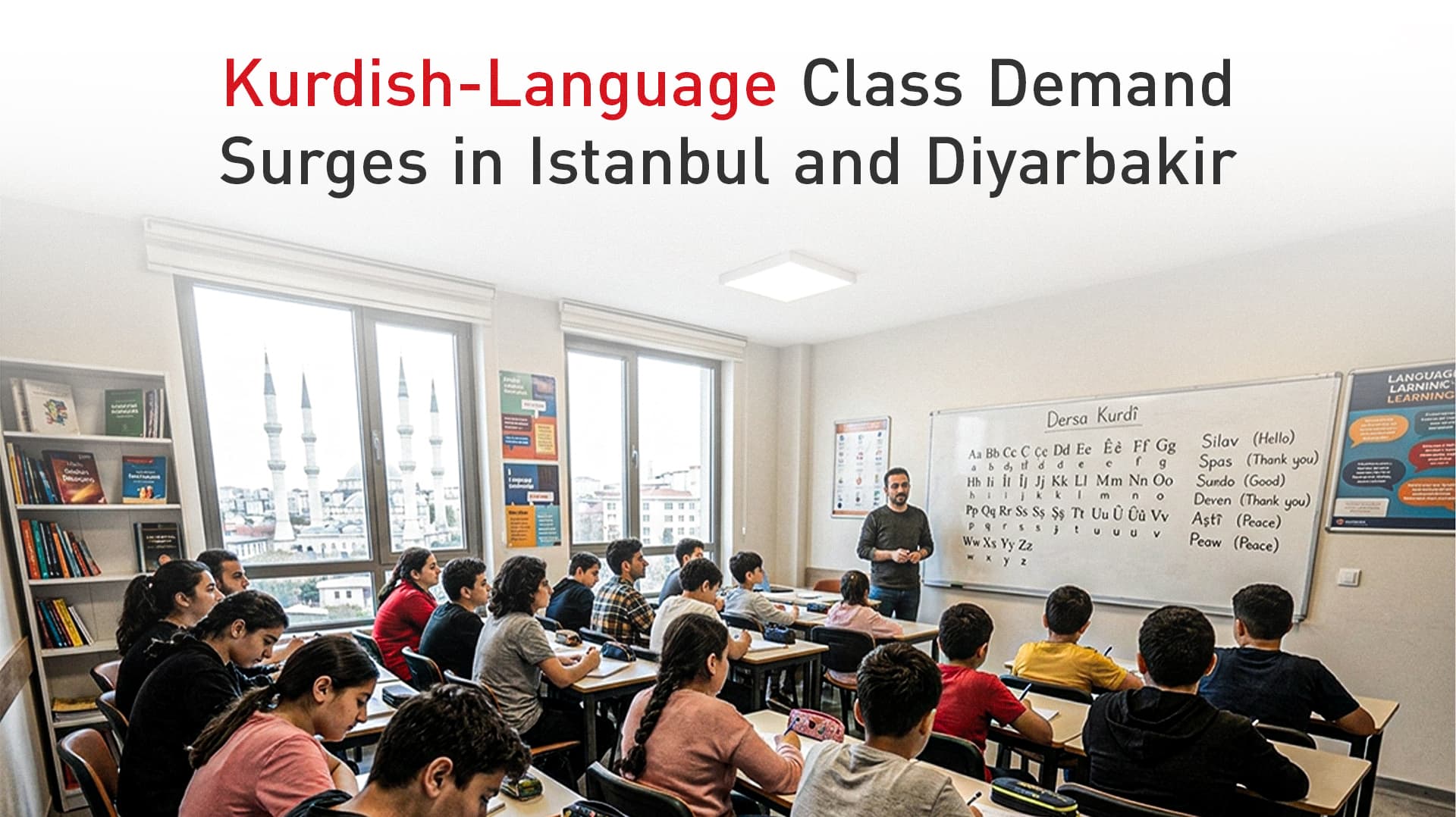
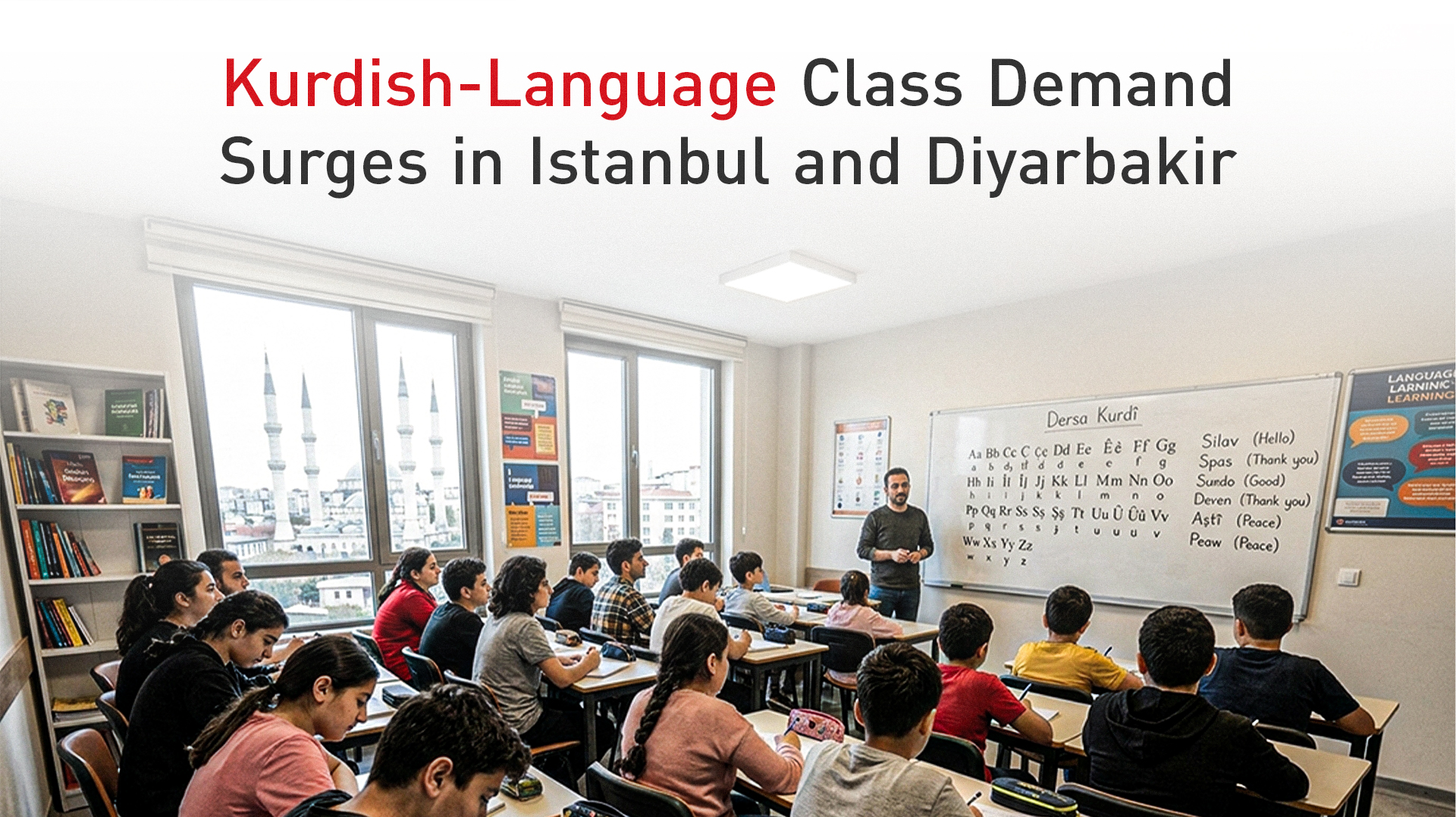
ERBIL () - Demand for Kurdish-language education is rising in parts of Türkiye, with nearly 1,000 students in Istanbul’s Esenyurt district choosing Kurdish as an elective subject for the 2026–2027 academic year, while education officials and advocates say teacher shortages are preventing students from accessing the classes.
Subhi Ozgen, a lawyer with the Kurdish Language Movement (HezKurd), said on Friday, that nearly 1,000 students at different schools in Esenyurt had registered to study Kurdish for the new academic year following awareness campaigns highlighting the importance of choosing Kurdish as an elective subject.
According to Ozgen, school administrations in the district formally requested that the Turkish Ministry of Education assign qualified Kurdish-language teachers so the classes could be opened in response to families’ requests.
He said the deadline for selecting elective subjects had ended in February 2026 and that all requests had formally been entered into the Ministry of Education’s system so teachers could be assigned before the start of the new academic year.
However, despite the official start of the new school year, the ministry had not assigned any Kurdish-language teachers, Ozgen said.
He stressed that the situation had caused deep concern among school administrations and families in Esenyurt because, according to the movement, it was preventing students from exercising a legal right to learn their mother tongue.
Ozgen also said that on Sept. 7, the Kurdish Language Movement had formally requested a meeting with Turkish National Education Minister Yusuf Tekin to directly discuss the problems and obstacles facing Kurdish-language education.
He said the minister had not yet responded to the request.
The Kurdish Language Movement called on the Ministry of Education and relevant government authorities to immediately provide the teachers needed by schools in Esenyurt so students would not lose the academic year or be deprived of the opportunity to study Kurdish.
The demand for Kurdish as an elective subject has also increased significantly in Diyarbakir, according to Ramadan Tekdemir, head of the Diyarbakir branch of the Education Workers’ Union.
Tekdemir said the number of students choosing Kurdish-language classes in schools had increased from 59,000 to 86,000.
He described the increase as a clear indication of growing awareness and greater interest among families in the mother tongue.
The increase in demand has also highlighted a shortage of Kurdish-language teachers.
Tekdemir said that of the 153 Kurdish-language teachers employed across Türkiye, only 42 were working in Diyarbakir.
According to follow-up assessments cited by Tekdemir, Diyarbakir alone currently needs more than 100 additional Kurdish-language teachers to meet students’ demand.
Tekdemir emphasized that education in one’s mother tongue is a basic, natural and fundamental social and cultural right.
He called for an end to linking the issue of mother-tongue education to political disputes and broader political questions.
“The issue of education and guaranteeing the right to learn in one’s mother tongue must be viewed as a humanitarian and constitutional matter and resolved by educators and specialists in the field, not by politicians,” Tekdemir said.