ERBIL () - Mohammad Baqer Qalibaf, Speaker of Iran's Parliament, said Wednesday, Sept. 16, 2026, that the United States Federal Reserve cannot control inflation expectations by raising or lowering interest rates, arguing instead that the real driver of price pressures is a supply-side shock tied to the closure of strategic energy corridors, namely the Strait of Hormuz and Bab al-Mandab.
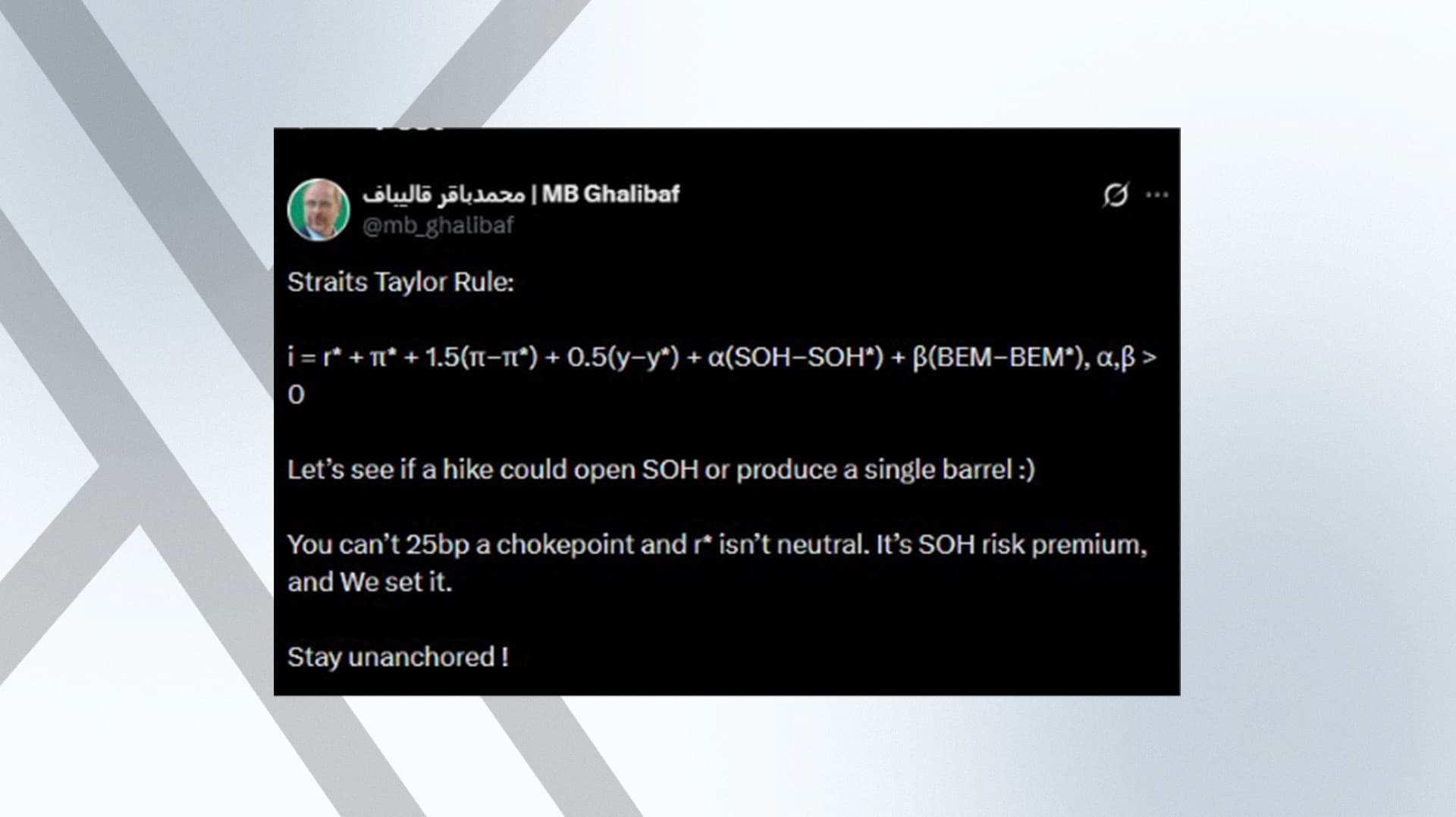
Writing on his official account on the social media platform X ahead of the US central bank's closely watched interest rate announcement, Qalibaf questioned the effectiveness of monetary policy in addressing what he described as a geopolitical problem. According to Iran's official news agency IRNA, he wrote that raising interest rates would not open the Strait of Hormuz or produce a single additional barrel of oil.
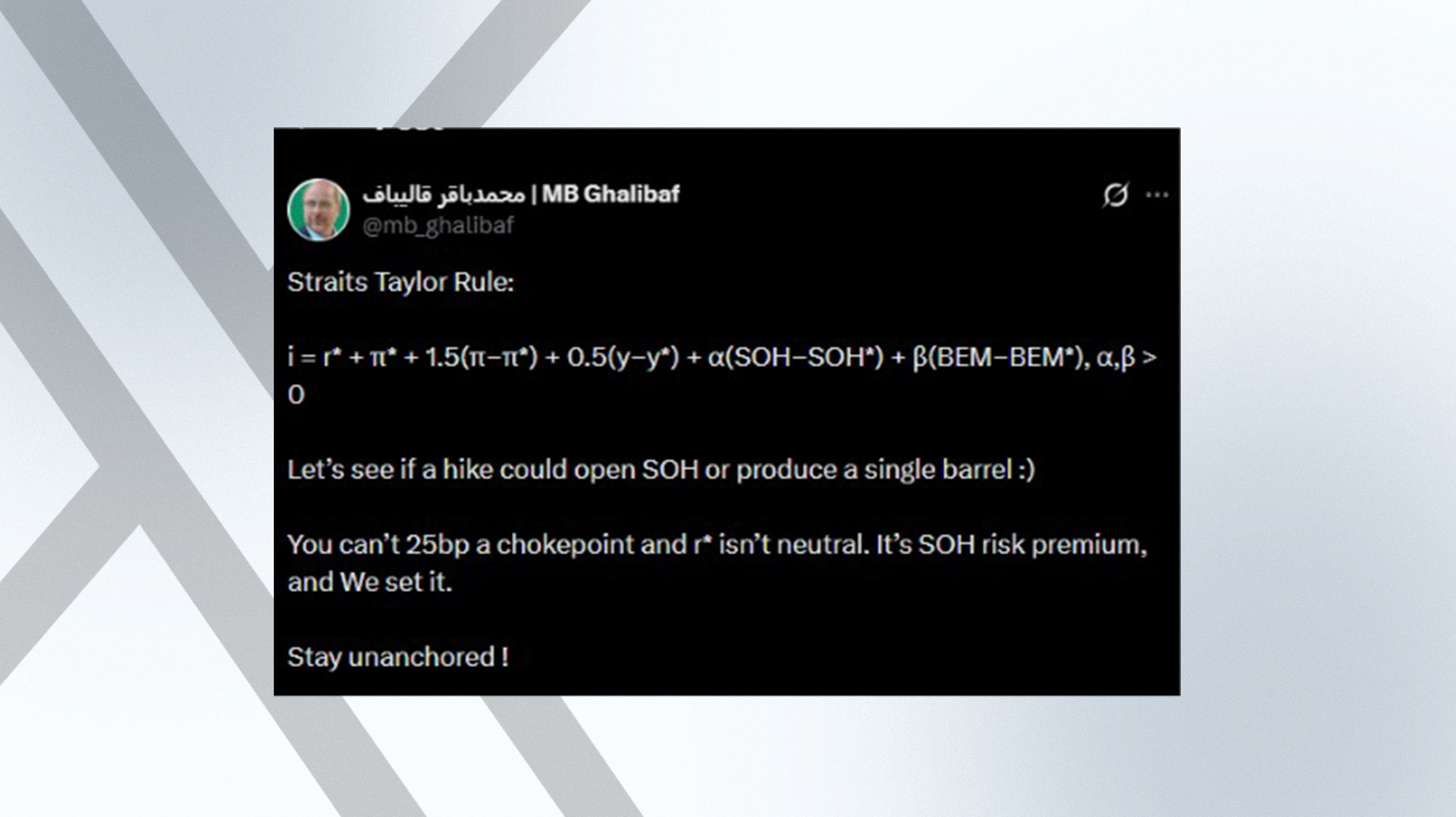
In the post, Qalibaf presented a modified version of the Taylor Rule, an economic formula used to guide central bank interest rate decisions, writing: "Straits Taylor Rule: i = r* + π* + 1.5(π−π*) + 0.5(y−y*) + α(SOH−SOH*) + β(BEM−BEM*), α,β > 0. Let's see if a hike could open SOH or produce a single barrel:) You can't 25bp a chokepoint and r* isn't neutral. It's SOH risk premium, and We set it. Stay unanchored!"
IRNA reported that Qalibaf said inflation expectations in the United States cannot be anchored through adjustments to interest rates, because those expectations are shaped by a supply-side shock stemming from the closure of energy chokepoints, specifically the Strait of Hormuz and Bab al-Mandab, and are unrelated to borrowing costs.
He said it is what he called the "Strait of Hormuz risk"that now determines the rate, adding that control over this risk currently rests with Iran.
According to IRNA's analysis of the post, Qalibaf's remarks reflect a broader argument that the traditional era of managing inflation and inflation expectations through demand-side tools such as interest rates has ended, and that geopolitics now holds greater sway over economic indicators including inflation. Under normal conditions, IRNA noted, central banks typically aim to anchor inflation expectations to a credible long-term inflation target by adjusting interest rates in line with that target and the economy's distance from full recovery.
IRNA said Qalibaf's reformulation of the classical US interest rate model was intended as a warning to market participants that manipulating interest rates alone will not achieve the goal of curbing inflation in the United States, and that new variables, including the closure of the Strait of Hormuz and Bab al-Mandab, must now be factored into economic calculations.