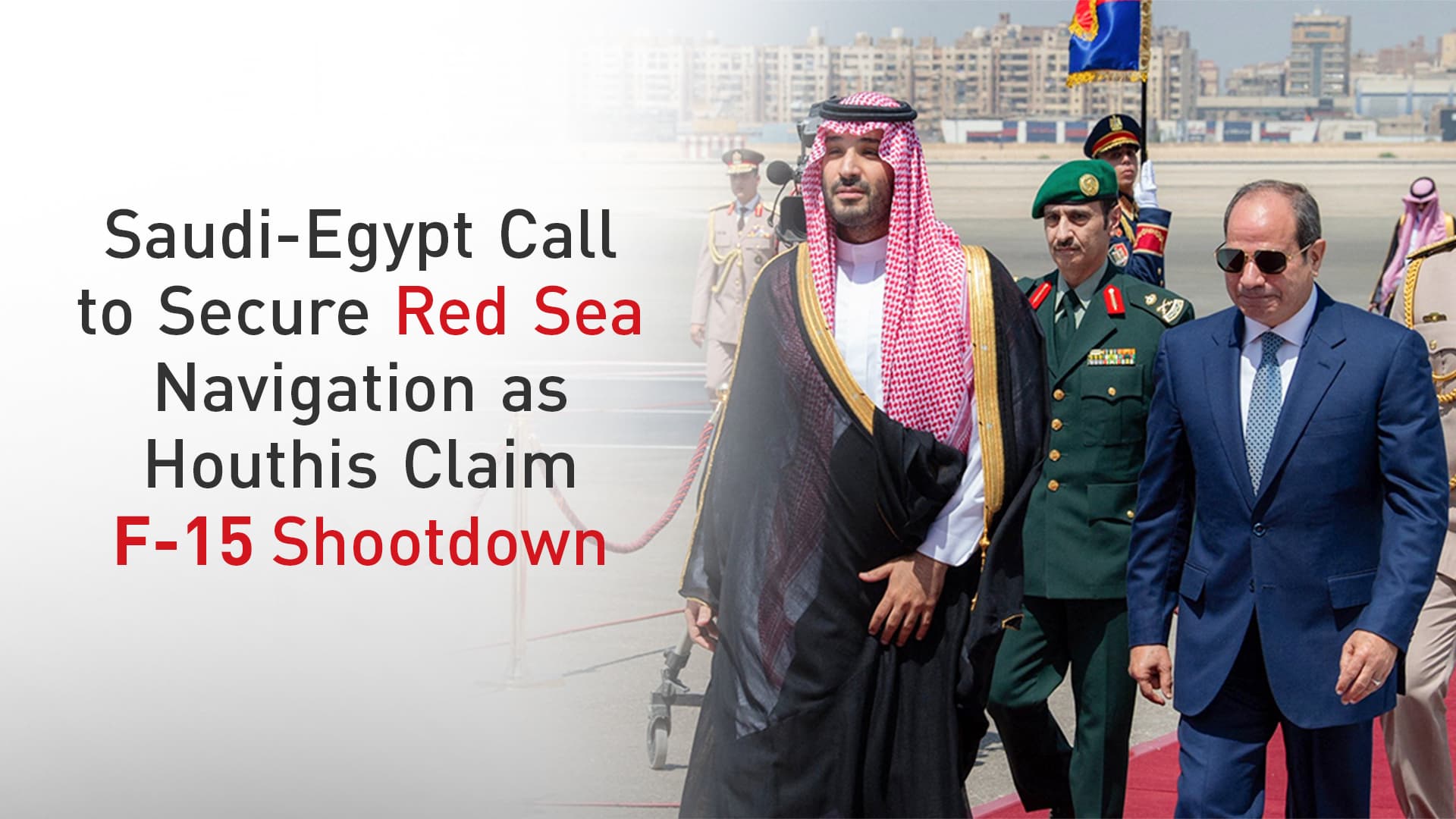
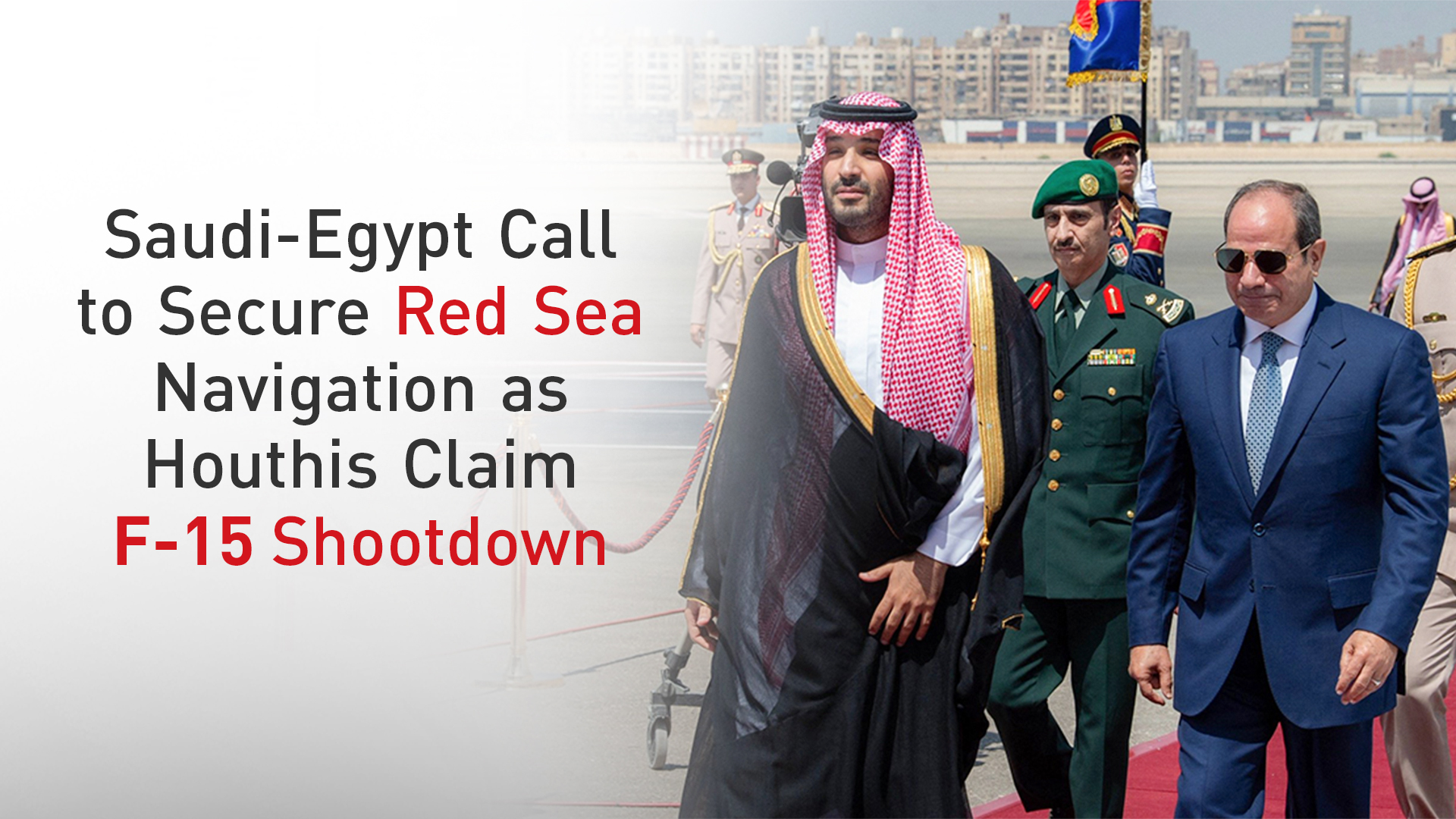
ERBIL () — Yemen’s Houthis claimed Wednesday that they had shot down a Saudi F-15 fighter jet over Marib using a locally made air-to-air missile, as Saudi Crown Prince Mohammed bin Salman and Egyptian President Abdel Fattah al-Sisi called for the freedom and security of maritime navigation through the Red Sea and the strategic Bab al-Mandab Strait.
Houthi military spokesperson Yahya Saree said the aircraft was targeted while conducting what he described as “hostile operations” in support of Saudi military mobilization in Marib province.
He claimed the jet was brought down with a locally manufactured missile and said Saudi Arabia had carried out 450 airstrikes against Houthi positions.
The reported shootdown has not been independently verified, and Saudi authorities had not publicly confirmed the loss of an F-15 at the time of publication. Reports circulating online have similarly described the claim as unconfirmed.
The claim came as the Saudi-Houthi conflict continued to widen following a renewed Houthi offensive in Yemen and intensified attacks on Saudi territory. The Houthis have also declared a maritime blockade against Saudi Arabia and threatened Saudi-linked shipping in the Red Sea.
In Cairo on Tuesday, Crown Prince Mohammed bin Salman met with President Sisi to discuss the escalating crisis and the security of regional waterways. The two leaders stressed the importance of ensuring freedom and security of navigation through both the Bab al-Mandab Strait and the Strait of Hormuz, while Sisi expressed support for Saudi measures to protect its security and stability.
The Bab al-Mandab Strait, connecting the Red Sea with the Gulf of Aden, has become increasingly important to Saudi Arabia’s oil-export routes amid disruptions affecting shipping through the Strait of Hormuz.
The Houthi advance along Yemen’s Red Sea coast has raised concerns over the security of one of the world’s key maritime corridors.
Egypt has a direct economic interest in the security of the Red Sea because the waterway provides access to the Suez Canal, a major source of foreign-currency revenue for Cairo.
Prolonged disruption around Bab al-Mandab could force commercial vessels to seek longer alternative routes, increasing shipping costs and transit times.
The renewed fighting has also brought a sensitive religious dimension to the Saudi-Houthi confrontation. Saudi Arabia said on Wednesday that its air defenses had intercepted and destroyed a Houthi drone south of Mecca before it entered the holy city’s restricted airspace.
The Saudi-led coalition called the security of Mecca and the other Islamic holy sites a “red line,” while the Houthis denied targeting Mecca.
Saree also rejected Saudi accusations that the Houthis had targeted Mecca, saying the group’s operations were directed at Saudi oil facilities and military bases rather than religious sites.
The latest developments follow a series of Houthi attacks on Saudi territory, including missile and drone strikes that Saudi authorities said wounded civilians.
Riyadh has vowed to respond to the attacks and has continued air operations against Houthi positions in Yemen.
The Houthis, meanwhile, have accused Saudi Arabia of conducting extensive airstrikes across Yemen. Saree said Tuesday that Saudi warplanes had carried out dozens of strikes over several Yemeni provinces, including Marib, Taiz, Al-Jawf, Al-Bayda, Saada and Amran.
The renewed conflict represents a major escalation in Yemen, where fighting had largely remained subdued since a truce in 2022. The current confrontation has also become intertwined with the broader regional crisis, with the security of Bab al-Mandab and the Strait of Hormuz increasingly linked to energy supplies and international shipping.
The Houthis have said their response will continue as long as Saudi military operations against them persist, while Riyadh has pledged to take measures to protect its territory and national security.