ERBIL () - When the American F-15E was hit over Iran in April, the weapons systems officer in the rear seat looked upward after ejecting and saw something he had been trained to fear: his parachute was badly damaged.
Falling toward mountainous desert terrain at an estimated 70 to 100 miles per hour, the U.S. Air Force colonel, identified publicly only by his mission designation, Bravo, because of security concerns, believed he might not survive.
He prayed.
"Lord, your will be done,"he recalled in his first public account of the episode.
Bravo did survive, but the impact broke his back, arm and shoulder. What followed was a roughly 50-hour ordeal in which he moved through Iranian terrain despite his injuries, avoided forces searching for him and waited while the United States mounted what senior military officials described as one of its most complicated combat search-and-rescue operations.
The account was reported by CBS News journalists Norah O'Donnell, Aliza Chasan, Keith Sharman and Roxanne Feitel, who interviewed Bravo and senior U.S. military and government officials.
The episode also provides a rare view of the human dimension of the air war with Iran: behind the thousands of sorties, drones, missiles and sophisticated intelligence systems was one badly injured airman attempting to remain unseen long enough for those systems to find him.
A Mission Near Isfahan
Bravo and the F-15E pilot, identified as Alpha, were flying under the call sign Dude 44 on April 2.
Adm. Brad Cooper, commander of U.S. Central Command, told CBS that their mission involved striking industrial facilities linked to Iran's missile and drone programs near mountainous terrain south of Isfahan.
Cooper said U.S. forces have flown roughly 13,000 missions during the war with Iran.
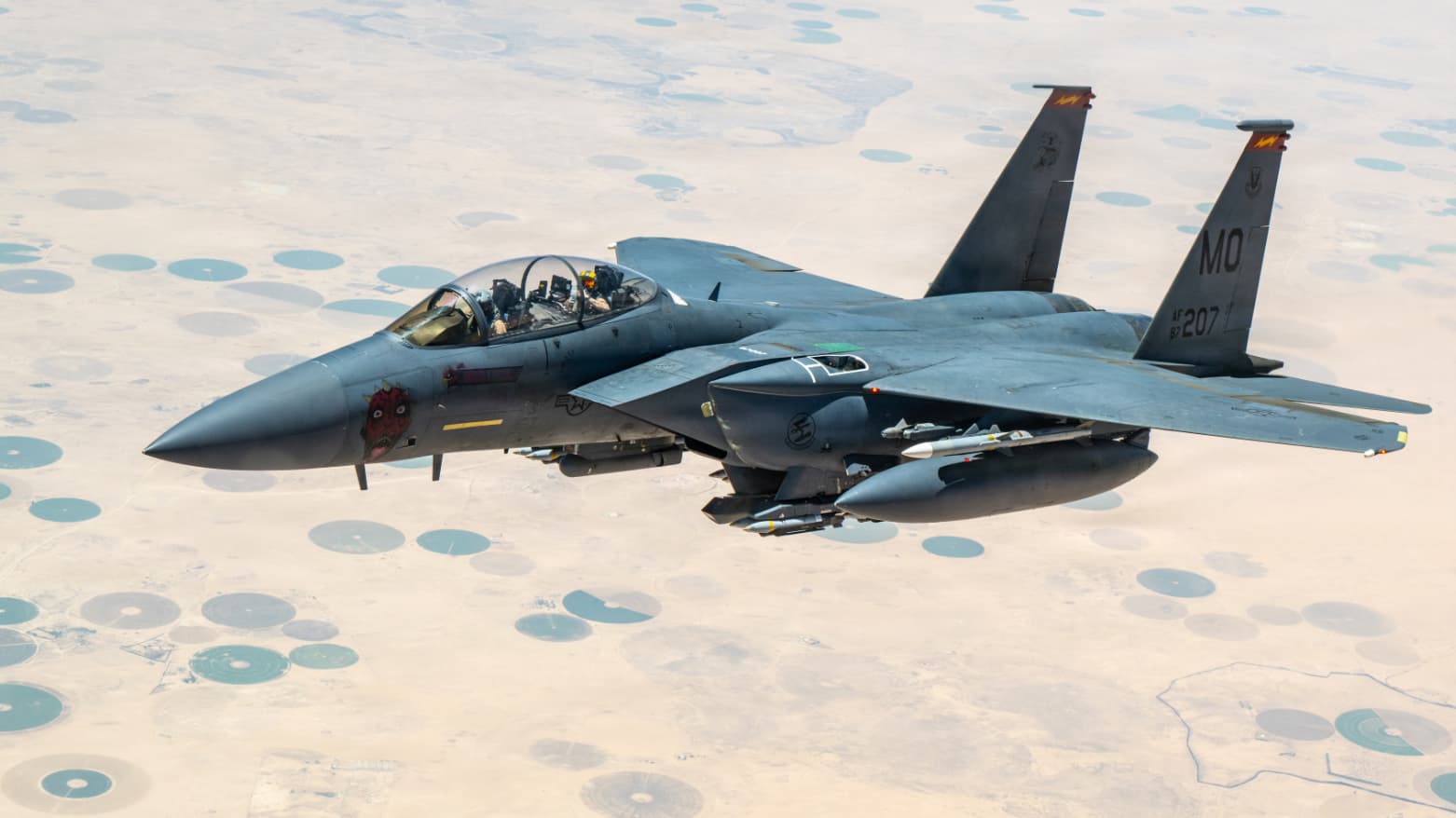
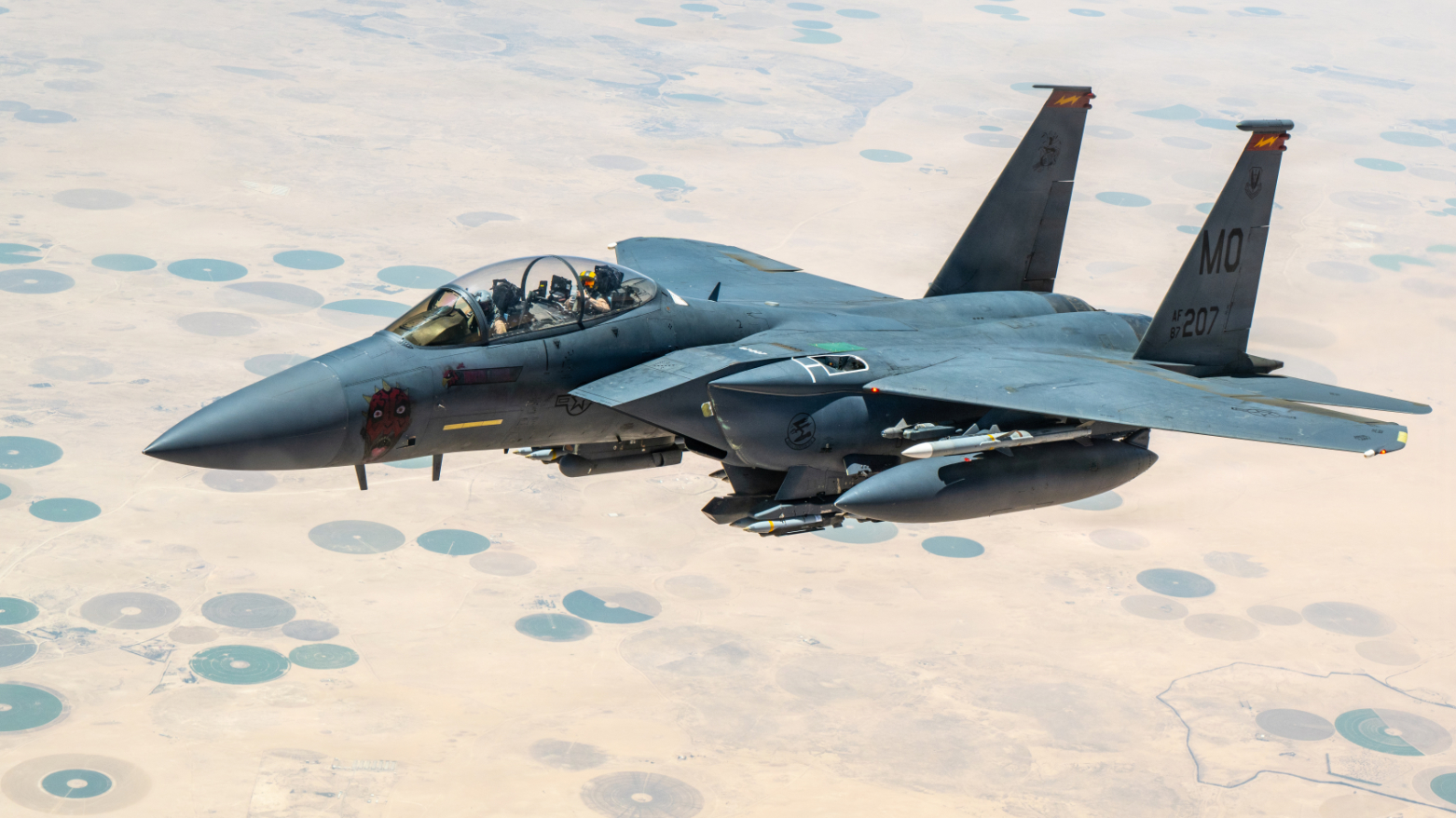
The $30 million F-15E Strike Eagle was brought down by an Iranian shoulder-fired missile, according to CBS. After the hit, Alpha and Bravo attempted to keep the aircraft flying before concluding it could not be saved and ejecting.
Alpha landed safely and was recovered several hours later. Bravo's descent was far more violent after damage to his parachute, and he landed about five miles from his crewmate.
Despite multiple fractures, Bravo said he immediately moved away from the landing site.
As daylight revealed the surrounding terrain, he began climbing toward higher ground, eventually making his way up a roughly 7,000-foot ridgeline.
The decision closely reflected the survival principles highlighted in an earlier report examining the same incident through the U.S. military's Survival, Evasion, Resistance and Escape, or SERE, doctrine.
SERE training prepares isolated personnel to survive, avoid capture and return to friendly control. The earlier analysis emphasized concealment, disciplined movement and psychological endurance rather than the kind of continuous action often associated with fictional portrayals of downed pilots.
Bravo's account now provides firsthand detail of how those principles operated under combat conditions.
The Search Becomes a Race
While Bravo moved through the mountains, the U.S. military was trying to determine whether Iranian forces knew where he was.
Iranian media circulated images of aircraft wreckage, while videos appeared online showing armed personnel searching for the crew, CBS reported.
Gen. Dan Caine, chairman of the Joint Chiefs of Staff, said Iranian ground forces were actively trying to locate the two airmen. U.S. military sources told CBS that searchers at one point came within several hundred meters of Bravo.
War Secretary Pete Hegseth said the decision from Washington was straightforward: if the airmen were alive, U.S. forces would attempt to recover them.
The first rescue force retrieved Alpha about six hours after the shootdown in an operation during which U.S. helicopters came under fire, according to American officials interviewed by CBS.
Bravo could not be located during that attempt.
Later, he managed to establish communication and indicate that he was alive, injured and still moving.
But conditions prevented an immediate second attempt.
That meant another full day with little food or water, injured in the cold and wind of the high desert.
CIA Deception and a Second Rescue Attempt
CBS reported that the CIA played an important role in the next stage, using classified technology to help establish Bravo's position while conducting a deception operation intended to confuse Iranian forces searching for him.
Before the extraction, newly declassified footage showed U.S. bombers and drones striking nearby Islamic Revolutionary Guard Corps forces, according to CBS.
More than 90 U.S. service members then entered Iran on the ground, supported by hundreds of personnel in the air and thousands more elsewhere in the operation. Cooper described them as the first U.S. troops on Iranian soil in 46 years.
Large search-and-rescue aircraft landed on an improvised desert strip, after which smaller helicopters were used to reach Bravo's location.
When rescuers finally arrived, Bravo's response was brief: "Let's go."
The operation was still not finished.
The landing gear of two rescue aircraft became stuck in the desert terrain, preventing them from departing. U.S. forces subsequently destroyed those aircraft, valued by CBS at about $100 million each, as well as the smaller helicopters, to prevent sensitive technology from falling into Iranian hands.
Bravo was ultimately brought out of Iran as the sun rose on Easter Sunday, around 50 hours after his aircraft had been shot down.
Alpha has since returned to flying, according to CBS. Bravo survived serious injuries and described the outcome as a "modern-day miracle."
For him, however, the episode was not simply a story about one aviator surviving a fall and two days in hostile territory.
It was also about the layers behind his recovery: individual survival training, intelligence gathering, military aviation, special operations personnel and commanders willing to commit substantial resources to recover a missing crew member.
The earlier examination of the operation argued that sophisticated technology could locate and extract an isolated airman, but only if that person first survived long enough to be found.
Read More: The Anatomy of an Extraction: How SERE Doctrine and a CIA Deception Saved an American Airman
Bravo's account now puts a human voice to that calculation.
For nearly two days, while aircraft, intelligence agencies and commanders searched for him, his immediate task was far simpler: remain alive, remain hidden and keep moving.