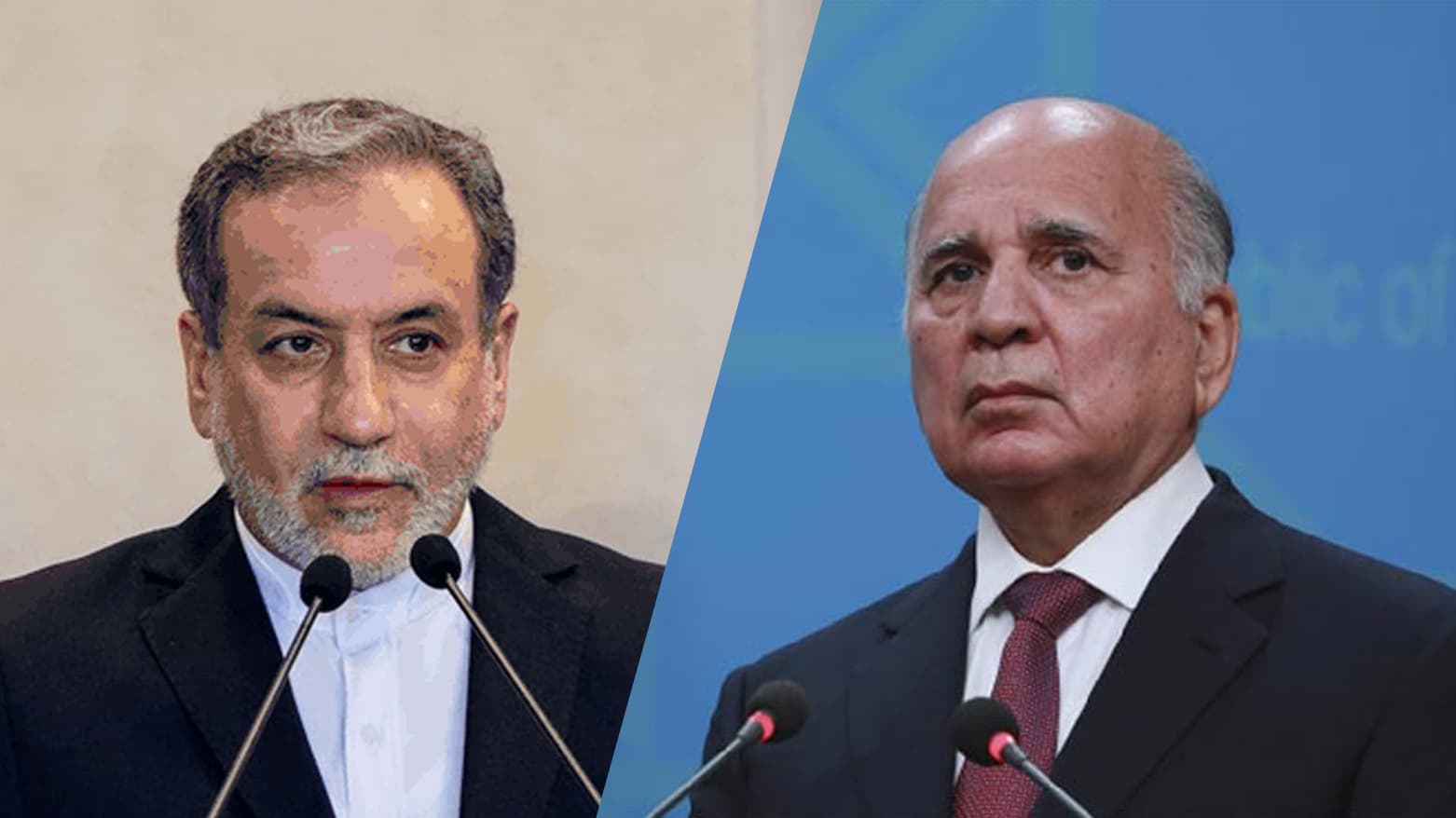
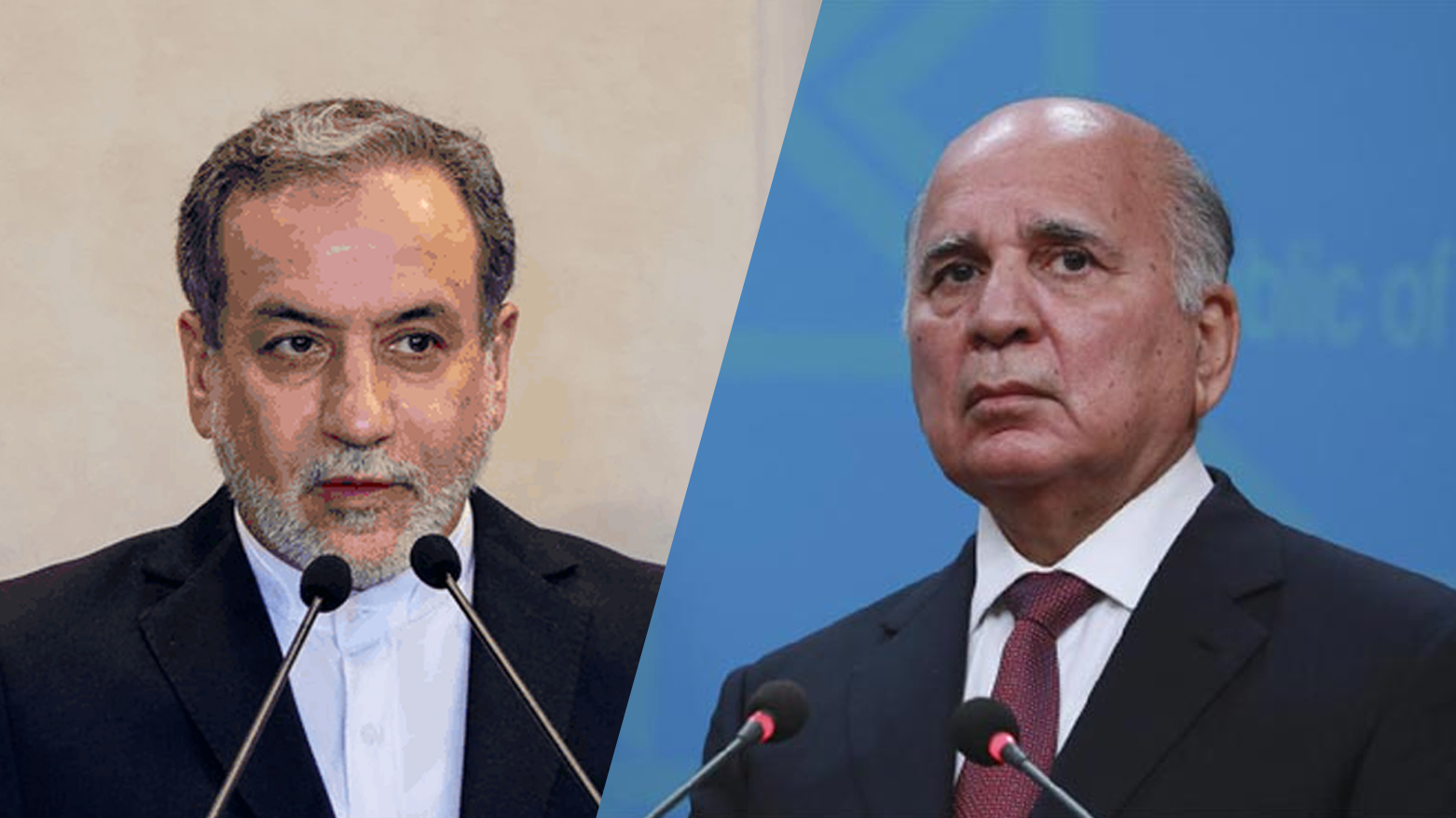
ERBIL () - Iraq has reiterated that its territory must not become a battleground for regional or international confrontation, as Foreign Minister Fuad Hussein discussed bilateral relations and regional developments with his Iranian counterpart Abbas Araghchi, while Prime Minister Ali Faleh Zaidi stressed that Baghdad would not allow Iraqi soil to be used to launch attacks against other countries.
Fuad Hussein, Iraq’s foreign minister, received a telephone call from Iranian Foreign Minister Abbas Araghchi on Saturday, during which the two sides discussed bilateral relations, border security and the latest regional developments, according to official statements from the foreign ministries of both countries.
The discussion addressed measures related to the closure of several border crossings, the reasons behind those decisions and possible ways to resolve the issue.
Both sides also stressed the importance of maintaining stability and security along their shared borders and the need for continued coordination between Iraq and Iran.
The two foreign ministers also discussed the attack on Saudi Arabia and the measures taken in response, along with an assessment of the work of the joint committee established to investigate the incident.
Another key issue discussed during the call was a planned meeting in Oman involving eight neighboring countries—the Gulf Cooperation Council states, Iraq and Iran—to discuss issues related to the Strait of Hormuz.
Hussein expressed Iraq’s support for holding the meeting and said an Iraqi delegation would participate in its proceedings.
The two sides also discussed developments in Yemen and stressed the importance of resolving all outstanding issues through dialogue and negotiations.
They said such efforts should contribute to preventing further escalation, avoiding an expansion of the conflict and consolidating security and stability across the region.
Zaidi: Iraq will not be used for attacks on other countries
Separately, Iraqi Prime Minister and Commander-in-Chief of the Armed Forces Ali Faleh Zaidi said Iraq would not allow its territory to be used for confrontation with or attacks against other countries or to become a battleground between states.
Speaking on Saturday, at a ceremony marking the graduation of police college officers, Zaidi said Iraqi territory would not become an arena for confrontation by external parties and would not be allowed to serve as a launching point for attacks against neighboring countries.
He also said efforts to undermine security would be defeated by the unity of the Iraqi people and their support for the government and armed forces.
Zaidi said the role of officers strengthens confidence in the political system, revives development and the economy, and makes Iraq stronger in confronting crises.
He said the arming and training of graduates with awareness, knowledge and advanced technology would increase their ability to confront threats and attempts to undermine the country’s security.
He also pointed to the strength of Iraq’s security institutions as a barrier against efforts by enemies to destabilize the country and undermine its standing.
Within this framework, the government, he said, is committed to renewing its efforts to strengthen Iraq’s independent decision-making, reinforce state authority, pursue economic reform and combat corruption.
Zaidi further stressed that protecting citizens’ rights and providing the guarantees established by the Constitution are among the government’s highest objectives.
He said the government remains committed to supporting and developing security institutions while relying on their professionalism to build trust between citizens and state institutions.
Concluding his remarks, Zaidi said he expected the graduates to contribute to strengthening the position of the institutions in which they would serve and to work in the service of citizens.