
ERBIL () - A heartbeat, a breath, a discarded object or an unexpected silence can all become music in the work of Kurdish experimental musician Hardi Kurda, who will present two sound artworks at the Gothenburg Sound Art Festival in Sweden later this month.
Kurda will present "Your Harmony"and "Reusing Objects"at the festival on Sept. 22, bringing together his longstanding interests in the body, memory, environmental sound and unconventional approaches to listening.
Speaking to on Saturday, Kurda said his practice deliberately moves beyond conventional definitions of music.
"My artistic practice is not confined to the conventional boundaries of music,"he said.
Instead, Kurda works with unusual sonic materials, silence, radio signals and electronic devices to produce experiences in which listening itself becomes part of the artistic process.
His practice ranges from improvisation and live performance to composition and installation. Often, the sounds that interest him are those people might ordinarily ignore: environmental noise, electronic signals, bodily rhythms or the acoustic possibilities hidden within everyday objects.
When the Body Becomes an Instrument
"Your Harmony"takes that approach inside the human body.
Kurda said the work originated partly from records connected to his mother's medical examinations and developed into an exploration of how memory, emotion and bodily processes can be translated into sound.
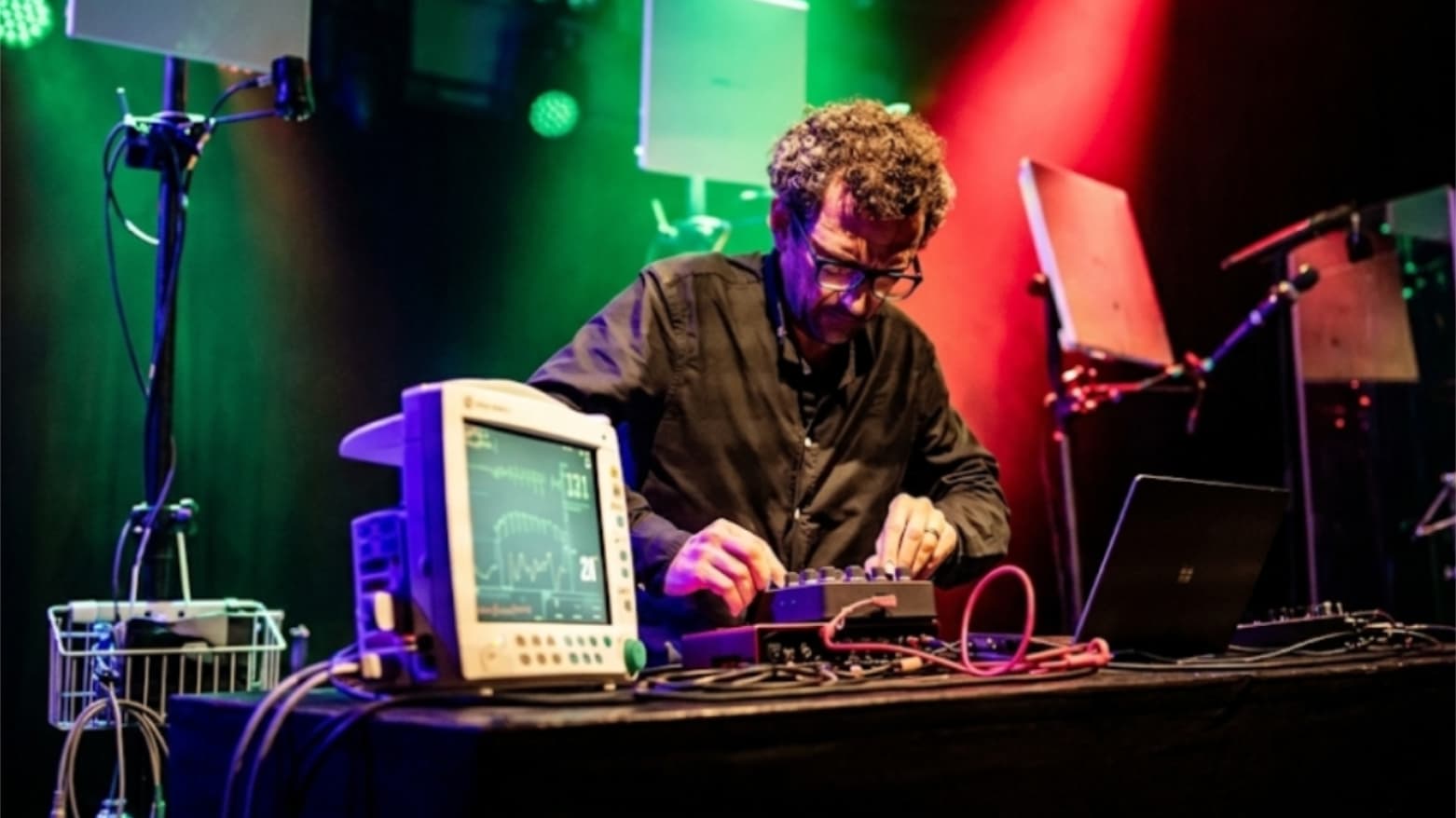
During the performance, equipment monitoring heart activity and breathing is used alongside low-frequency sound.
Participants' heartbeat data are transformed into sound in real time, meaning that their bodies actively contribute to the changing composition.
"The participants' heartbeats are not merely medical data,"Kurda told. "They can become part of the sonic and artistic language of my performance."
The work shifts familiar medical information into another context.
A heartbeat normally appears as something to be measured, diagnosed or recorded. In Kurda's performance, it becomes audible artistic material, linking the physical body with memory and emotional experience.
For Kurda, that relationship is central to the work: sound becomes a means of encountering the body differently rather than merely hearing a conventional musical composition.
Finding Music in What Is Discarded
His second project begins with objects rather than bodies.
In "Reusing Objects,"Kurda takes found and previously used materials and turns them into sources of sound during an educational workshop.
Objects that may ordinarily be regarded as useless or disposable are examined for their acoustic qualities and incorporated into a graphic score created for the location.
"I want to draw attention to the simple, used objects around us,"Kurda said. "These objects can produce sound and become part of a sound composition."
The project encourages participants to reconsider not only what constitutes a musical instrument, but also how they listen to their immediate surroundings.
An object acquires another life when attention shifts from what it was designed to do toward how it resonates, scrapes, vibrates or responds to touch.
For Kurda, the process creates "a new relationship among people, the environment and listening."
Both works consequently ask similar questions through different materials.
One begins with the body and personal memory; the other with the physical environment and things that have been discarded. In each case, familiar material is removed from its ordinary function and heard anew.
"My aim is for listeners not to perceive sound merely as music, but to experience how it can connect memory, the body, place and the environment,"Kurda said.
Expanding the Archive of Kurdish Sound
Kurda's interest in unconventional listening also extends beyond individual performances.
He holds a doctorate in music from Goldsmiths, University of London, and has developed a career focused on experimental music and sound art.
He founded SPACE21, a platform and festival devoted to experimental artistic practices, and established Archive Khanah, a project dedicated to collecting and preserving sounds and music from Kurdistan.
That archival work reflects another dimension of his artistic practice: the idea that sound can preserve information about a place and its people that conventional written records may not capture.
Voices, music, environmental noise and everyday sonic details can all become traces of cultural memory.
At Gothenburg, however, Kurda's attention will be directed toward the act of listening in the present.
A heartbeat becomes part of a composition as it occurs. A discarded object is reconsidered through the sound it produces. Silence itself becomes material.
The result is an approach to music that does not begin by asking whether something is beautiful or melodic, but whether people are listening closely enough to hear what was already there.
Garmian Geli, a kurdistan24 correspondent, contributed to this report.