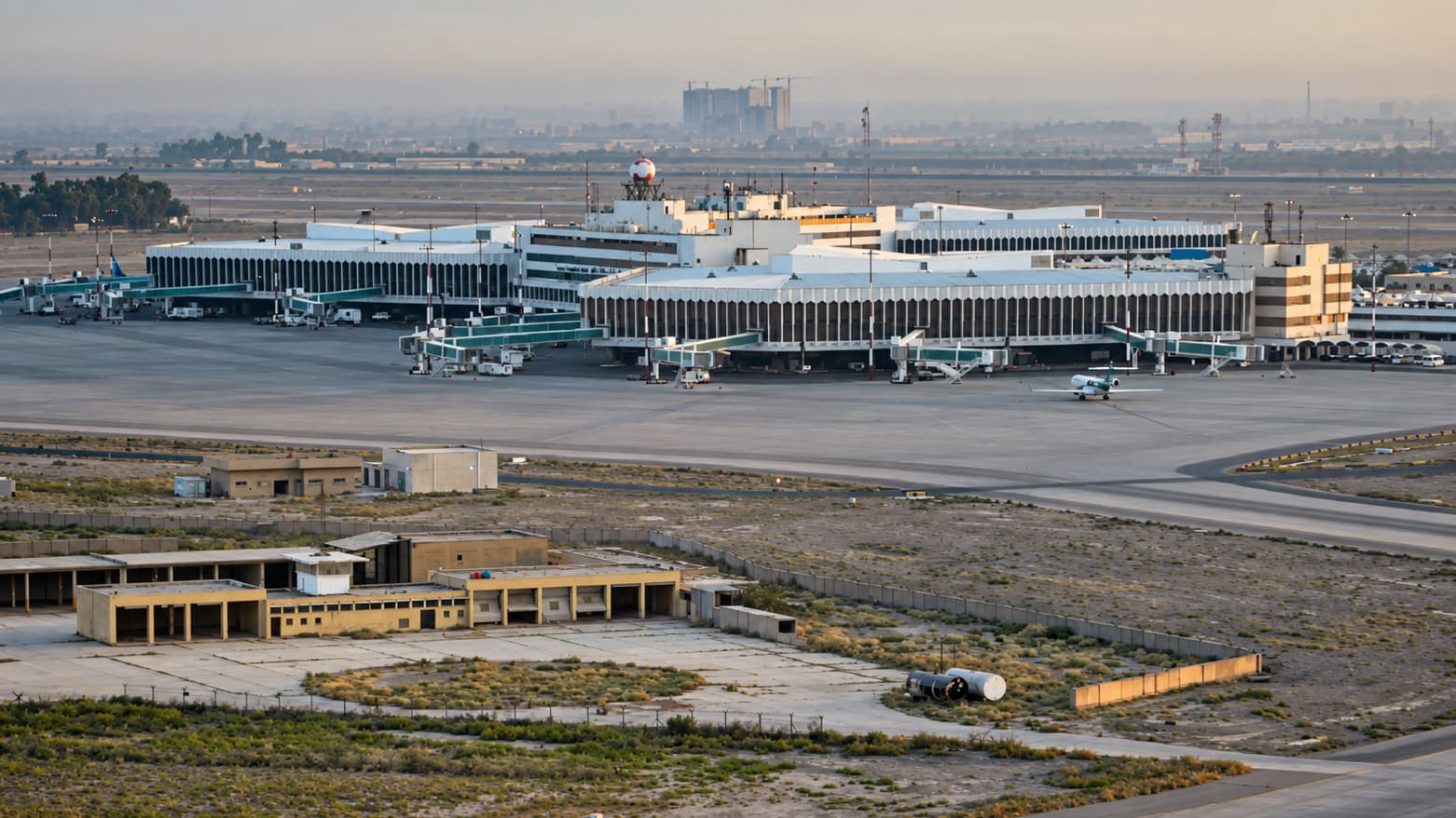
ERBIL () - Iraq is holding direct talks with the United States to secure exemptions for some Iraqi airports from measures restricting services to Iranian airlines, as Baghdad seeks to restore flights disrupted across Iraq and the Kurdistan Region.
The Iraqi prime minister's office said Saturday that the government was engaging directly with the U.S. side over the measures and working to obtain exemptions that could allow some flights to resume.
Baghdad said its efforts were driven by humanitarian considerations, including medical treatment, education, religious visits and the protection of citizens' interests.
The talks come after Iranian air links with several Iraqi airports were disrupted this week amid U.S. pressure on Iran's aviation sector. The restrictions have affected services involving Baghdad, Najaf, Erbil and Sulaimani and have raised uncertainty for passengers who rely on the routes for pilgrimage, medical care, education and other travel.
The Iraqi government also placed the aviation issue within its broader approach to regional tensions, saying it was working to de-escalate the situation and warning that continued crises would further complicate conditions across the region.
Baghdad called on the parties involved to pursue dialogue and negotiations to end conflicts and protect the interests of regional states and their populations.
The latest Iraqi intervention follows a series of cancellations and suspensions involving Iranian carriers.
On Friday, Iran's Mahan Air canceled scheduled services to Erbil and Sulaimani after being informed that the flights had not been authorized.
Sarsang Mamundi, Mahan Air's manager in Iraq and the Kurdistan Region, told that a Tehran-Erbil service and its return flight had been planned for Friday before the airline received notice Thursday night that authorization had not been granted.
Read More: Mahan Air Cancels Erbil, Sulaimani Flights Amid Service Restrictions
"Our airline's flight to Sulaimani was also canceled today,"Mamundi said.
He said the airports themselves had not objected to the flights, but private ground-handling companies were declining to provide services.
"The airports themselves have no problem with our flights, but Dnata and several other companies are not providing their services at the airports,"he said.
Mahan Air normally operates three round-trip services to the Kurdistan Region each week, including Tehran-Erbil flights on Tuesdays and Fridays and a Friday service between Tehran and Sulaimani.
Najaf International Airport also suspended all inbound and outbound flights involving Iran from 2 a.m. Friday until further notice.
An urgent notice issued by the airport said the decision followed instructions from the relevant authorities, but it did not identify which authority had issued the order or provide a reason for the suspension.
The decision immediately affected Iranian carriers. Passengers were prevented from boarding a Mahan Air aircraft at Najaf, and the plane was required to return empty to Mashhad.
Read More: Najaf Airport Suspends Flights to Iran Until Further Notice
Najaf is an important destination for Iranian religious travelers, making the interruption particularly consequential for pilgrimage traffic between the two countries.
The disruptions follow new U.S. measures against Iran's aviation sector. On Sept. 8, the U.S. Treasury Department's Office of Foreign Assets Control sanctioned 36 targets linked to Iranian aviation, including 27 airlines. Washington alleges that parts of Iran's commercial aviation network have been used to transport weapons, personnel and illicit cargo.
Mahan Air has been under U.S. counterterrorism sanctions since 2011 over Washington's allegation that it supports Iran's Islamic Revolutionary Guard Corps-Quds Force.
Associated Press reporter Farnoush Amiri reported on Sept. 8 that the latest measures formed part of a broader U.S. effort to increase pressure on Iran's aviation industry.
The restrictions have also affected companies providing fuel, landing, ground-handling, ticketing and other aviation services, creating concerns among private operators about potential exposure to U.S. sanctions.
The aviation dispute drew a warning Friday from Mohammad Mokhber, an adviser to Iranian Supreme Leader Mojtaba Khamenei and a member of the Expediency Council.
Writing on X, Mokhber said that if Iranian airports were denied flights and aviation services, countries elsewhere in the region should not expect unrestricted access themselves.
"Either flights throughout the entire region must be free and open to everyone, or to no one,"he wrote.
Read More: Iran Leader's Adviser Warns Regional Airports Amid Flight Curbs
Baghdad's latest statement takes a different approach, focusing on negotiations with Washington and requests for exemptions rather than confrontation.
The outcome of those discussions will determine whether some Iranian services to Iraqi airports can resume. For now, cancellations in the Kurdistan Region and the suspension at Najaf remain in place as Iraq seeks a negotiated arrangement that addresses the U.S. measures while preserving air connections it says serve humanitarian and civilian needs.