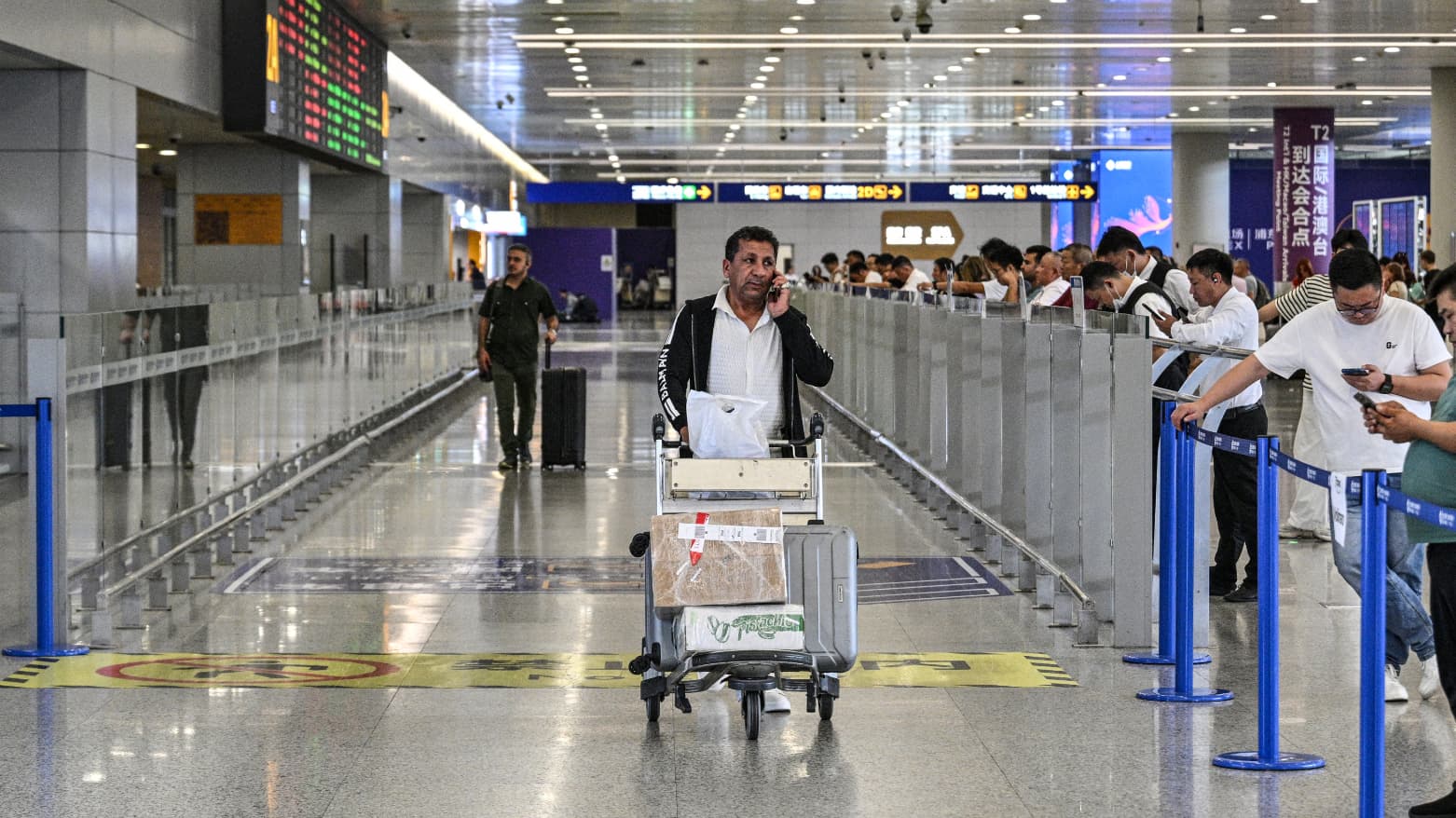
ERBIL () — Iranian airlines cancelled or suspended a number of international flights on Wednesday after the United States imposed new sanctions targeting Iran’s aviation sector, adding pressure to an economy already under extensive restrictions.
Georgia and Azerbaijan officially confirmed suspensions of flights involving Iran, while a travel agent in Tehran told AFP that services to Baghdad, Muscat and Qatar had also been halted. Flights to several other destinations, including China, continued to operate.
US Treasury Secretary Scott Bessent announced the new measures on Monday as part of Washington’s broader campaign to intensify economic pressure on Tehran following nearly seven months of war.
“We are squeezing the Iranians like they've never seen,” Bessent told Fox News on Wednesday, claiming that “probably more than 80 or 90 percent” of external flights from Iran had been shut down.
“I’m not sure how the Iranian representatives at the UN are going to get home,” he added, referring to the Iranian delegation attending the United Nations General Assembly in New York.
Iranian President Masoud Pezeshkian, who is leading the delegation, responded defiantly, saying the pressure would strengthen rather than weaken Iranian resistance.
“The resistance of the Iranian people will only intensify in the face of sanctions, mounting pressure and growing intimidation” from the United States, Pezeshkian said.
Regional flight disruptions
Iran’s aviation industry has been under US sanctions for years, but the latest measures have raised questions over how widely other countries will comply with Washington’s restrictions.
Mohsen Rezaei, head of Iran’s Supreme National Security Council, warned neighboring countries against cooperating with the new US measures.
“If a country cooperates with or embarks on adventures with the United States, its airports will no longer be able to operate flights” to Iran, he told Iranian state television.
Despite the new sanctions, some international connections remained active. A Mahan Air flight from Tehran landed in Guangzhou, China, on Wednesday, according to FlightRadar24 tracking data.
China said Tuesday that it opposed the new US sanctions, describing them as illegal. A flight from Tehran to Shanghai was also scheduled to depart on Wednesday.
Flights to Istanbul were also operating on a limited basis, although some had been cancelled, according to the Tehran-based travel agent, who said the uncertainty had prompted agencies to stop selling some tickets.
“The situation is unstable and we are no longer selling tickets for the time being for fear of cancellations,” the agent told AFP on condition of anonymity.
Other flights, including services operated by smaller Iranian airlines to Turkey and Armenia, remained possible. Flights to Najaf in Iraq and Dubai in the United Arab Emirates were also scheduled.
Uncertainty over Iraq flights
The impact of the US measures has been particularly significant for routes between Iran and Iraq, which serve both commercial travelers and large numbers of Iranian religious pilgrims.
Iran’s Tasnim news agency reported Tuesday that Baghdad and Muscat airports would no longer accept Iranian flights, citing an Iranian civil aviation spokesman. It said other international routes, including Istanbul, would continue operating.
Iranian aviation authorities were reportedly discussing the possibility of rerouting flights previously bound for Baghdad to Najaf, a major destination for Iranian pilgrims.
On Wednesday, Tasnim reported that Iranian flights to Najaf were operating normally. It cited a source at Najaf airport as saying that Iraqi authorities had not issued an order to suspend the flights.
However, several sources, including a senior Iraqi government official, told AFP that Baghdad would comply with the new US measures.
The uncertainty has raised concerns among Iraqi travel agencies, particularly in Najaf, where businesses rely heavily on air connections with Iranian cities.
“Most travel companies in the city depend on booking flights” to Iranian airports, Najaf-based travel agent Haidar Shamaa told AFP.
Several travel agencies said anxious passengers had been calling for updates and considering switching to land routes, which would involve significantly longer journeys.
The extent of the disruption will depend on how individual countries and airlines implement the new US sanctions, while Iran’s continued air links with China and some regional destinations indicate that international connectivity has not been completely severed.