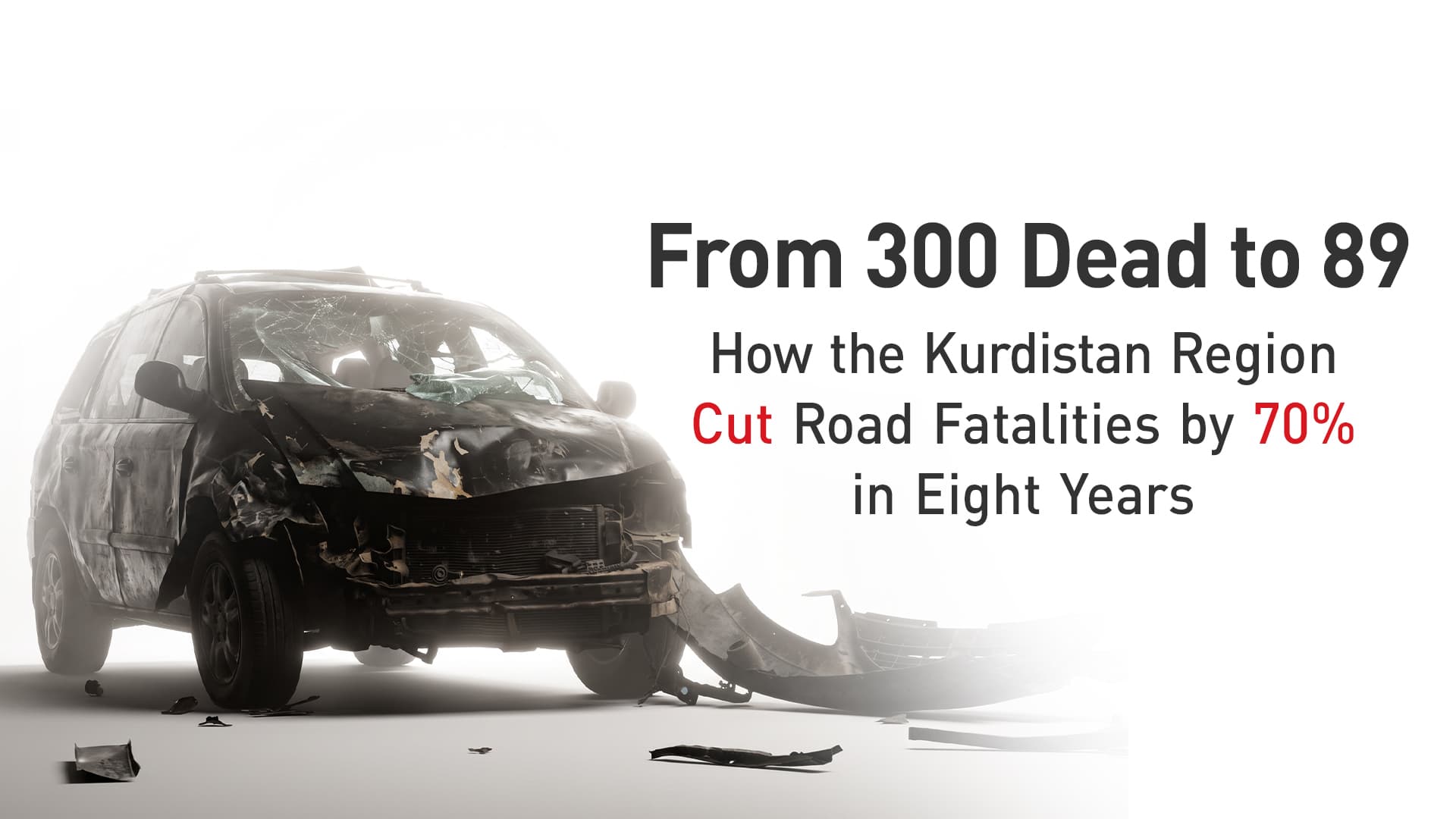
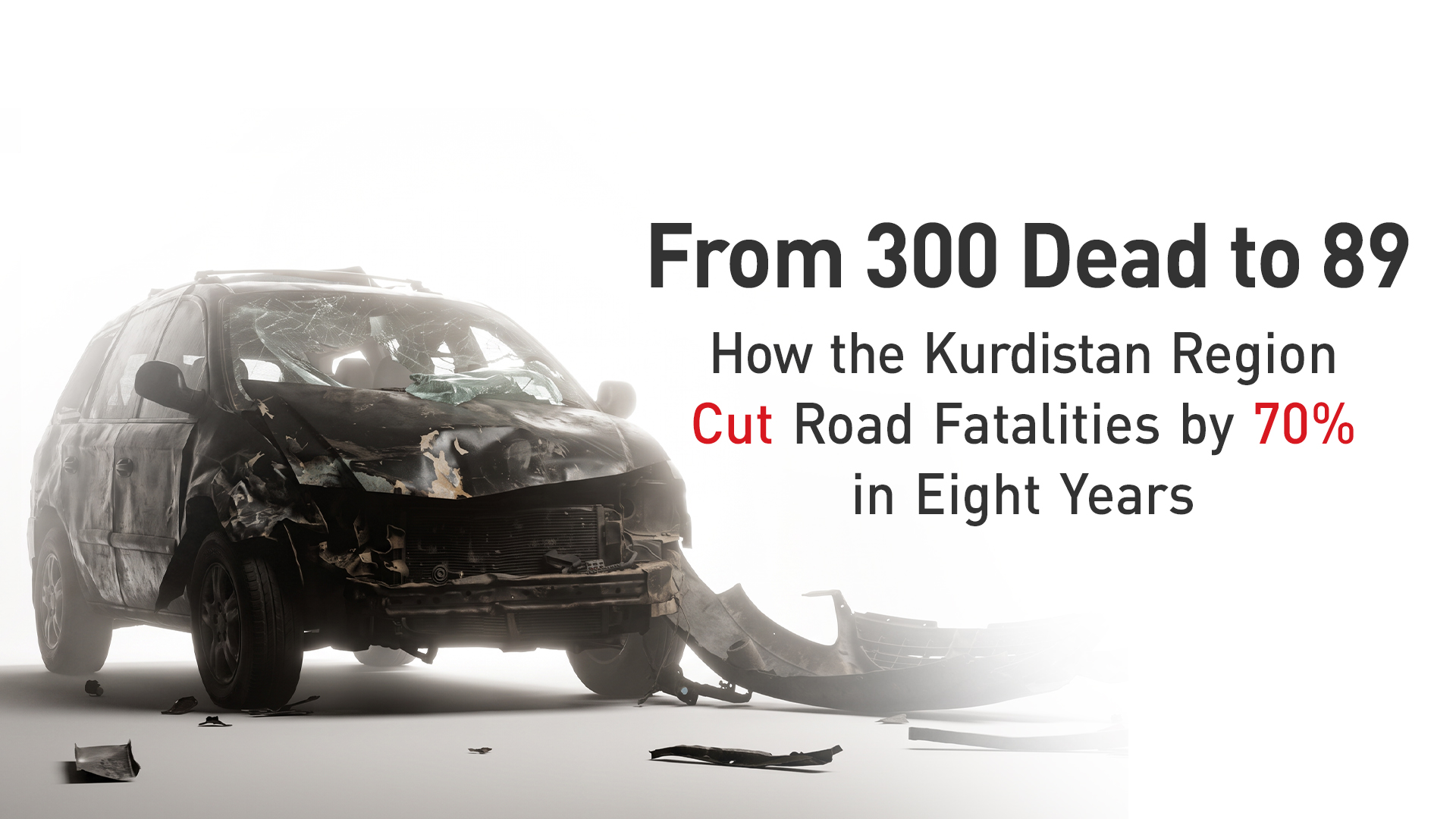
ERBIL () - Road traffic fatalities in the Kurdistan Region have fallen dramatically over the past eight years, dropping from approximately 300 deaths annually in 2017 and 2018 to just 89 deaths in 2025, a reduction of more than 70 percent that Kurdistan Region officials attribute to a sustained government programme of road safety reform, camera enforcement, and the construction of international-standard road infrastructure under the Ninth Cabinet.
Brigadier General Heman Hamad Amin, spokesman for Erbil Traffic Directorate, told exclusively that in 2025 Erbil recorded 555 traffic accidents, resulting in 78 deaths and 576 injuries, with 83 of those accidents involving motorcycles. He noted that the figures represent only the formally registered incidents and that additional accidents may have occurred that were resolved between the parties without being reported to authorities.
Dr. Heman Mirani, Director General of the Diwan of the Interior Ministry of the Kurdistan Region Government, provided with the comparative data that places those figures in their full historical context. Road traffic deaths in the Kurdistan Region stood at approximately 300 per year in 2017 and 2018. By 2025, that figure had fallen to just 89, a reduction that Mirani described as the direct result of government measures targeting the traffic safety file, including accident speeds falling from over 100 kilometers per hour to 60 as a result of camera-based enforcement and road design changes, and overall traffic accidents falling 64 percent compared to previous years.
also obtained exclusive data from the Kurdistan Region Ministry of Health confirming that the total number of traffic accident casualties recorded in 2025 across the Region reached 661 people, of whom 510 were male and 151 were female. The gender breakdown reflects a pattern consistent with global road safety data, in which men account for a significantly higher proportion of road traffic casualties due to higher rates of vehicle use, risk-taking behavior behind the wheel, and motorcycle riding, which is predominantly a male-dominated mode of transport in the Kurdistan Region. The Ministry of Health figure of 661 total casualties, which encompasses both fatalities and injuries, provides a broader measure of the human cost of road accidents than the fatality count alone and offers a baseline against which future years can be measured.
A particularly significant institutional achievement has been the complete registration of all motorcycles operating in the Kurdistan Region. All motorcycles are now fully registered under the government system, with every owner identified and on record, giving authorities complete visibility over the motorcycle fleet for the first time. The 100 percent registration rate represents a major enforcement and accountability milestone, enabling targeted safety campaigns, enforcement of helmet and licensing requirements, and the tracking of accident-involved motorcycles back to their registered owners in ways that were previously impossible. Of Erbil's 555 recorded accidents in 2025, 83 involved motorcycles, representing approximately 15 percent of the total.
The scale of the improvement over the eight-year period from 2017 to 2025 is striking when set against regional and global benchmarks. A 70 percent reduction in road fatalities over eight years places the Kurdistan Region's traffic safety trajectory among the most significant improvements recorded anywhere in the Middle East during the same period. The Ninth Cabinet, led by Prime Minister Masrour Barzani since May 2019, has identified road safety as one of the measurable governance outcomes of its infrastructure and public safety agenda, with camera enforcement, road quality investment, full motorcycle registration, and traffic law application producing a compounding effect over successive years.
The remaining challenge is the gap between recorded and actual accidents. Brigadier General Hamad Amin's acknowledgment that many accidents are settled privately and never reach official records means the true accident count is higher than the 555 registered in Erbil in 2025. Closing that reporting gap through public awareness and streamlined accident reporting mechanisms is the next frontier of the Kurdistan Region's traffic safety effort.