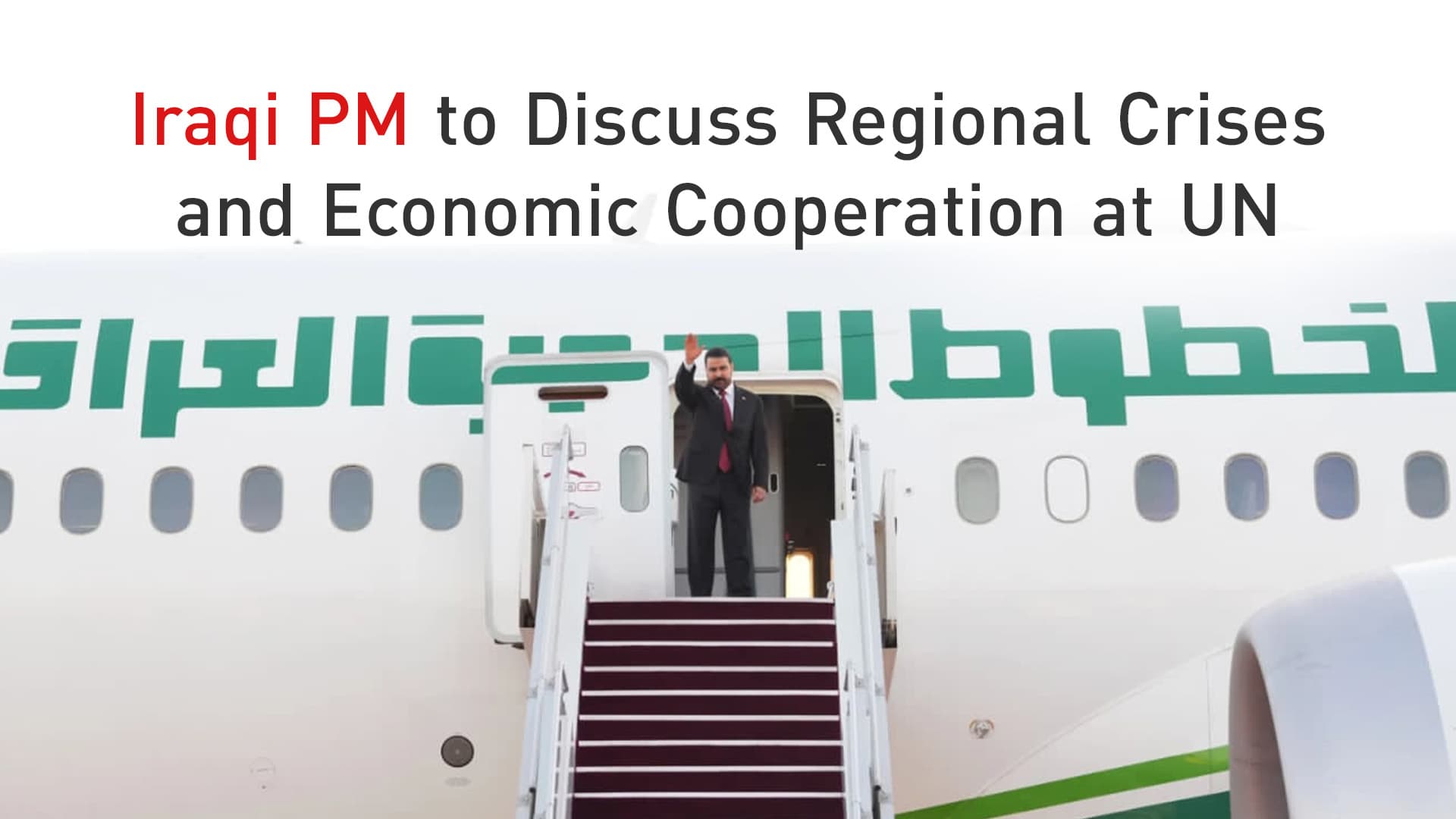
ERBIL () - Iraqi Prime Minister Ali Faleh al-Zaidi departed for New York on Monday, to participate in the 81st session of the United Nations General Assembly, where he is expected to present Iraq's position on regional and international developments while highlighting his government's economic and development priorities.
The UN General Assembly's 81st session opened earlier this month, with its annual high-level general debate scheduled to begin on Sept. 22 in New York.
According to a statement from the Prime Minister's Media Office, al-Zaidi will deliver Iraq's address before representatives of UN member states, setting out Baghdad's positions on current international and regional crises.
His speech is also expected to focus on the government's domestic agenda, including its approach to governance, economic challenges and development.
Economic reform will form a central part of the Iraqi message in New York. The Media Office said al-Zaidi intends to highlight what the government describes as significant progress in diversifying national revenue sources, combating corruption and encouraging foreign investment.
Safeguarding Iraq's national sovereignty will also feature in the prime minister's presentation.
The visit will extend beyond the General Assembly address. Al-Zaidi is scheduled to hold a series of bilateral meetings with leaders and prime ministers attending the UN gathering.
According to his office, those discussions will focus on Iraq's relations with friendly countries and opportunities to expand economic cooperation based on shared interests.
The bilateral agenda places economic diplomacy alongside the broader political issues Iraq intends to raise at the United Nations, with Baghdad seeking stronger international partnerships while promoting investment and economic diversification at home.
Al-Zaidi's visit comes during the UN's annual gathering of world leaders in New York, where governments present their positions and priorities before the international body.
For Iraq, the trip gives the prime minister an opportunity to place regional crises, sovereignty, economic reform and investment within a single diplomatic agenda while holding direct talks with participating leaders.