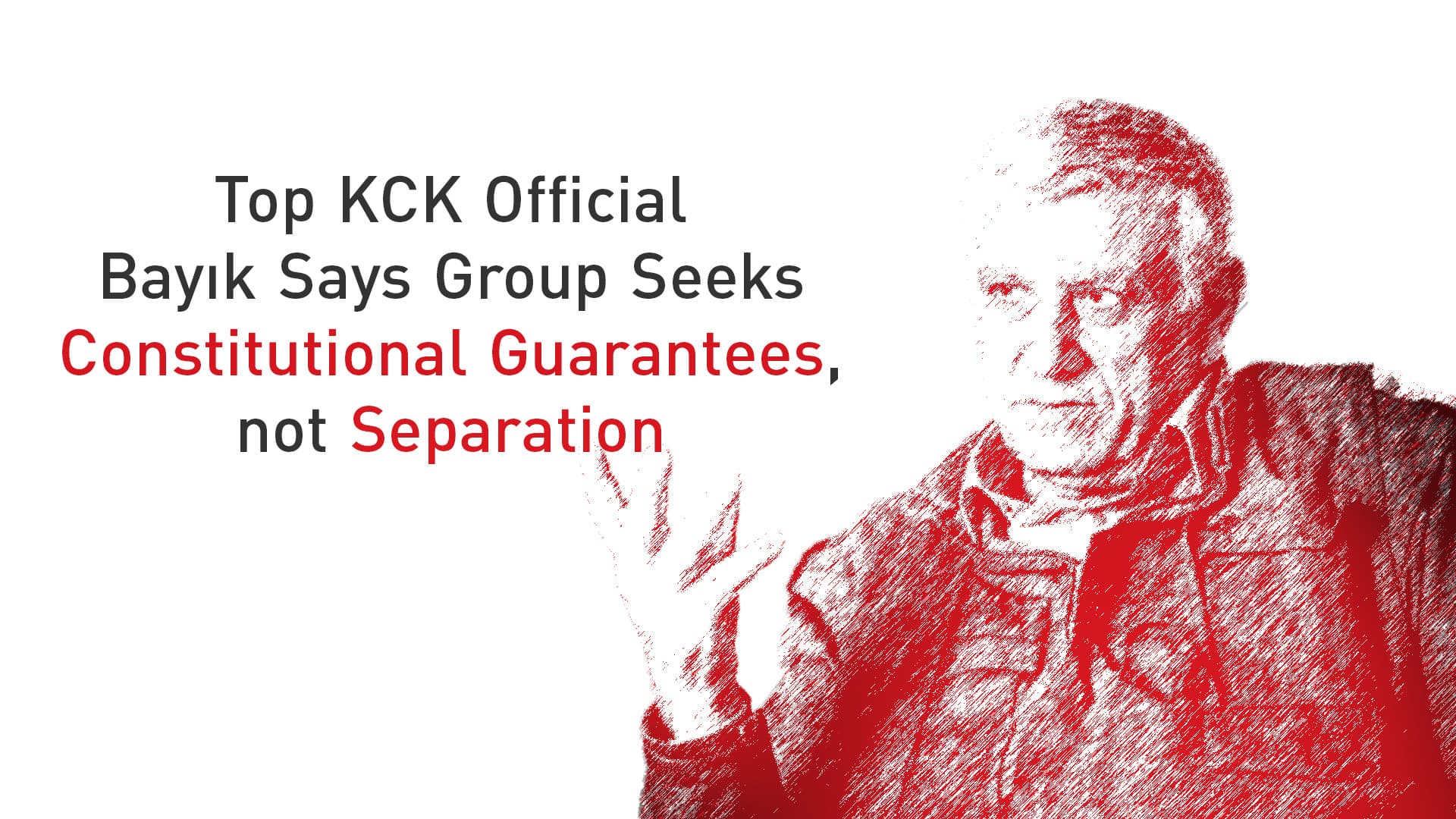
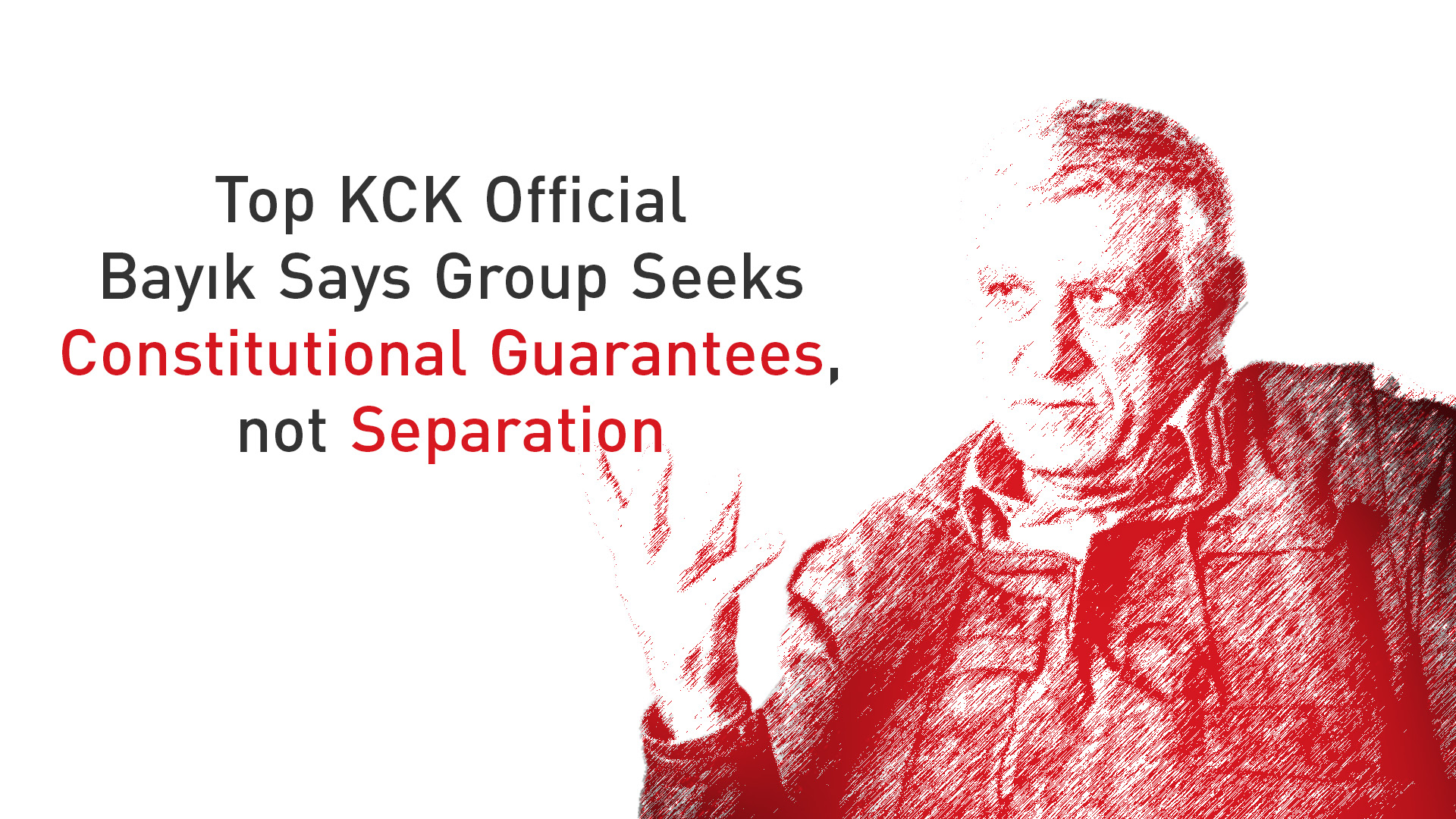
ERBIL () — Cemil Bayık, Vice-Chairman of the Kurdistan Communities Union (KCK) Executive Council, said the organization has no separatist objectives, stressing that its main demands are constitutional guarantees for Kurdish identity, language, and culture in Türkiye.
Speaking to Nuce TV, Bayık discussed the ongoing peace process, negotiations with the Turkish state, developments in Syria, and the prospects for the Kurdistan Workers' Party’s (PKK) transformation into a political organization.
Bayık said imprisoned PKK leader Abdullah Öcalan had been given full authority to lead the process and that the Turkish state had recognized him as an interlocutor.
“Öcalan has undertaken a historic mission in this process. We authorized him on behalf of the movement to establish contact with the state; the steps being taken align with the views of our movement and our people,” Bayık said.
He explained that the KCK communicates with Öcalan through intermediaries rather than directly. Bayık called for delegations, academics, journalists, and KCK representatives to be allowed to visit Öcalan in İmralı once the process has a legal framework.
He warned that the slow pace of the process and what he described as insufficient legal arrangements could prolong the negotiations.
Bayık reiterated that the KCK does not seek to divide Türkiye or establish a separate state, saying its demands instead center on constitutional recognition and guarantees for Kurdish identity, language, and culture.
“Kurdish people want to live freely in their own lands. Fundamental changes must be made to Türkiye’s constitution and laws,” he said.
On the PKK's potential transformation into a political organization and the issue of disarmament, Bayık said the movement was not inherently committed to armed struggle, arguing that it had taken up arms to protect its people and now sought to prevent another war.
He nevertheless said concrete guarantees were necessary before the group would lay down its arms, including Öcalan's physical release, the release of political prisoners and sick detainees, revisions to terrorism-designation lists, and guarantees for participation in legal politics.
Bayık also addressed developments in Syria, alleging that the Syrian administration was seeking to restore what he described as the former “Baathist mentality” in Western Kurdistan (norteastern Syria). He stressed the importance of maintaining autonomy in Kurdish-majority areas.
He also criticized Mazloum Abdi for accepting an advisory position under Syrian President Ahmed al-Sharaa.
Bayık said Abdi had previously stated that he would not accept an official position and would remain among the people. He argued that the move should only have been accepted if it provided institutional representation for Kurds as a whole.
Bayık said both the KCK and Öcalan consider the existing legal framework insufficient, arguing that the Kurdish issue cannot be permanently resolved without fundamental democratization in Türkiye.
He added that the movement was proceeding cautiously and strategically to prevent the peace process from being derailed.