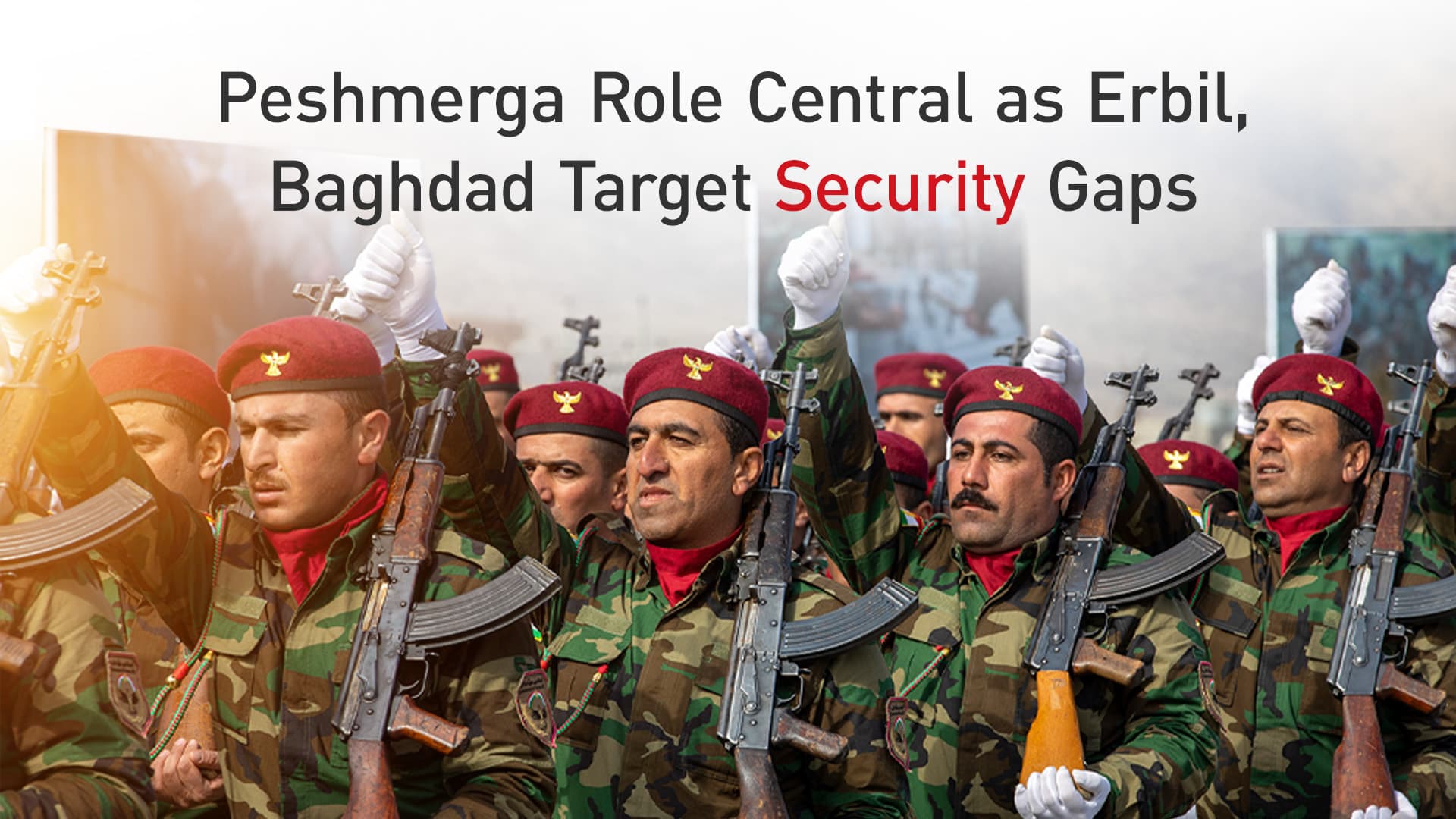
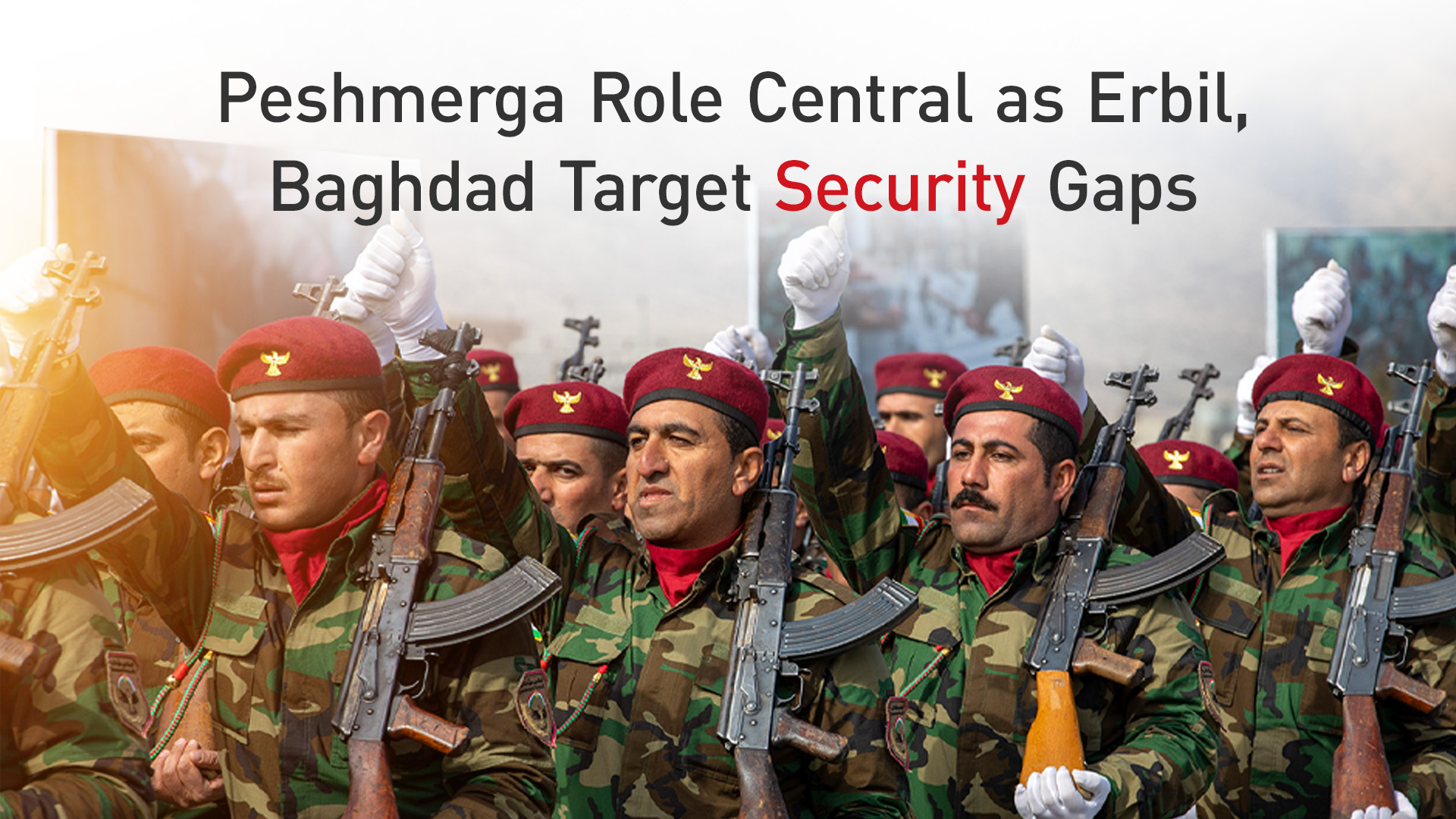
ERBIL () - Senior Peshmerga and Iraqi Defense Ministry officials have held another round of security talks aimed at closing gaps between their forces, sharpening intelligence coordination and defining areas of responsibility across parts of Iraq where ISIS remnants have previously exploited weak security coverage.
According to a statement from Iraq's Defense Ministry, a senior delegation from the Kurdistan Regional Government's Ministry of Peshmerga Affairs met the ministry's director general of intelligence and security under directives from the Office of the Commander-in-Chief of the Armed Forces and the Iraqi Army chief of staff.
The discussions focused on exchanging information about wanted individuals, dividing areas of operation and developing practical measures to close security gaps between Iraqi and Peshmerga lines.
The Iraqi Defense Ministry official said cooperation between federal security institutions and the Peshmerga contributes to stability across Iraq. The Peshmerga delegation, meanwhile, reaffirmed its commitment to strengthening coordination with Baghdad under directives from senior Kurdistan Region commanders.
The meeting underscores the growing importance of the Peshmerga not only to the Kurdistan Region's security but also to the wider effort to prevent ISIS remnants from exploiting territory between federal and regional forces.
Why the Security Gaps Matter
The gaps became particularly significant after October 2017, when Iraqi forces and armed militia groups moved into Kurdistani territories disputed between Erbil and Baghdad following the withdrawal of Peshmerga forces.
Federal and Peshmerga formations subsequently held separate lines across a broad belt stretching from Khanaqin in Diyala province through Kirkuk and Salahuddin to Makhmour and areas around Mosul.
In some locations, neither side maintained complete control over the terrain between those positions.
ISIS remnants used those spaces, particularly remote rural and mountainous areas, to move between provinces, establish temporary shelters and carry out attacks including ambushes, kidnappings and roadside bombings.
That experience made coordination between the Peshmerga and Iraqi forces a practical security requirement rather than simply an institutional relationship between Erbil and Baghdad.
Intelligence-sharing is especially important because movements that begin in territory monitored by one force can quickly cross into another force's area of responsibility.
The latest discussion over wanted individuals and operational boundaries is therefore significant: clearer responsibilities and faster information exchange can reduce the ungoverned spaces on which militant networks depend.
Joint Mechanisms Take Shape
Erbil and Baghdad have spent several years building mechanisms intended to close those gaps.
reported in 2021 that the two governments planned six joint coordination centers. Four were operational by June of that year, creating channels for intelligence exchange, communication and coordinated responses to ISIS activity.
Read More: Iraqi Army, Kurdish Peshmerga to form joint brigades in disputed territories: Official
The two sides also agreed to establish two joint brigades composed of Iraqi Army and Peshmerga personnel for deployment in disputed territories.
By March 2025, Maj. Gen. Abdul Khaliq Talaat, the KRG representative to Iraq's Joint Forces Command, told that both brigades had been deployed and had significantly restricted ISIS movement in their operational areas.
He nevertheless warned that two formations were insufficient for a security belt extending roughly 560 kilometers, arguing that additional forces and stronger intelligence work remained necessary.
That assessment helps explain why the latest talks have focused on more than symbolic coordination.
Closing such a long and geographically complex belt requires sustained operational cooperation, clearly defined responsibilities and the ability of both sides to respond quickly when militant activity is detected.
Read More: 'ISIS Still a Danger Despite Abu Khadija's Elimination,' KRG Representative
High-Level Baghdad Meeting
The latest meeting follows another senior-level security gathering held in Baghdad on Sept. 6.
According to the KRG Department of Media and Information, high-ranking Iraqi and Peshmerga officials discussed strengthening cooperation within the joint brigades.
Participants included Staff First Lieutenant General Abdul-Amir al-Shammari, director of the Office of Iraq's Commander-in-Chief of the Armed Forces, and Staff Lieutenant General Issa Ozer, chief of staff of the KRG Ministry of Peshmerga Affairs, alongside senior commanders and security officials.
The talks covered coordination in areas under the respective forces' control, border security, joint training and plans to improve operational capabilities.
Taken together, the September meetings point toward a broader effort to institutionalize cooperation rather than rely on occasional field-level contacts.
Peshmerga Reform Strengthens Institutional Base
The talks also come as the Ministry of Peshmerga Affairs undergoes a major internal restructuring.
On Sept. 10, Peshmerga Minister Shoresh Ismail announced the full integration and reorganization of Units 70 and 80 under the ministry.
The forces were reorganized within a unified command-and-control structure operating through brigade, division and regional-command levels.
Earlier reporting said the restructured Peshmerga would consist of 11 divisions, with six assigned to Area Command One and five to Area Command Two.
Read More: Kurdistan Region To Complete Unified 11-Division Peshmerga Force by September
The reform centralizes command, administration, accounting and training, creating a more unified force for coordination with Iraqi and international partners.
That matters directly to the security-gap issue.
Effective cooperation with the Iraqi Army depends on the Peshmerga being able to operate through clear command structures, communicate decisions quickly and deploy forces according to agreed plans.
A more unified Peshmerga therefore provides a stronger institutional foundation for joint security operations with Baghdad.
Read More: KRG Announces Full Unification of Peshmerga Forces Under Ministry
Peshmerga as a National Security Partner
The latest developments also reinforce the Peshmerga's broader place within Iraq's security architecture.
The force is constitutionally recognized and remains responsible for defending the Kurdistan Region, while joint arrangements with federal forces have increasingly demonstrated its relevance to security beyond the Region's formal administrative boundaries.
In areas where ISIS remnants can move between jurisdictions, neither Erbil nor Baghdad can address the threat effectively in isolation.
The Peshmerga's knowledge of terrain, established positions and operational presence across parts of the security belt make it an essential component of efforts to prevent militants from exploiting gaps between forces.
The Iraqi Defense Ministry's own emphasis on cooperation reflects that reality.
The challenge now is implementation.
Previous agreements have produced joint centers and brigades, but officials have repeatedly acknowledged that the scale of the security belt demands more sustained attention.
The latest talks on exchanging intelligence, identifying wanted individuals and dividing operational responsibilities could further narrow the spaces in which ISIS remnants operate, provided the arrangements are continuously enforced.
For Erbil and Baghdad, the security equation is increasingly clear: a stronger, more unified Peshmerga working in structured coordination with Iraqi forces offers one of the most practical ways to deny ISIS the geographical gaps it has repeatedly sought to exploit.