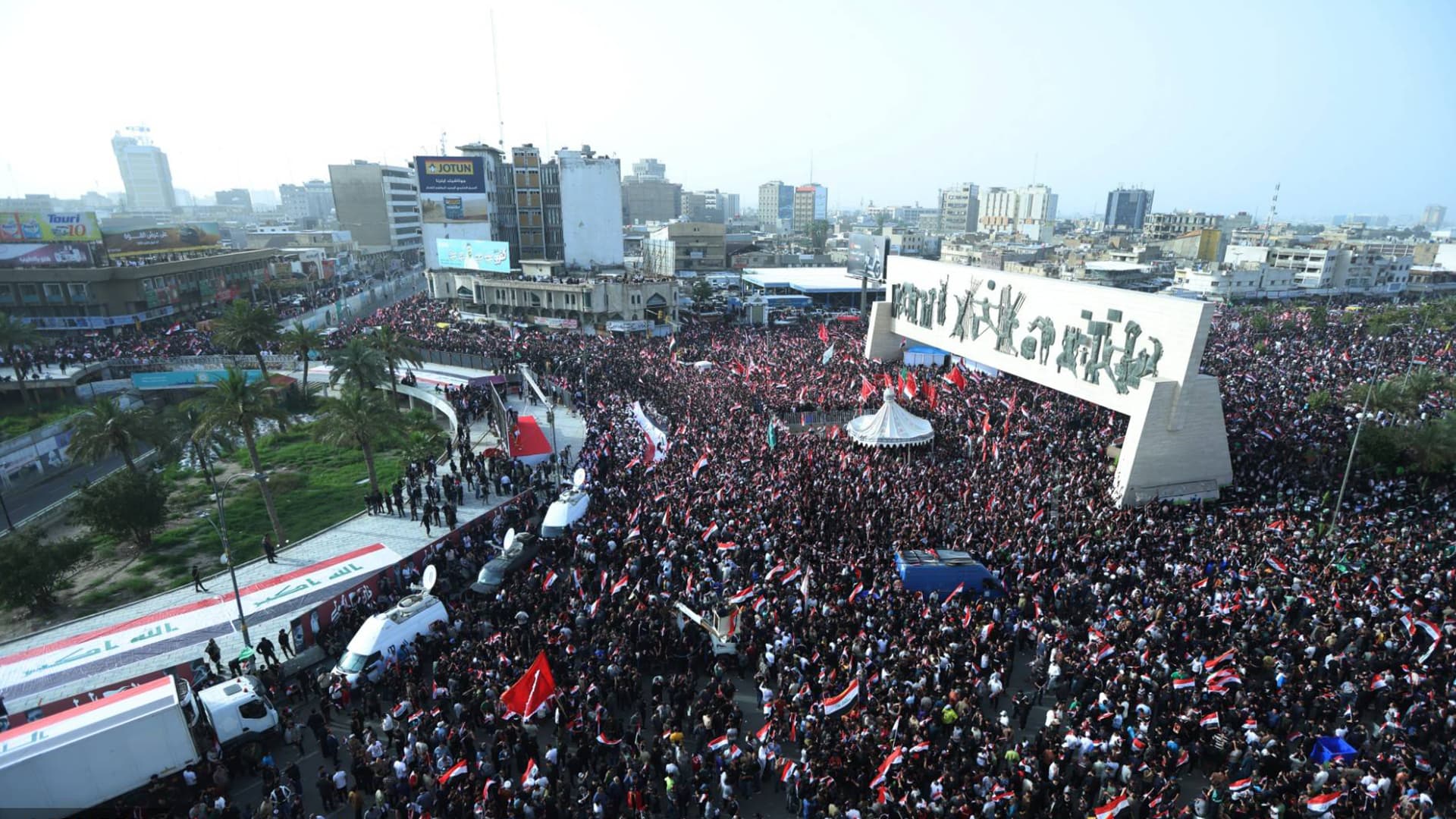
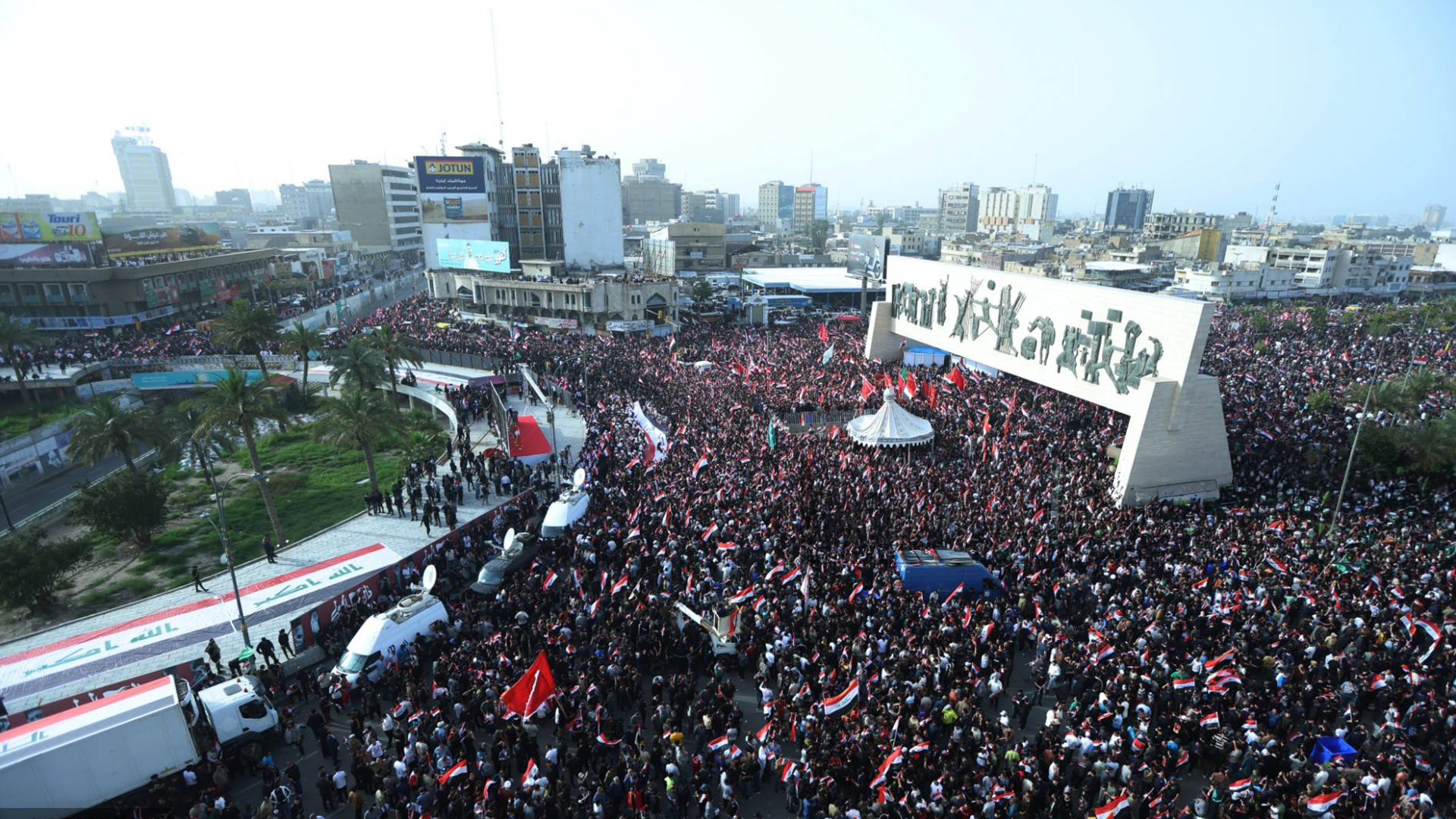
ERBIL () — Baghdad witnessed an unusually busy morning of demonstrations on Tuesday, with 11 separate protests involving doctors, electricity generator owners, former security personnel, housing buyers, detainees’ families, and relatives of victims linked to a French company.
correspondent Shivan Jabari reported from Baghdad that the demonstrations caused significant crowds and disruptions on the capital’s streets, with protesters gathering at several government institutions and public locations to demand unpaid salaries, services, employment rights, housing units and compensation.
Among the protests, buyers of the Mahaba 1 and 2 residential projects gathered outside the Investment Authority, demanding that their apartments be handed over.
According to Jabari, the buyers have already paid for their units, which were originally scheduled to be completed in 2021, but have yet to be delivered. Ownership of the projects belongs to Nizar Abdulwahid, the brother of businessman Shaswar Abdulwahid.
Meanwhile, contract doctors hired between 2022 and 2025 launched a nationwide strike at Iraqi hospitals over unpaid salaries for several months.
The doctors, whose monthly salaries range from 450,000 to 550,000 Iraqi dinars, gathered in protest outside Baghdad’s Kindi Hospital, demanding payment of their outstanding wages.
Electricity generator owners also staged demonstrations over difficulties in securing gas supplies for the generators they operate to provide electricity to residents.
The operators said they provide up to 18 hours of electricity daily to citizens, but complained that the government had failed to fulfill its promise to supply them with the gas needed to maintain the service.
In Baghdad’s Green Zone, two separate demonstrations were held outside the courts.
The protesters included former police officers and employees of the Counter-Terrorism Service who had previously left their positions and are now seeking reinstatement. Their demonstrations come after the government decided to dissolve their employment arrangements, according to.
Another demonstration involved families of detainees seeking the implementation of a general amnesty law. The families protested near the Green Zone, criticizing what they described as the failure to fully implement a parliamentary decision passed last year.
They said the decision has not been implemented as intended and that their relatives remain in detention.
In a separate protest, families of victims linked to French company Mario gathered to demand the implementation of a government compensation decision.
The case dates back to the 1980s, when the company allegedly supplied the Iraqi Health Ministry with faulty injection equipment, resulting in nearly 100 people contracting HIV, according to the protesters’ account.
The victims’ families are now demanding that the government implement a compensation decision issued in their favor.
The simultaneous demonstrations highlighted a broad range of economic, administrative and social grievances in Baghdad, bringing several groups into the streets on the same day to press their demands on government authorities.