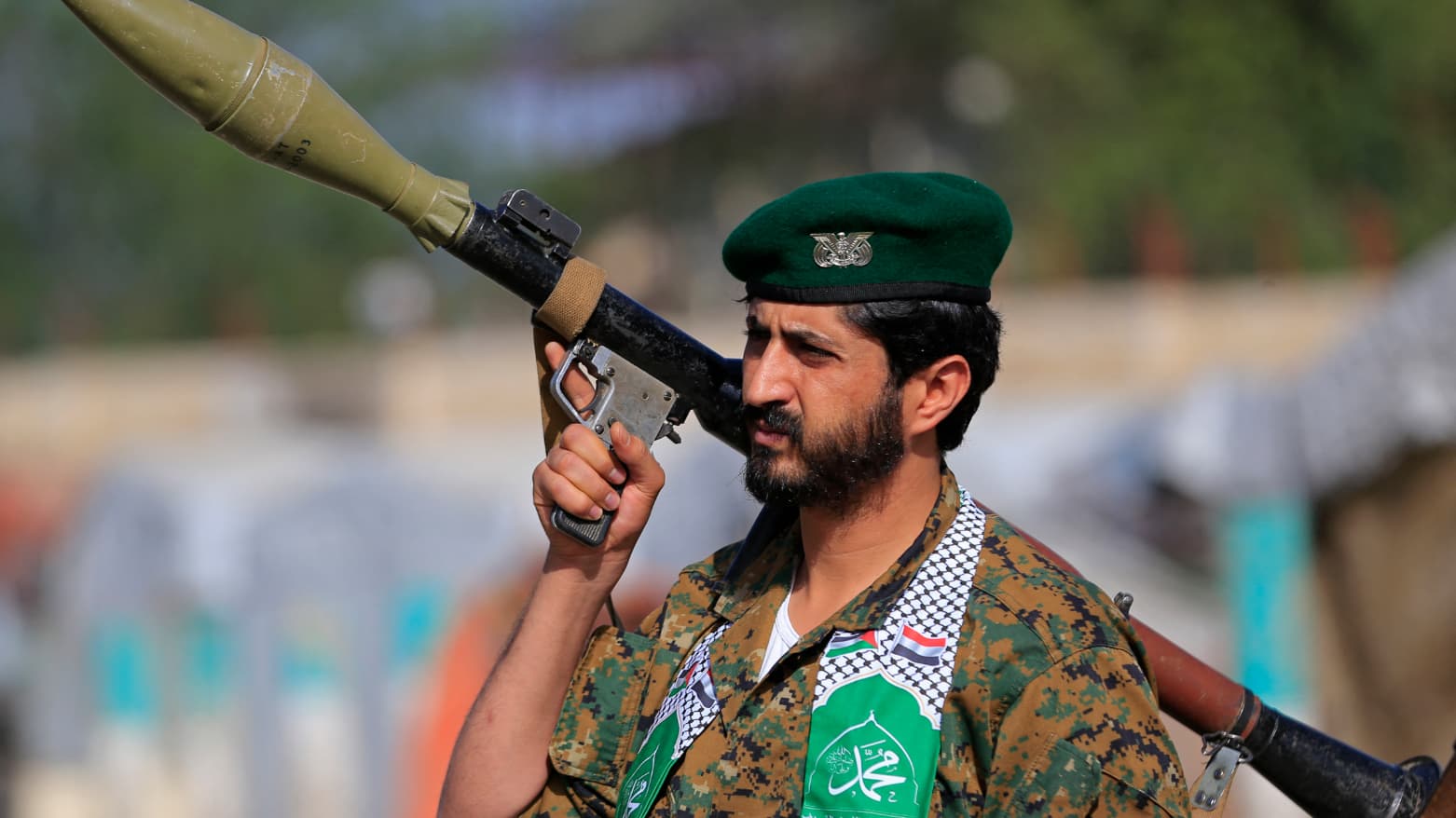
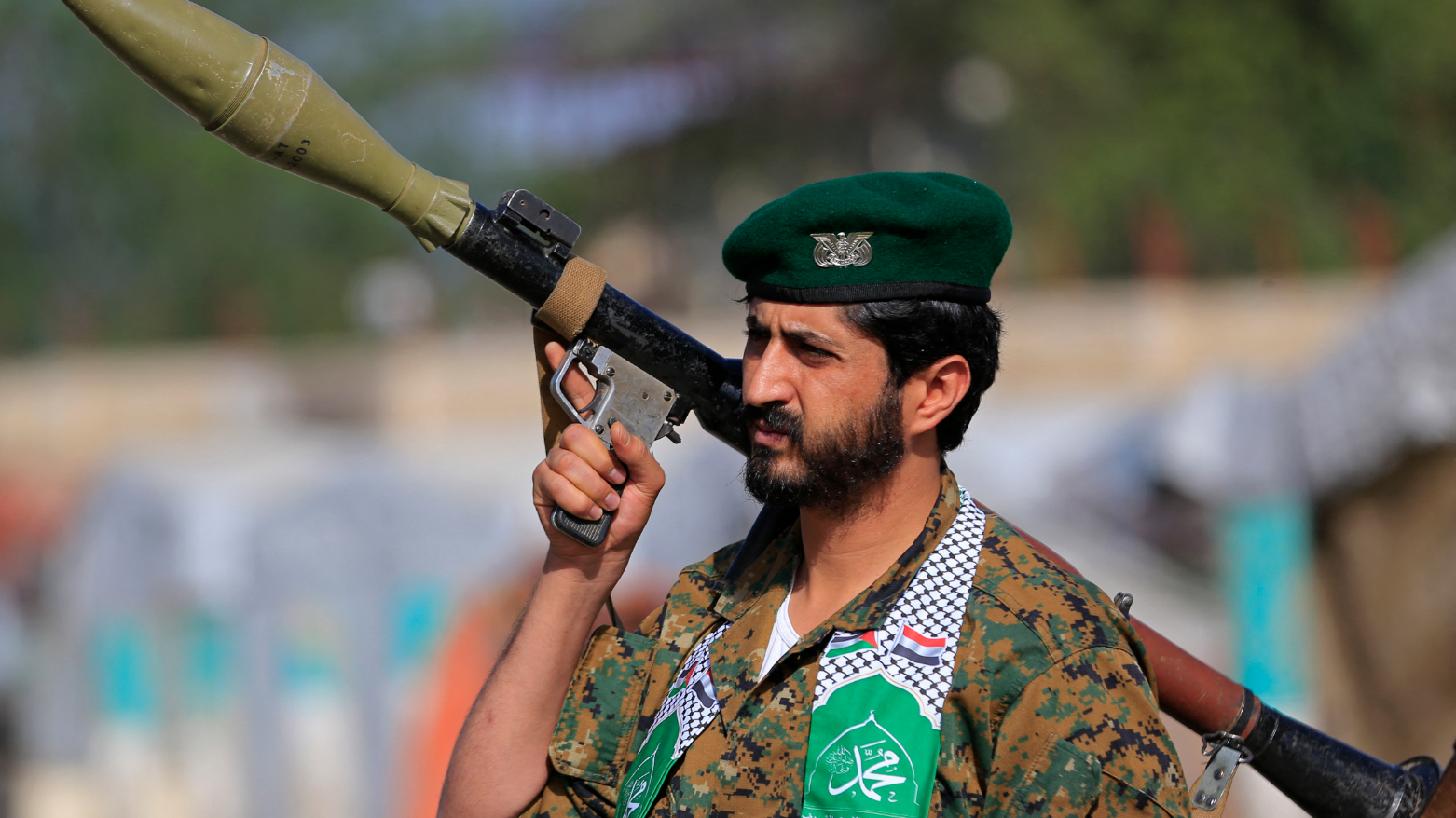
ERBIL () - Yemen's Houthis said Monday they launched dozens of ballistic missiles and drones at Saudi Arabia's King Khalid Air Base in Khamis Mushait, marking a sharp expansion of their campaign against the kingdom as fighting intensifies across Yemen and the Red Sea.
Houthi military spokesperson Yahya Saree said the operation targeted fighter-jet hangars, radar installations, runways, ammunition depots and other military infrastructure at the base.
He claimed the weapons struck their intended targets and caused extensive damage.
Agence France-Presse separately reported from Sanaa that the Houthis said they had used dozens of drones and ballistic missiles against military targets in Saudi Arabia, citing Saree's statement.
The Houthis described the attack as retaliation for Saudi airstrikes in Yemen. Saree alleged that Riyadh had carried out more than 300 strikes over the previous five days, using F-15 and Typhoon fighter jets operating from bases including Khamis Mushait and Taif.
Those figures and operational details were Houthi claims and were not independently established in the supplied material.
"Our armed forces will continue their military operations deep inside Saudi Arabia for as long as its oppressive attacks against our people continue,"Saree said, warning that further strikes could become broader and more forceful.
He also reiterated the group's policy of what it calls "blockade for blockade and escalation for escalation,"saying Houthi forces would continue targeting Saudi military concentrations until attacks on Yemen end and what the group describes as a blockade is lifted.
Escalation Beyond the Air Base
The claimed attack comes as the Houthis rapidly expand their military position around one of the world's most important shipping corridors.
Associated Press correspondent Samy Magdy reported Monday that the Houthis had captured the Greater and Lesser Hanish islands in the southern Red Sea after government-aligned forces withdrew.
The islands lie about 160 kilometers north of the Bab el-Mandeb Strait, through which commercial shipping moves between the Red Sea and Gulf of Aden.
The advance followed Houthi seizures of the port city of Mokha and Mayun island, which sits inside the Bab el-Mandeb Strait itself, according to AP.
Those gains have increased concern over Saudi Arabia's ability to move oil through the Red Sea at a time when shipping through the Strait of Hormuz has also been disrupted by the wider regional war.
AFP reported Monday that oil prices rose more than 3% at one point after Saudi Arabia shut its East-West pipeline following earlier Houthi drone attacks, while another merchant vessel was struck in the Strait of Hormuz.
West Texas Intermediate was trading around $102.73 a barrel and Brent crude around $107.66 in the figures supplied by AFP.
The combination of fighting around Bab el-Mandeb, attacks on Saudi infrastructure and instability around Hormuz has placed two of the Middle East's most important energy and trade corridors under simultaneous pressure.
Iran Denies Direct Role
The widening Houthi offensive has also renewed scrutiny of the movement's relationship with Iran.
Tehran has long backed the Houthis politically and has been accused by Western and regional governments of providing military support.
Iran, however, denied any involvement in the current Yemen fighting on Monday.
"Iran does not interfere in Yemeni affairs,"Foreign Ministry spokesperson Esmaeil Baqaei told reporters, according to AFP.
Baqaei described the Houthis as "entirely independent actors who make their decisions based on their own interests."
The statement came as Houthi territorial gains and attacks on Saudi targets increasingly intersect with the broader war involving Iran and the United States.
AP reported that the Houthi advances and attacks on Saudi oil infrastructure could further squeeze global energy supplies and potentially strengthen Tehran's position by increasing pressure on alternative oil-export routes.
That does not establish that Iran directed Monday's claimed attack on King Khalid Air Base, and Tehran explicitly rejected such a role.
Saudi-Houthi War Reopens
The latest escalation also threatens to pull Yemen deeper into large-scale warfare after several years in which a truce had substantially reduced nationwide fighting.
AP reported that Saudi-backed Yemeni government forces attempted over the weekend to regroup and push toward Dhubab, a strategic town north of Bab el-Mandeb.
The Houthis, meanwhile, have shown that their campaign is no longer confined to territorial advances along Yemen's Red Sea coast.
Their claimed strike on King Khalid Air Base signals an effort to carry the confrontation directly into Saudi territory and target the military infrastructure they accuse Riyadh of using to conduct attacks inside Yemen.
What remains unclear is the extent of the damage at the base and whether Saudi Arabia will respond with additional military action.
For now, the confrontation is expanding on several fronts at once: inside Yemen, across the Red Sea shipping corridor and, according to the Houthis, deep inside Saudi Arabia itself.