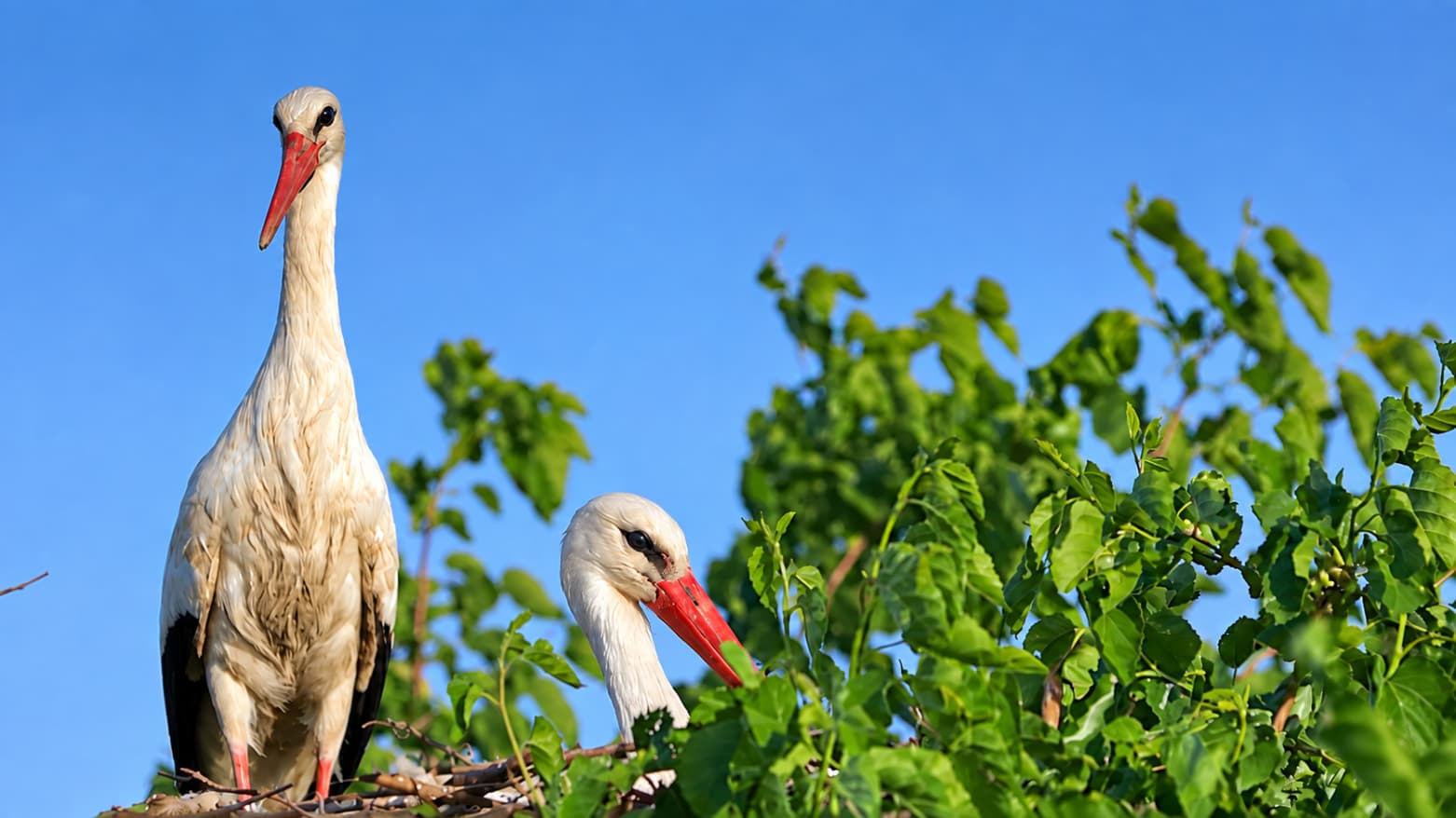
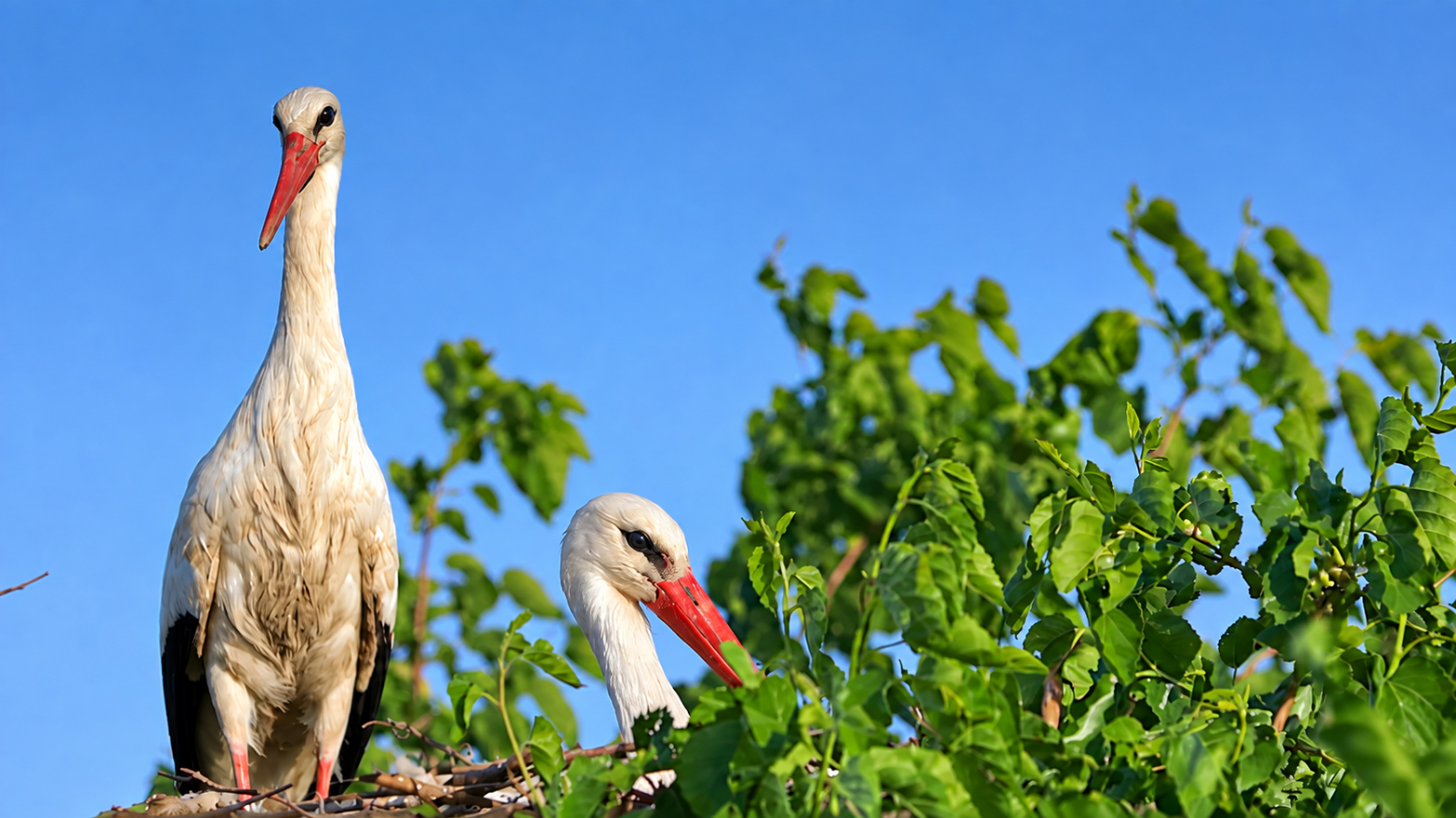
ERBIL () - By this point in the year, the storks of Kanimaran are usually gone.
They return to the village in the Raparin Independent Administration around early February, reclaim their nests, raise their young and remain through the warm months. By mid-August, their seasonal rhythm ordinarily carries them onward toward warmer regions.
This year, the calendar changed, but the birds did not leave.
Instead, as autumn approaches, the storks have descended from their nests and gathered around streams, fields and utility poles, lingering in a landscape they would normally have left weeks earlier.
For villagers accustomed to measuring part of the year by their arrival and departure, the sight has been striking.
"This year, I find it very strange,"local farmer Briyar Sabir told. "They have all come down from their nests and gathered together on utility poles in one place, as if they are waiting for something."
Sabir has watched storks move through his orchards and fields for years. Their presence itself is nothing unusual. Their refusal, so far, to depart is.
"This is the first time I have witnessed such behavior,"he said.
A Village That Has Lived With Storks for Generations
In Kanimaran, storks are not treated as intruders.
They move through farmland without causing damage and have lived alongside residents for generations. Villagers regard them with affection, and when one becomes injured or too weak to fly, someone will often intervene.
Saadi Ahmed said the birds have been part of village life for as long as family memory reaches.
"My grandfather says they have been here since his time,"Ahmed told.
He believes Kanimaran's relatively cool environment and the absence of threats from residents may help explain why the birds have long favored the area.
"They do not damage anything,"he said. "Even when they enter our farmland, they cause no harm at all."
Recently, one sick stork was taken in by a villager named Mawloud, who cared for it until it recovered.
"It later flew away and rejoined the others,"Ahmed said.
That small act reflects a relationship that exists in many parts of Kurdistan, where the white stork, leklek in Kurdish, carries a significance extending well beyond ornithology.
Read More: Winged Messengers of Spring: Storks Grace Kurdistan's Skies Again
When Migration Patterns Begin to Shift
The prolonged stay in Kanimaran is being viewed locally as another possible sign that changing climatic conditions are altering familiar patterns in the natural world.
previously examined the return and migration of white storks in a May 2025 report, documenting sightings across Erbil and Duhok and the birds' long association with villages, fields and electricity pylons across the Region.
That report noted observations from neighboring Türkiye where some stork populations had stopped making their full seasonal migration, instead remaining through winter in areas that had once served only as temporary stops.
Changes in temperature and food availability have been cited by experts as factors that can alter migratory behavior.
The storks in Kanimaran have not been scientifically assessed as part of the current report, so the precise reason for their delayed departure remains uncertain. But their extended stay has made a normally predictable part of village life suddenly less predictable.
For residents, that uncertainty is visible every time they look toward the poles and see the birds still gathered there.
More Than a Migratory Bird
The affection shown to Kanimaran's storks also has deeper cultural roots.
Earlier report drew on research by Kurdish scholar Himdad Mustafa, whose work on the symbolism of birds describes the stork as a longstanding figure in Kurdish folklore and spiritual tradition.
Historically, the return of the leklek in spring has been associated with renewal, blessing and peace.
Accounts cited in Mustafa's research describe old beliefs that storks undertook sacred journeys before returning with the spring. Their nests were regarded as auspicious, and harming the birds could provoke social condemnation.
Such traditions help explain why the stork's presence around Kurdish villages often feels different from that of an ordinary wild animal.
It arrives, leaves and returns according to a rhythm that generations have come to recognize.
When that rhythm changes, people notice.
There is also an ecological reason to pay attention.
In the earlier feature, reporting by journalist Ayub Nuri for New Region was cited regarding the work of ornithologist Dr. Korsh Ararat, who has documented hundreds of bird species across Kurdistan and Iraq and warned of pressures including habitat loss, deforestation, pesticides, shrinking water surfaces and climate change.
Ararat has argued that bird protection should be understood not only as an environmental concern but as part of Kurdistan's cultural heritage.
In Kanimaran, that connection is already part of daily life.
The villagers do not need ornithological terminology to know when something in the seasonal pattern looks different.
They know when the nests fill.
They know when the young birds appear.
And they know when the sky should begin to empty.
This year, it has not.
The storks remain near the water and fields, standing above the village on utility poles, gathered together as if preparing for a journey whose departure has been postponed.
For Kanimaran's residents, their continued presence is beautiful.
It is also a quiet reminder that even the oldest seasonal rhythms can change.