
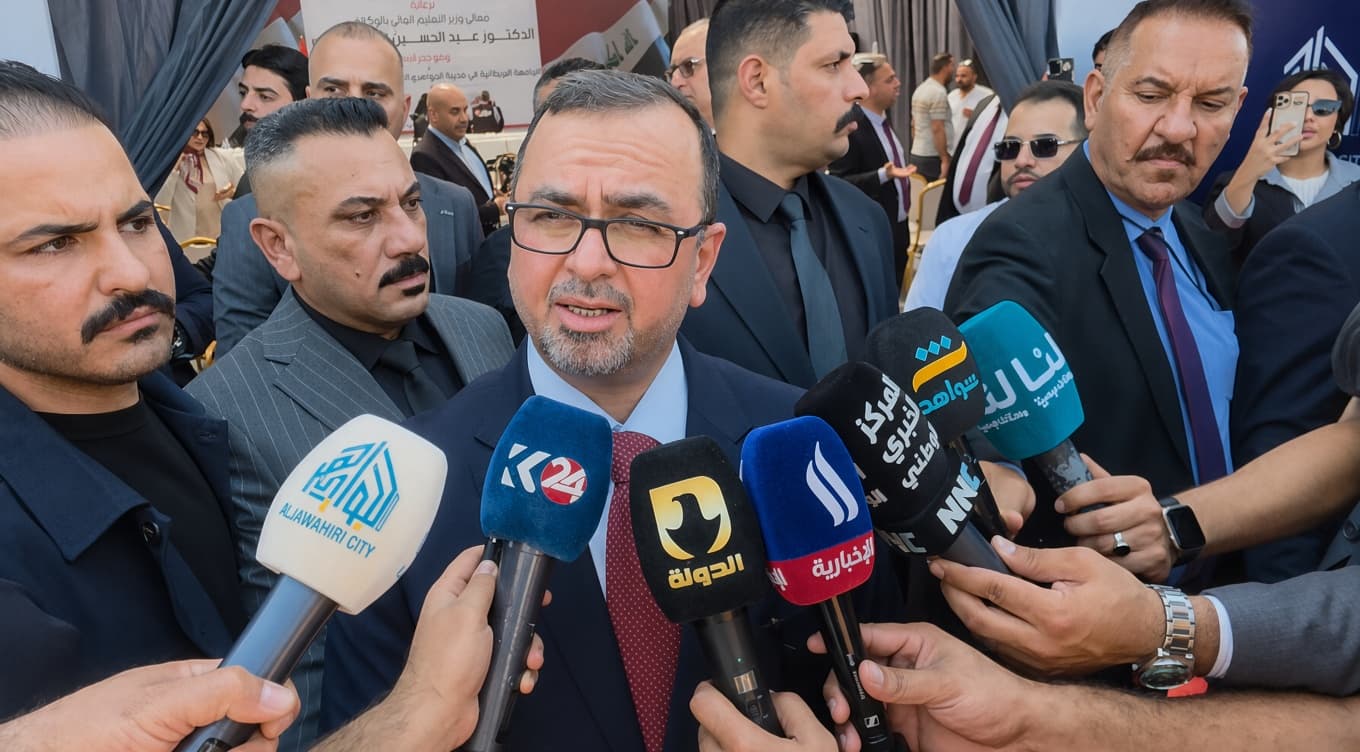
ERBIL () - Iraq has received a new shipment of hemophilia injections following a prolonged shortage that left hundreds of patients in the Kurdistan Region without essential treatment, Iraqi Health Minister Abdul Hussein al-Moussawi told on Saturday.
Al-Mousawi said the first shipment had arrived and was currently undergoing testing to verify that the medication was safe for use.
He said there was strong coordination between Iraq's Health Ministry and the Kurdistan Region Government's Ministry of Health to address the shortage and ensure treatment reaches patients.
"Two additional shipments of hemophilia injections are expected to arrive in the country soon,"al-Mousawi told.
The minister said coordination between Baghdad and Erbil would continue until the shortage was resolved and patients' medical needs were fully met.
The development follows reporting that hemophilia patients in the Kurdistan Region had been facing a severe shortage of Factor VIII injections.
correspondent Ahmed Abdulsamad reported from the field that 324 hemophilia patients are registered in Erbil province alone.
According to the report, pharmaceutical stores in Erbil had been completely depleted of Factor VIII injections for two months, while no supplies for the condition had been sent by the Iraqi government to the Kurdistan Region for eight months.
Dr. Marwa Nazim, a hematology specialist, previously told that patients had been placed in a critical situation because the absence of Factor VIII could expose them to persistent and potentially dangerous bleeding.
During the shortage, doctors at Nanakali Hospital had resorted to plasma as a temporary emergency measure for some patients.
Nazim stressed, however, that plasma cannot substitute for the injections required for regular hemophilia treatment.
Factor VIII is used to replace or supplement a clotting protein that is deficient in patients with hemophilia A, helping the blood clot and reducing the risk of uncontrolled bleeding.
Under Iraq's pharmaceutical system, the injections are classified as a "sovereign medicine,"meaning procurement and distribution fall under the authority of the federal Health Ministry and the state-owned KIMADIA company.
That arrangement means the Kurdistan Regional Government cannot independently secure the medication through the same channels when federal supplies are interrupted.
The medication is also costly, further complicating access during prolonged shortages.
The arrival of the first shipment represents the first concrete step toward restoring supplies, although the medication has not yet been cleared for distribution while safety testing continues.
Al-Mousawi did not specify when the first consignment would complete testing or when the two additional shipments would arrive.
For patients in Erbil and elsewhere in the Kurdistan Region, the immediate priority remains the resumption of regular Factor VIII supplies after months of disruption.


