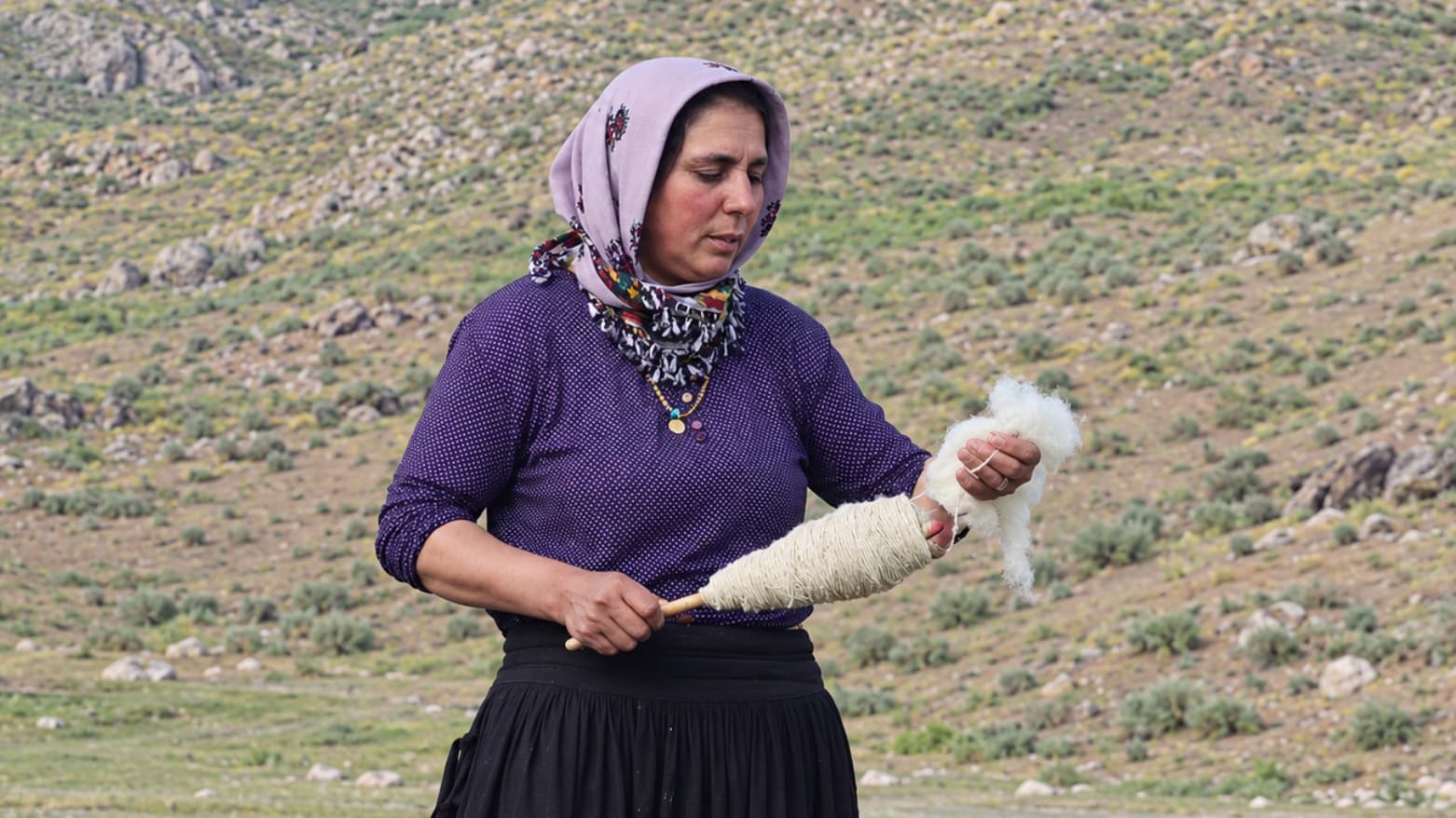
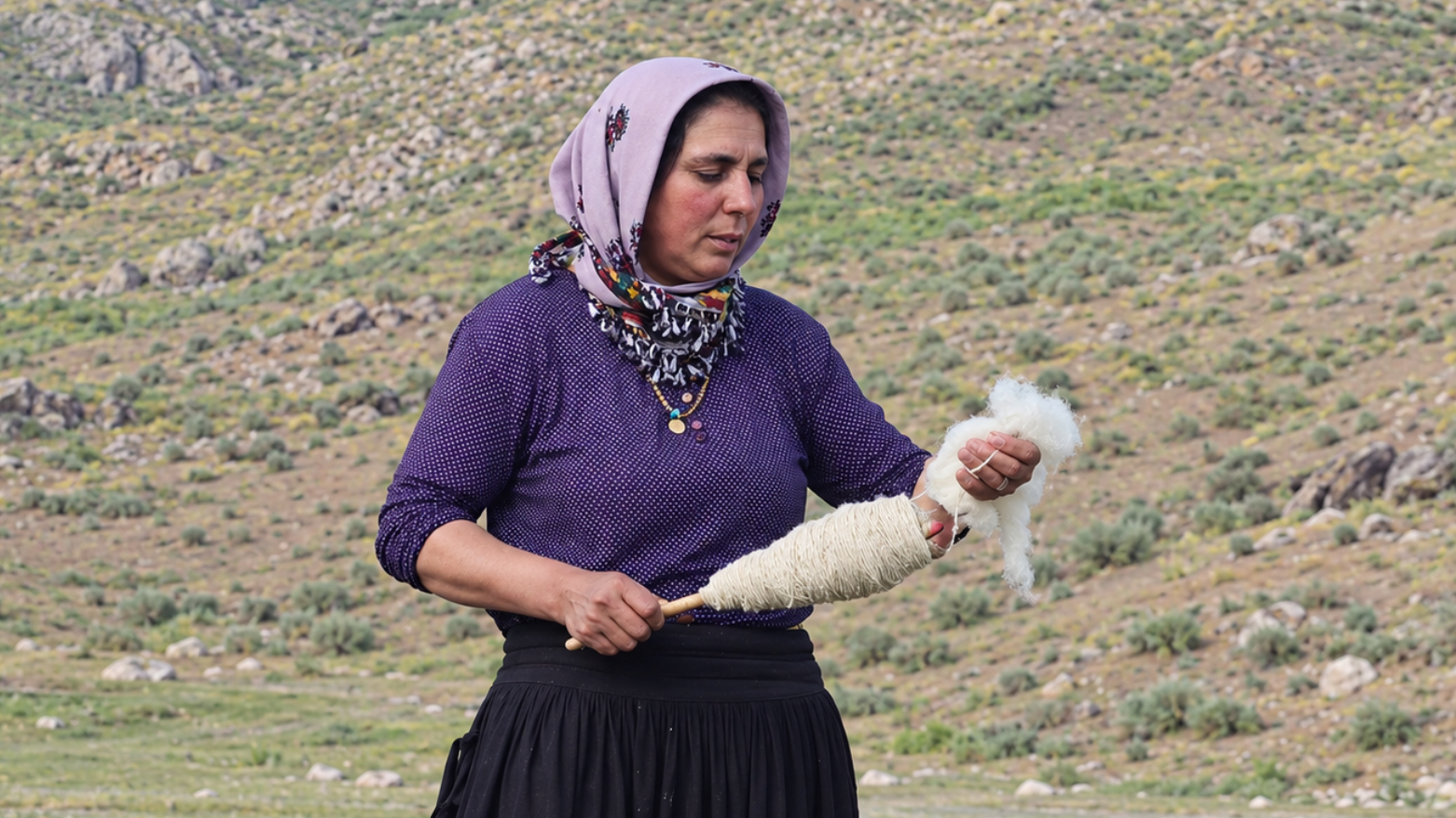
ERBIL () - In Kurdish households, a small wooden spindle once linked the rhythms of pastoral life to the making of clothes, rugs and other textiles. Known as Teşîrês, spindle spinning was more than a method of producing yarn. It formed part of the practical knowledge through which families transformed animal fibres into materials for everyday use.
The teşî is the spindle itself. Prepared fibres are drawn out and twisted into a continuous strand, while a weighted whorl helps the spindle rotate. The spinner controls how much fibre enters the thread before the finished yarn is wound onto the spindle. The process comes before weaving, when yarns are interlaced to create fabric.
The language of the craft is preserved in historical records.
In his 1922 grammar of Bahdinan Kurdish, E. F. Jardine listed Teşî as the word for spindle alongside terms connected to spinning, yarn, carding and winding. His descriptions of sheep's wool being shorn, combed and spun before weaving show how deeply textile production was embedded in everyday Kurdish vocabulary.
That simple sequence hid a great deal of work. During fieldwork in Badinan in 2018, researcher Reyhane Mirabootalebi recorded the account of an older weaver who described women sorting, washing, carding and combing fibres from household sheep and goats before reaching for the wooden spindle.
The yarn could then be dyed with materials available locally, including pomegranate skins and walnut bark. In her 2021 University of Delaware dissertation, Mirabootalebi placed this labour alongside farming, animal care and other household responsibilities, showing how textile production was woven into the wider economy of family life.
Spinning was not always solitary. Hooshmand Alizadeh, writing in the peer-reviewed journal Cities in 2007, described women in Sina, Eastern Kurdistan, working with wool at the doorstep, or bar-mâl, while children played nearby. The setting allowed textile work to continue alongside conversation and help from neighbours.
For poorer households, wool processing could also bring income. Alizadeh noted that wool and rugs were sold in local markets, giving the work an economic as well as domestic role.
The practice was recorded visually as well.
A 1998 photograph by Karin Pütt, now held in the Syrian Heritage Archive, shows a Kurdish woman using a suspended spindle in the Dêrîk area of Western Kurdistan (northeastern Syria). The image provides a dated record of the tool in use and places the craft within another Kurdish community beyond Badinan and Sina.

A Kurdish woman spinning with a suspended spindle. She is wearing a traditional overgarment. (Photo: Karin Pütt, now held in the Syrian Heritage Archive)
The spindle's importance is clearer when seen alongside the textiles it helped produce. In a 2023 study in Acta Via Serica, Mirabootalebi examined the Senneh gelim tradition of Sina, tracing women's work, the materials they used and the changing conditions of production. Her research presents Kurdish textile traditions as products of household necessity, artistic expression and exchange with neighbouring societies.
Those traditions have also endured disruption.
Mirabootalebi links the loss of textile practices in Southern Kurdistan to conflict, displacement and the destruction of rural communities. She records villagers collecting surviving craft tools after 2003, including a spindle and a wool carder, in an effort to preserve material culture that might otherwise disappear.
Teşîrês therefore carries more than the memory of an old implement. Its cultural meaning lies in the knowledge surrounding it: how fibre was prepared, how thread was controlled by hand, how work was shared, and how women turned the products of livestock into clothing, household goods and marketable textiles.
Preserving the spindle tradition means preserving those skills and the social world around them. In its simple wooden form, the teşî holds a record of labour, memory and continuity across Kurdish life.