ERBIL () - For centuries, Qubhan School in Amedi stood as more than a traditional educational institution. It served as a comprehensive center of Islamic learning that produced generations of prominent scholars, religious jurists and figures of high standing, earning exceptional recognition and broad respect across scholarly and social circles.
With roots dating back more than 700 years, the historic institution became a major center of knowledge in Kurdistan, combining religious and worldly sciences and maintaining scholarly connections that extended beyond the region.
Qubhan School distinguished itself through a comprehensive curriculum that brought together what are known as the transmitted sciences and the rational sciences, combining religious knowledge with other fields of learning.
Islamic studies researcher Ayoub Hussein said the school’s scholarly standing extended well beyond its local surroundings.
“From an academic perspective, both the rational and transmitted sciences were taught at the school. There were also scholarly consultations and academic ties between Qubhan and Al-Azhar University in Egypt and Al-Zaytuna University in Tunisia, as well as historic mosques in Aleppo, such as the Upper Mosque and the Red Mosque,” Hussein said.
He added that these high-level academic connections demonstrated the scale of the institution’s work during its era.
“This high-level academic communication is conclusive evidence that the work of Qubhan School was comparable to that of major universities of that era. It was not merely an ordinary school,” Hussein said.
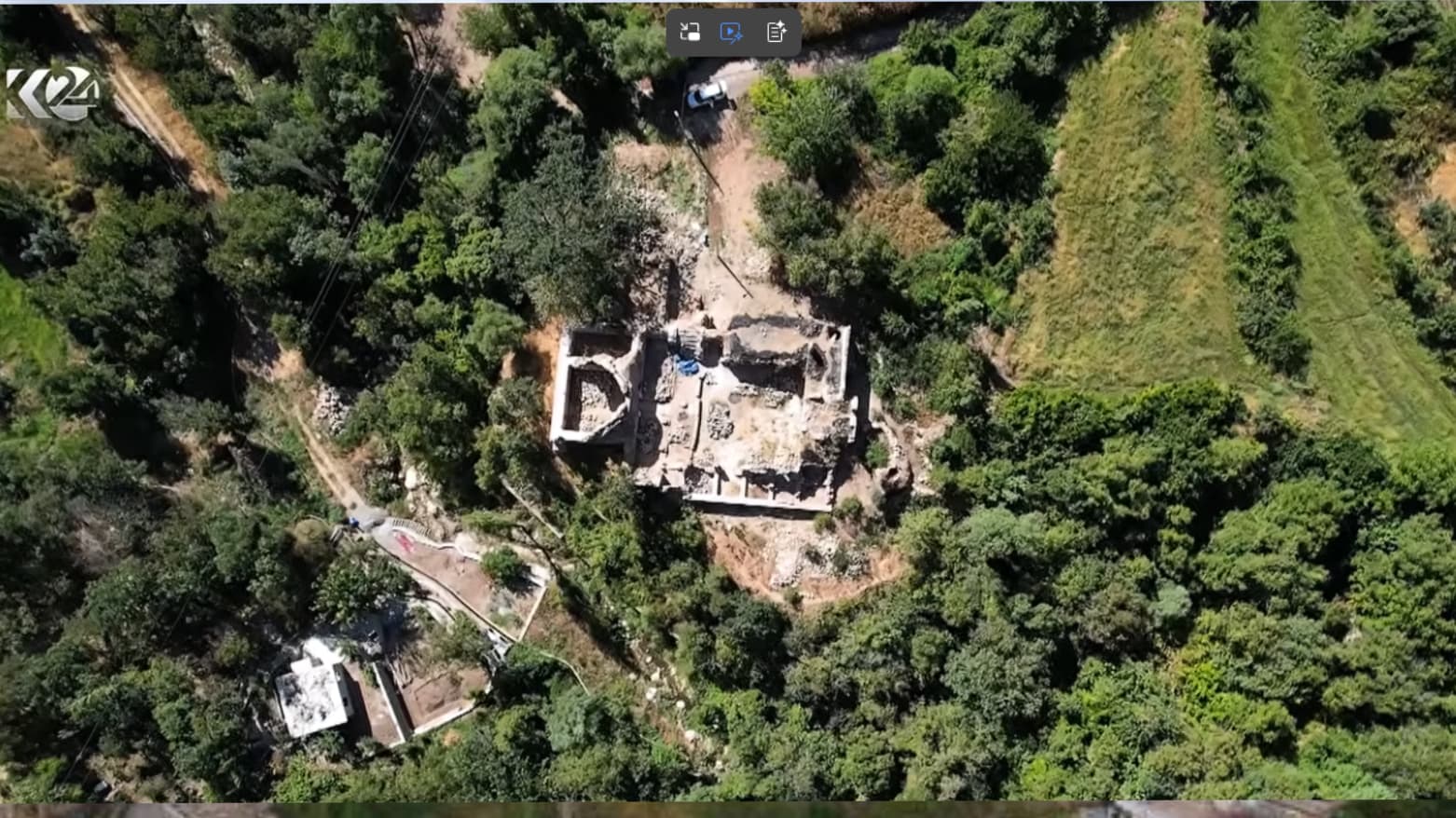
The school is regarded as one of the region’s important historical and archaeological landmarks. Historical sources indicate that its roots stretch back more than 700 years, while its surviving buildings date to prosperous historical periods that left their mark on Islamic architecture in Kurdistan.
Archaeological expert Hiwar Ihsan said the school acquired its prominent architectural form during the reign of Sultan Hussein Wali between 1534 and 1576, during the 16th century.
“There is a section that was added to the school around 200 years ago. It is located in front of its entrance on the eastern side and was designed in the form of a mosque. Today, it represents the oldest part of this extension,” Ihsan said.
Qubhan School remained a prominent symbol of knowledge and civilization in Kurdistan for centuries, continuing its educational and pedagogical mission without interruption until 1962.
Although its educational activities eventually came to an end, its ruins and historical remains continue to stand as a testament to the depth of the region’s intellectual and cultural heritage and to the institution’s role in producing generations of scholars and thinkers who contributed to the wider Islamic world.