ERBIL () - The Central Bank of Iraq says it has sufficient foreign currency reserves to meet demand and continue financing imports, pushing back against fears of a dollar shortage as the Iraqi dinar comes under renewed pressure in the parallel market.
In a statement issued Saturday, the Central Bank said reports about rising exchange rates and slowing market activity did not reflect a shortage of hard currency. It said reserves were sufficient to finance foreign trade, settle bank-card transactions and provide travelers with cash dollars at the official exchange rate.
The bank instead attributed the rise in the market exchange rate to speculation, manipulation and expectations surrounding regional geopolitical developments, arguing that some market actors were exploiting uncertainty to unsettle Iraq's financial environment.
It said foreign trade would continue to be financed through approved mechanisms intended to keep imports moving and meet domestic market needs.
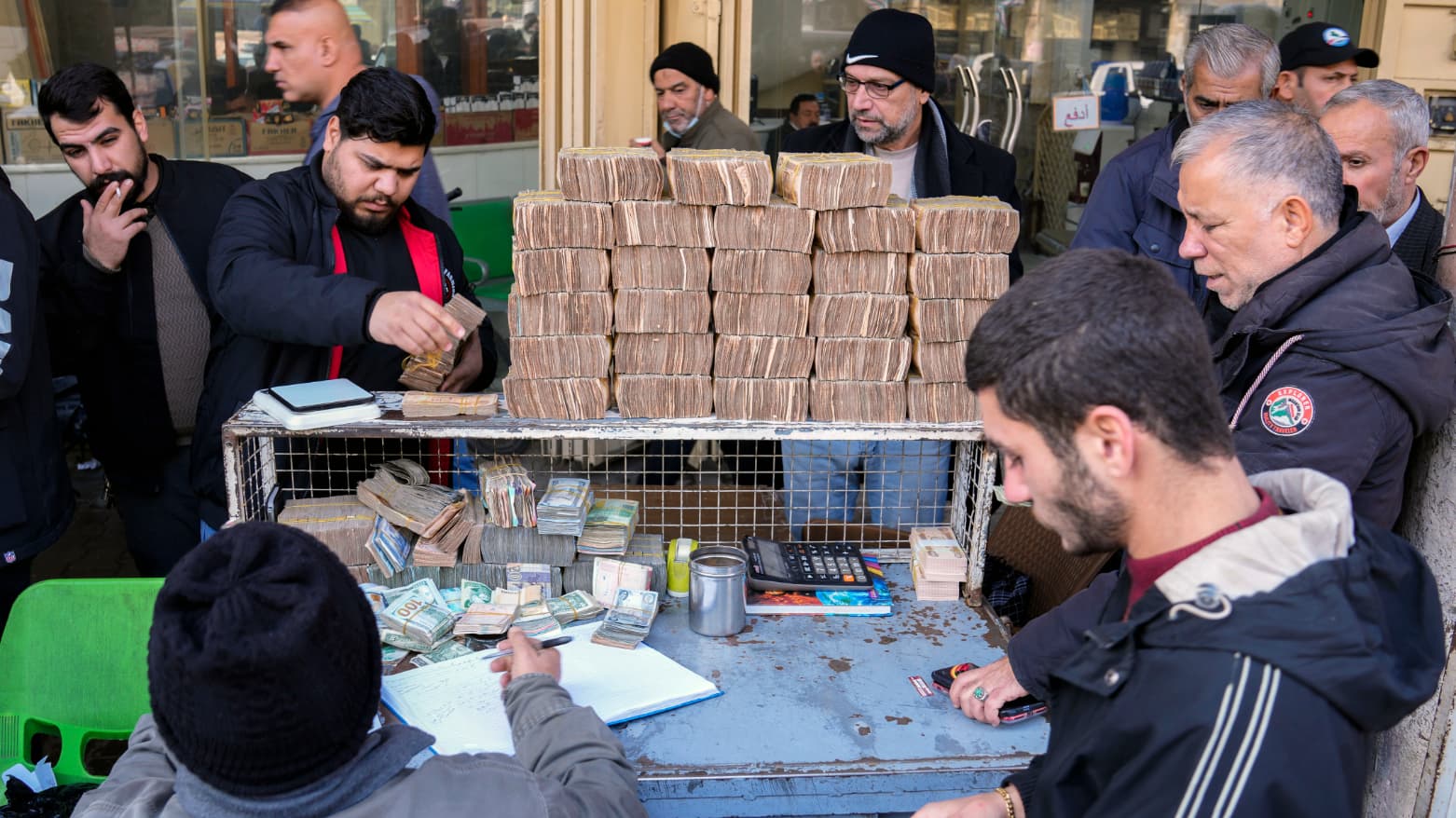
The intervention comes after a sharp rise in the dollar. On Saturday, the exchange rate reached 159,350 dinars per $100 in Erbil and moved above 160,000 dinars in Baghdad, widening the gap with the official rate of 1,310 dinars to the dollar.
The reasons for that widening gap have become the subject of competing explanations.
Central Bank Rejects Shortage Narrative
The Central Bank's position is that Iraq does not lack the foreign currency needed for legitimate demand.
That differs from concerns raised by some lawmakers and economic observers, who have pointed to reduced cash availability, political uncertainty and fears of possible US financial measures.
Daner Abdulghafar, a member of the Iraqi Parliament's Finance Committee, said the last $500 million physical cash shipment from the US Federal Reserve to the Central Bank arrived on Aug. 6.
He said much of that money had since been used for salaries, travel needs and foreign remittances, leaving only a limited amount available. Abdulghafar also said lower Central Bank dollar sales were contributing to the pressure on the dinar.
Read More: Iraqi Lawmaker Links Dinar Slide to Reduced Dollar Shipments
Those remarks concern physical dollar shipments and market supply rather than the Central Bank's overall foreign-currency reserves. The bank's statement maintains that it can continue meeting demand through its approved channels.
That distinction is important as traders and the public respond to rapidly changing expectations.
Sept. 30 Adds to Market Anxiety
Political uncertainty surrounding the effort to bring weapons held by armed groups under state authority has also entered the currency debate.
Abdulghafar warned that the US Federal Reserve could restrict dollar shipments if armed factions failed to surrender their weapons by Sept. 30.
Sherwan Doberndani, a member of Parliament's Security and Defense Committee, separately said Iraq could face US financial and economic sanctions if the government failed to implement its weapons-control policy. He also said dollar smuggling remained a problem and pointed to regional tensions and difficulties affecting dollar flows as pressures on the currency market.
Read More: Iraqi MP Warns of US Sanctions Over Failure to Disarm Armed Groups
These statements describe potential consequences, not announced US measures.
Earlier reports that Washington had directly threatened to stop monthly dollar transfers unless armed groups disarmed by Sept. 30 have also been disputed.
Mazhar Mohammed Saleh, a senior financial adviser to the Iraqi prime minister, rejected those reports as "rumors,"saying Washington had not formally informed Baghdad of such a plan.
Read More: Iraqi PM Adviser Denies US Plans to Halt Dollar Shipments
No confirmed US decision to halt dollar transfers is established in the reporting.
That uncertainty itself, however, has become part of the market psychology surrounding the dinar.
Read More: Dollar Climbs Against Iraqi Dinar as Baghdad Rate Tops 160,000
Eco Iraq Points to Several Factors
Economic platform Eco Iraq said the dollar's rise could not be attributed to a single cause.
It identified commercial speculation in the parallel market, concerns about developments after Sept. 30, talk of possible US sanctions and declining confidence in parts of the banking system as factors encouraging greater demand for dollars.
Read More: Eco Iraq Identifies Factors Behind Rising Dollar Exchange Rate
The platform said uncertainty can prompt traders to increase dollar purchases, creating additional pressure even before any policy change occurs.
It urged the Central Bank to monitor the foreign-exchange market closely, curb speculative activity and strengthen confidence in both the dinar and Iraq's banking system.
That assessment broadly overlaps with the Central Bank's emphasis on speculation and expectations, though Eco Iraq gives greater weight to political and financial uncertainty.
Wider Fiscal Pressure
The currency debate is unfolding alongside broader strains on Iraq's public finances.
Central Bank figures released Sunday showed domestic public debt reaching approximately 109.5 trillion dinars at the end of July, up from 90.5 trillion at the close of 2025.
The increase of roughly 19 trillion dinars in seven months reflects a separate fiscal challenge. The debt included 72.5 trillion dinars in Central Bank loans to and claims on the Finance Ministry, as well as loans, bonds and Treasury bills.
Those debt figures do not themselves demonstrate a shortage of foreign reserves, but they add to concerns over the financial pressures facing the state.
Meanwhile, the political debate over armed groups is unlikely to be resolved simply when September ends.
Baha al-Araji, a senior figure in the Reconstruction and Development bloc, has said there is broad political agreement on bringing weapons under state authority but that the process could take more than a year because of mistrust and regional complications.
Read More: Al-Araji Says Broad Political Consensus Emerging on Iraq's Armed Groups
That longer timetable reinforces the likelihood that political and security developments will remain part of the currency market's calculations beyond Sept. 30.
For now, two points stand side by side: Iraq's dinar has weakened sharply in the parallel market, while the Central Bank insists the country has enough foreign currency to meet legitimate demand.
Whether that assurance calms the market will depend not only on the bank's ability to supply dollars through official channels, but also on whether speculation and political uncertainty ease in the weeks ahead.