ERBIL () - On an Erbil runway, old black-and-white photographs of Kurdish men and women were given a new life through fabric, embroidery and dress as young designer Lana Zana Piran presented Dunadun, a collection built around Kurdish clothing that has gradually disappeared from everyday use.
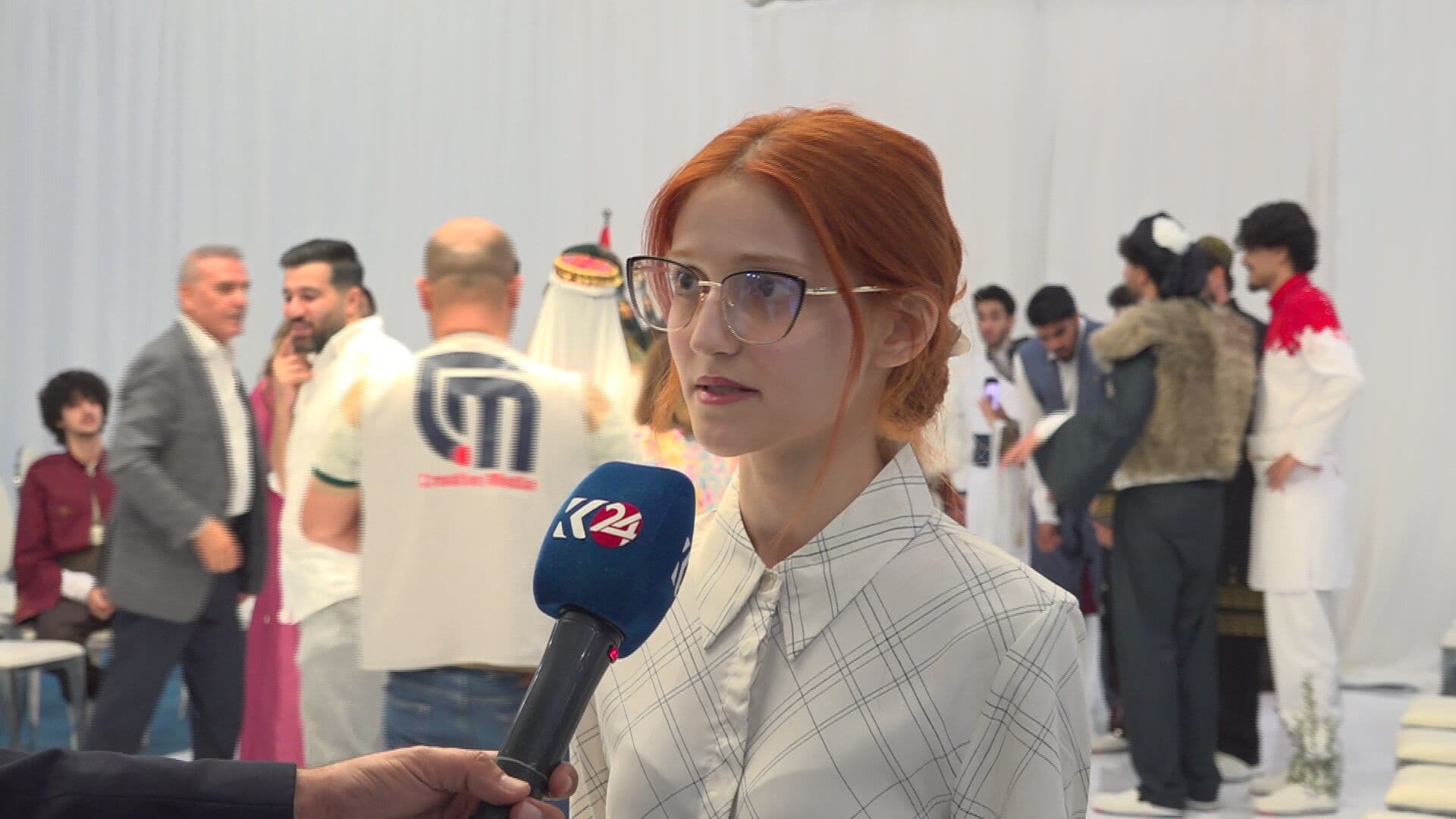
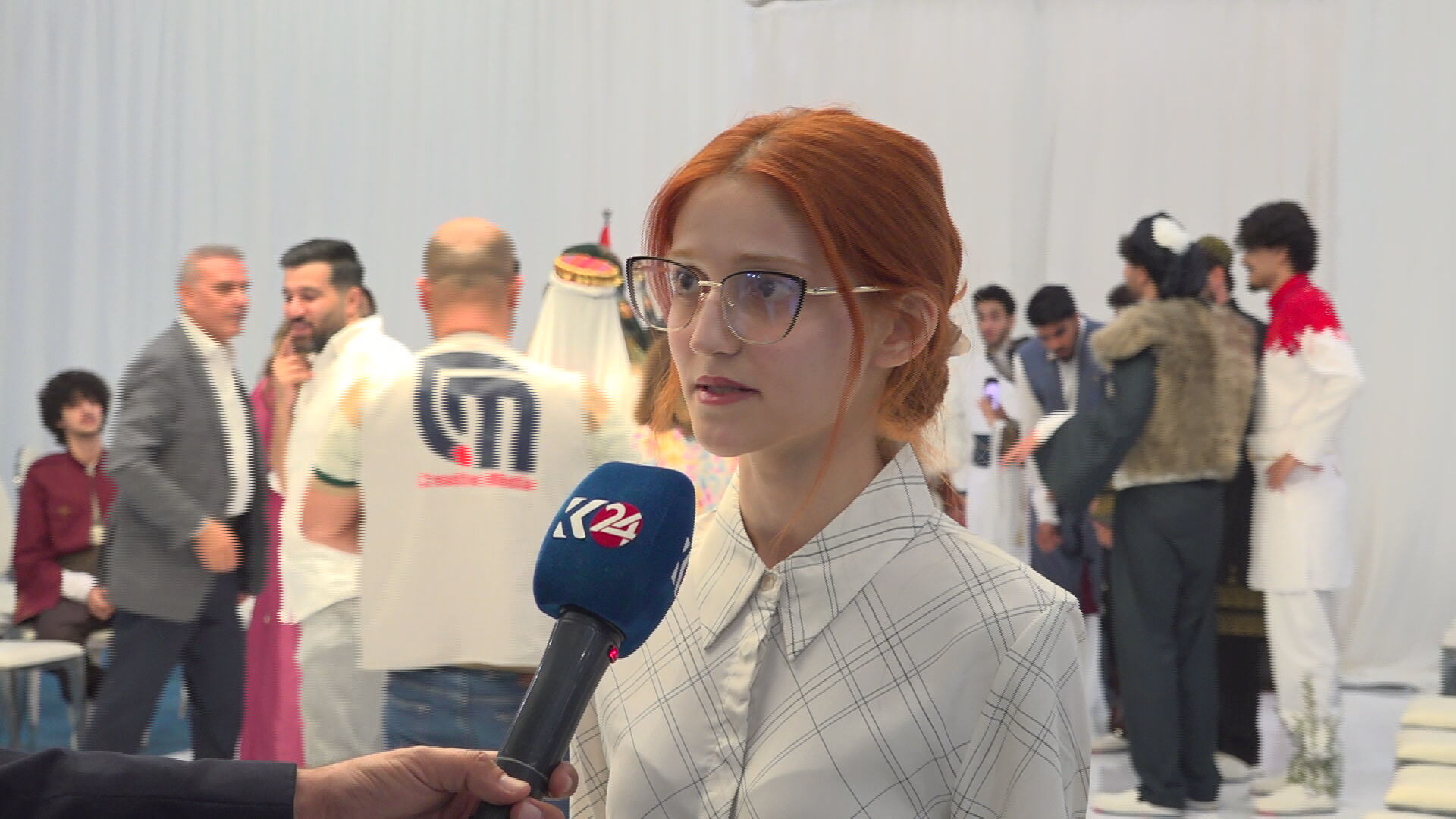
Speaking to's correspondent Ahmad Samad, Piran said the project began with historical photographs.
"The project is inspired by pictures of Kurdish people, very old pictures, black-and-white photographs,"she said. "I looked at these pictures and I thought it was very sad that people don’t wear these clothing anymore."
That feeling became the foundation of Dunadun, a name Piran previously told comes from the Yarsani religious tradition and means "rebirth."
Rather than designing an imagined version of Kurdish fashion, Piran went back to older visual records, studying garments from different parts of Kurdistan and bringing details she found there onto the runway.
She said clothing traditions have become particularly uncommon in areas including Amed and the Urmia region, prompting her to include as many regional forms of Kurdish dress as possible.
"I kind of wanted to make a fashion show including as many different styles of Kurdish clothing as possible,"she said.
To viewers unfamiliar with those historical references, some of the garments may appear contemporary. Piran said that was precisely part of the point.
"If you see it now, you might think, okay, this is new, but it's actually not,"she said. "It's actually Kurdish, but people don't know it."
Piran, who is 20, has spent around three years developing her first collection. Her approach places preservation ahead of extensive modernization, reflecting her concern that older clothing traditions can lose their identity when altered too freely.
She previously told that she prefers to concentrate on traditional elements because too much modernization can cause history to disappear.
The collection also reflects the diversity of Kurdish clothing itself.
Traditional Kurdish dress has varied considerably between regions and communities, with differences in fabrics, cuts, layering, headwear and decoration. Women's clothing has included combinations of long dresses, trousers, jackets, waistcoats, sashes, jewelry and head coverings, while men's clothing developed its own regional forms of loose trousers, shirts, jackets and broad sashes.
For Piran, those distinctions provide material not for creating one standardized Kurdish costume, but for showing how broad the clothing heritage already is.
Models taking part in Dunadun also attached their own meanings to the garments.
One male model described the clothing he presented as being filled with symbols drawn from Kurdish heritage and praised Piran for giving renewed attention to them.
He also raised concerns about cultural appropriation, arguing that distinctive Kurdish motifs should be recognized as part of Kurdish cultural heritage when similar designs appear in international fashion.
"Our culture is far, far richer,"he said, expressing hope that designers such as Piran would encourage greater attention to Kurdish cultural signatures "so that no one can steal something that bears the Kurdish cultural imprint."
His comments represented his own interpretation of the designs and the wider debate over cultural ownership.
For one female model, the symbolism was more explicitly political.
She said her clothing represented the women fighters of Kobani and explained that the braid she wore was intended as a symbol of defiance.
"Let our enemies know that the Kurdish girl is not defeated,"she told.
She linked the braid to an incident involving a Kurdish fighter whose braided hair was cut earlier this year, saying she deliberately incorporated the hairstyle into her appearance as a statement of resistance.
The meanings attached to the garments therefore differed across the runway.
For Piran, the collection begins with historical recovery. For the models, the same clothing can carry ideas of identity, cultural ownership, memory and resistance.
That range of interpretations fits the larger idea behind Dunadun: old clothing returning not as static museum material, but as something capable of being worn and understood again.
Piran has also been cautious about turning Kurdish clothing into a global fashion product simply for commercial appeal. She previously told that making it suitable for everyone could change it too much and weaken the traditional character she is trying to preserve.
Her work instead moves in the opposite direction from much of contemporary fashion.
Rather than asking what can be invented next, Piran searches photographs and disappearing regional traditions for what has already existed but is in danger of being forgotten.
In Erbil, those images stepped out of the archive and onto the runway.
For a collection called "rebirth,"that was the intention: to make forgotten Kurdish clothing visible again, not as a costume from another era, but as a living part of Kurdish cultural memory.