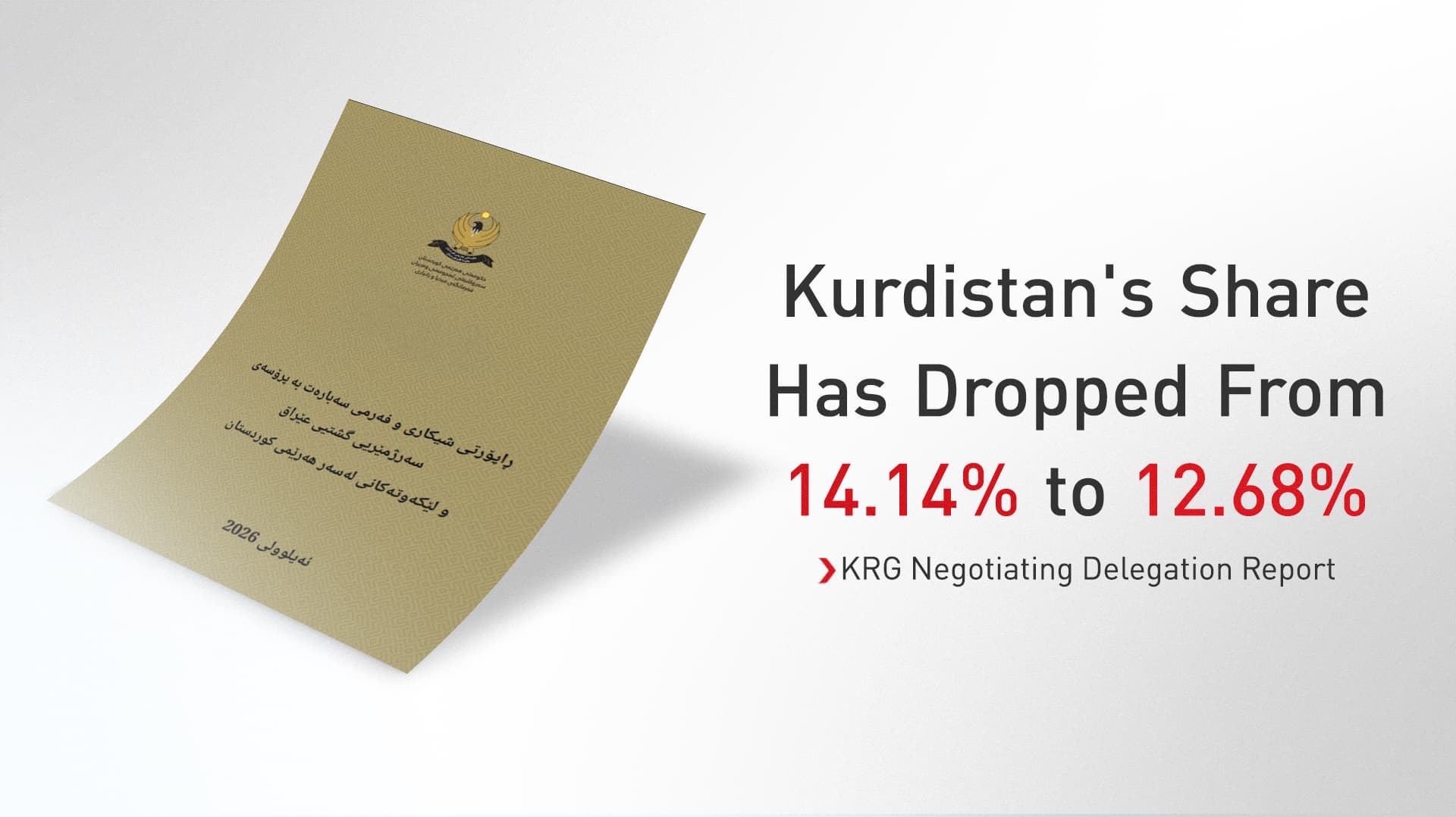
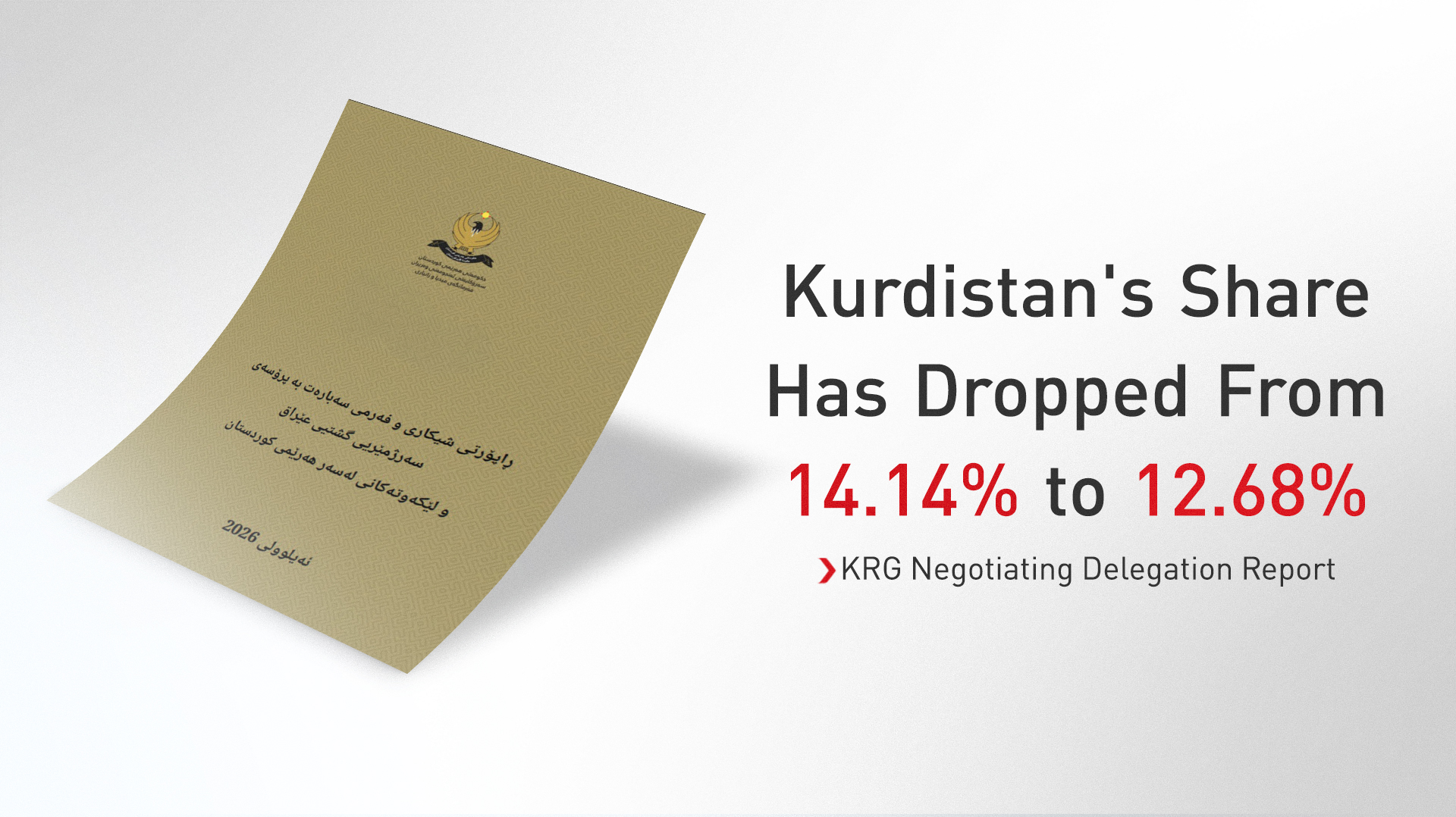
ERBIL () - The Kurdistan Regional Government's negotiating delegation has prepared a comprehensive report on the obstacles and challenges facing the implementation of the Kurdistan Region's share in the federal budget, following the completion of the second session of Iraq's national census on 20 November 2024, revealing that the federal government has unilaterally reduced the Kurdistan Region's share from 14.14 percent to 12.68 percent in a move that directly affects salaries and the Region's share in the 2027 federal budget.
First: Background and Key Proposals
Before the census was completed, discussions between federal and Kurdistan Region planning ministries resulted in the Kurdistan Region issuing several important decisions regarding the federal census, specifically Federal Ministerial Decisions No. 24853, 24859, and 24860.
The most important elements of those decisions include three components. First, field teams were to include representatives from all community components including Kurds, Arabs, Turkmens, Christians, Yazidis, and Shabaks for the national census in Kurdistani areas. Second, a comparative review of census data for 2024 alongside 2024 census data and data from the Ministry of Interior including the Interior and Transport Ministry data from 1957 covering commerce, livestock, and transporters. Third, supporting field teams with both government and civil society supervision so that accurate and reliable statistical data is produced for Kurdistani areas.
Financial provision: 13.83 billion dinars allocated by the KRG Planning Ministry for implementation of the process.
Second: Federal Government Commitments and Shortcomings
Nearly two years after the process began, it has become clear that the federal government has not fulfilled its commitments, specifically in the following areas. In Kurdistani areas, the field teams did not include representatives from all community components as agreed. With regard to follow-up of the census data, the Iraqi census agency confirmed the national population figures at 46,118,793 for Iraq and 6,519,129 for the Kurdistan Region.
Regarding government supervision, on November 28 a formal request was sent to the Iraqi Prime Minister and five formal letters were subsequently sent to the head of the census agency requesting access to technical records and providing any electronic or paper data, but none were provided.
With regard to the federal request to use the 1957 census data as a comparison baseline, the relevant federal body did not respond to the Kurdistan Region's request over more than 12 years, and this project was shelved less than 6 months after the process began, leaving the Kurdistan Region without the additional data that was supposed to be provided.
Financial shortcoming: to date, a budget of approximately 13.8 billion dinars for the census implementation has not been disbursed to the Kurdistan Region by the federal government.
Third: The Challenge of Reducing the Kurdistan Region's Population Share and Financial Consequences
From the beginning of 2026, the federal Planning Ministry, based on the ownership data showing the Kurdistan Region at 14.14 percent, began reducing the share. But in the same year, the ministry reduced this share by regulation to 12.68 percent, and in order to cover the shortage of census data and population controllers the ministry referred to Iraq's population figures in some areas of Kurdistani areas such that the Kurdistan Region government, which has no control over those areas, neither registered nor counted them. As a result, hundreds of thousands of Kurdistani citizens were displaced and scattered.
Kurdistani citizens that the KRG has been sending to those areas include approximately 500,000 people to the areas of Sinjar, Shikhan, Sharbazher, Qaiyas, and Makhmour who returned to their homes but due to the KRG government's lack of administrative control over those areas, the Iraqi federal government's census counted them under its own sovereignty and not as part of the Kurdistan Region's population, without informing the Kurdistan Region government.
Fourth: KRG Demands and Recommendations
The Kurdistan Region government calls for the following. Restoring the 14.14 percent share: the government demands that the Kurdistan Region's share in the 2027 federal budget be based on the 14.14 percent ratio, as this share is what ensures that Kurdistan Region citizens receive their legitimate rights in food, healthcare, and infrastructure projects.
Canceling all annual amendments: for all annual amendments from 2019 to 2025, since according to the law the Kurdistan Region's share was 12.67 percent, but based on the KRG Planning Ministry's data it amounts to only 3.31 percent of the federal budget going to the Kurdistan Region. Relying on this data to support the census registration, the same data accepted by the federal government's census agency, which the field supervision does not accept.