ERBIL () - Twenty-five years ago, a Soviet-designed Mi-17 helicopter crossed the mountains of Afghanistan carrying seven CIA officers on a mission that would open America's longest war, flying under the call sign 9-11-01, painted with an unfinished American flag because no blue paint was available, and carrying millions of dollars in cash to enlist Afghan allies against al-Qaeda and the Taliban, CBS News reported on the anniversary.
The seven-man CIA team, code-named JAWBREAKER, landed in the Panjshir Valley on September 26, 2001, just 15 days after the September 11 attacks. Their mission was to gather intelligence, prepare the ground for the US military campaign, and shore up ties with the Northern Alliance, whose military leader Ahmad Shah Massoud had been assassinated by al-Qaeda operatives just two days before September 11.
The Mi-17 that carried them is now on display at CIA headquarters in Langley, Virginia, where it has undergone an extensive restoration ahead of the anniversary. The aircraft flew more than 300 missions in Afghanistan before its final operational flight in 2012.
A Helicopter Built to Blend In
The CIA acquired the Mi-17 in the 1990s, calculating that its Soviet origins would be an advantage in Afghanistan, where both the Northern Alliance and the Taliban used the same model. "The big reason we got an Mi-17 rather than flying in a Blackhawk is because it blends in,"CIA historian Rob Byer told CBS News. "And when you're going behind enemy lines, you'd like to blend in as much as you can."
The aircraft had no transponder to identify it to American warplanes. The crew improvised by painting USA and an American flag across the tops of its stabilizers, visible to friendly pilots overhead but hidden from enemy eyes on the ground. The call sign 9-11-01 was a reminder of what had brought them there. To cross the Anjuman Pass on the route to the Panjshir Valley, which rises roughly 14,500 feet above sea level, the Mi-17 was one of the few helicopters capable of making it over at that altitude.
Former CIA officer David Tyson, who flew aboard the same aircraft as a member of Team Alpha, remembered it vividly. "It was shaking a lot, fuel was leaking, very noisy, and I didn't know if it was airworthy,"Tyson told CBS News. "But I was assured by the pilots it was a good bird."
Team Alpha and the First American Killed
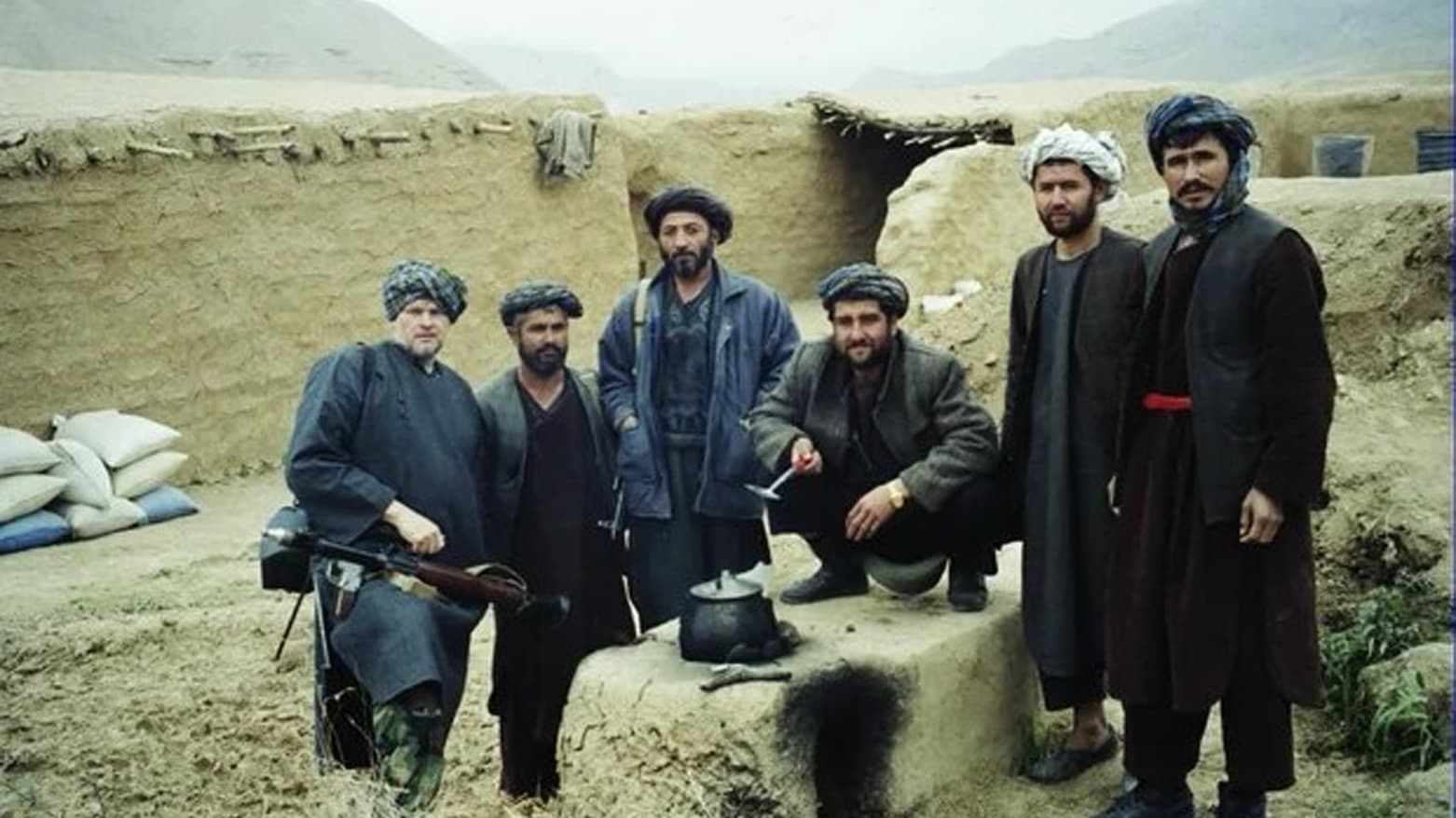
Tyson was a CIA case officer based in Central Asia, fluent in Uzbek, Turkmen, and Russian, who was on a flight to the United Kingdom on September 11, 2001, for a meeting related to recovering Stinger missiles left over from the Soviet war in Afghanistan. He realized immediately that his expertise would take him to Afghanistan. On October 17, less than three weeks after JAWBREAKER arrived, Tyson and Team Alpha were inserted into northern Afghanistan behind Taliban lines, working with forces commanded by Uzbek leader Abdul Rashid Dostum. They traveled on horseback through the mountains, sometimes riding as long as 14 hours a day on saddles that were wooden frames with carpets thrown over them.
"The horses were not friendly,"Tyson recalled. "They were stallions, they fought between each other, they bit us, they kicked us, they tried to knock us off."
By late November, Taliban forces had collapsed across much of northern Afghanistan. On November 25, Tyson and fellow CIA officer Johnny Micheal Spann entered Qala-i-Jangi fortress near Mazar-e-Sharif, where hundreds of foreign fighters who had surrendered were being held. Hours into their mission, the prisoners rose up.
"There were explosions, gunfire, and a lot of yelling,"Tyson said. "I started seeing things in what I would call slow motion."He heard Spann call his name and began moving toward his partner through the fighting. "I remember seeing his silhouette or body on the ground. I believe Mike was already dead when I got to him and I was able to shoot the men on top of him and took Mike's rifle from him."
Spann, 32, became the first American killed in combat in Afghanistan. His was the 79th star carved into the CIA's Memorial Wall. Tyson fought his way to safety with Spann's rifle, which he continued using for the rest of his deployment. The rifle and Tyson's boots, dubbed Dad's lucky boots by his then-eight-year-old son, are now displayed in the CIA Museum alongside each other. "That rifle saved my life, I think, among other things,"Tyson said. "It's very fitting that that rifle's in the museum. It reminds us of Mike and who he was."
Still Thinking About Mike Every Day
Tyson said he thinks about Spann on a daily basis. "I'd like to think he helps guide me through things,"he said. Tyson and Spann's widow Shannon Spann DeBruyn are now involved with Badger Six, a nonprofit named after Spann's call sign, which supports approximately 35 Afghan fighter families who worked alongside Team Alpha, providing food, medicine, relocation, and resettlement support after the Taliban reclaimed Afghanistan in 2021.
Asked whether he feels an obligation to help where governments have not, Tyson answered simply: "Sure, yeah. That's what people do. That's what we do."