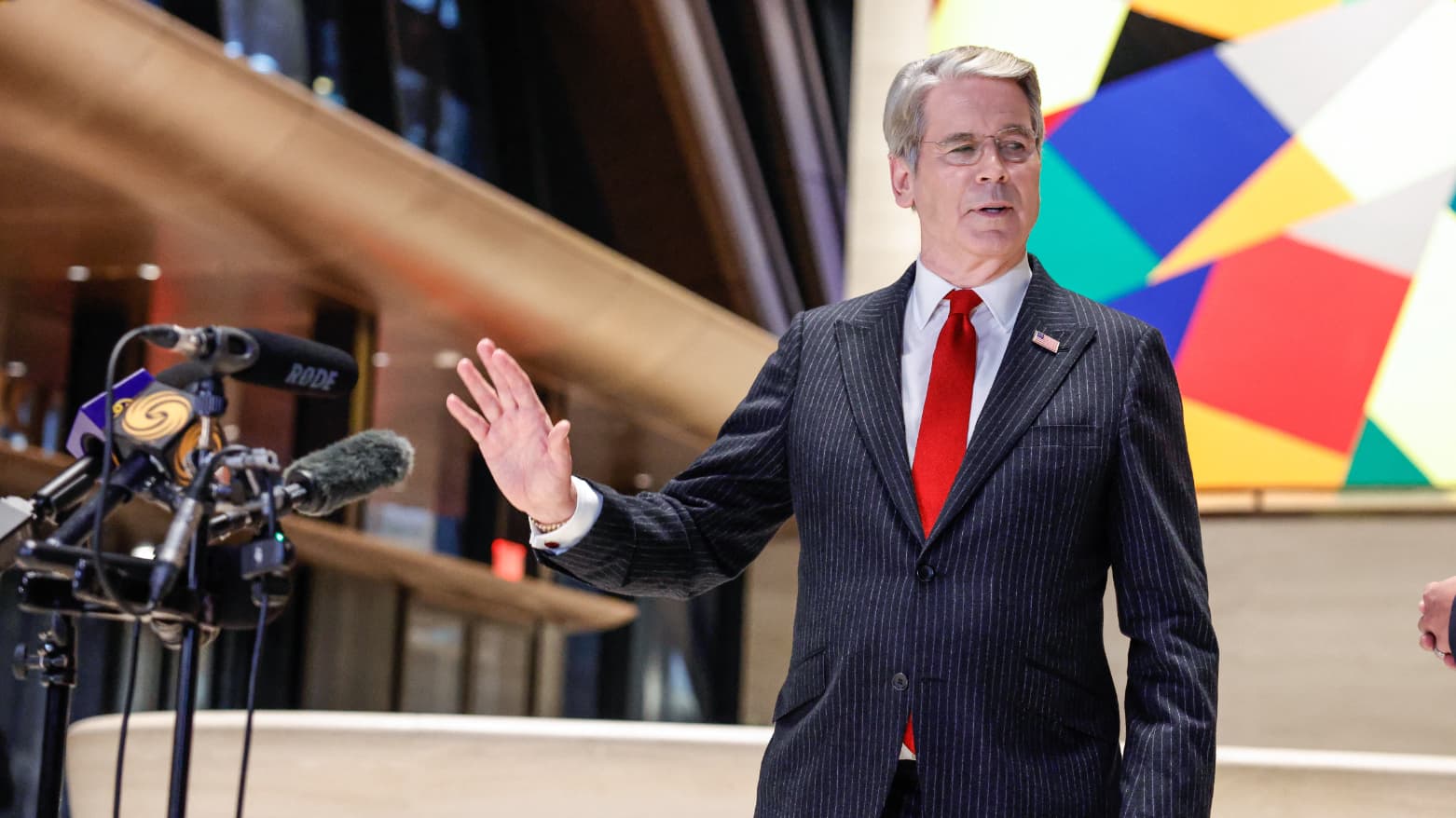
ERBIL () - U.S. Treasury Secretary Scott Bessent said Washington's international campaign to isolate Iran economically is producing results, pointing to restrictions on Iranian airlines and banks in Türkiye, Oman and the United Arab Emirates as the United States intensifies pressure on Tehran alongside continuing diplomacy over the Strait of Hormuz.
Writing on X, Bessent said Treasury teams had been dispatched internationally to press governments to take action against Iran following the launch of "Operation Economic Outcast,"the Trump administration's campaign targeting Iranian financial, aviation and commercial links.
"These efforts are delivering results,"Bessent wrote.
He said Türkiye and Oman had stopped Mahan Air flights, while the UAE had halted services by Iranian airlines. Bessent also said major commercial banks in Türkiye and the UAE had ceased transactions involving Iran.
The Treasury Department launched Operation Economic Outcast on Aug. 24, describing it as an effort to sever financial channels used by Tehran. On Sept. 8, the department sanctioned 36 targets connected to Iran's aviation sector, including 27 Iranian airlines, and warned companies providing services to sanctioned carriers of possible exposure to U.S. restrictions.
Bessent said teams acting at his direction had engaged governments around the world and thanked the United Kingdom, Türkiye, Oman and the UAE for their cooperation.
The Wall Street Journal, in a report by Benoit Faucon, described a broader diplomatic effort led in part by Jonathan Burke, a U.S. Treasury assistant secretary for terrorist financing and a former Citi managing director.
According to the newspaper, Burke traveled through the Middle East and Europe urging countries maintaining economic links with Tehran to choose between those connections and access to the United States.
Burke told the newspaper that Washington was seeing greater urgency from its partners.
The report said U.S. officials had engaged more than 50 countries as part of the campaign, focusing in particular on aviation services and banking ties that had remained available to Iran despite years of sanctions.
The effects have become visible across the region.

Mahan Air services to Türkiye and Oman were halted, while the UAE suspended Iranian airline operations. Iranian carriers have also faced restrictions elsewhere as U.S. measures increasingly affect ground handling, ticketing and other services required to operate international routes.
Washington has presented those developments as evidence of the effectiveness of its pressure campaign.
The regulatory decisions themselves, however, have not always been formally attributed to U.S. demands.
Türkiye's banking regulator revoked the operating license of Bank Mellat's Istanbul branch on Sept. 18. The official decision cited provisions of Turkish banking law concerning risks to depositors and financial stability rather than explicitly linking the action to Washington's pressure campaign.
In the UAE, the central bank barred branches of Bank Melli Iran from conducting financial transactions to and from Iran, including trade finance and transfers. UAE authorities said the measures followed compliance violations related to anti-money laundering, counterterrorism financing and proliferation financing requirements.
The distinction reflects the different ways the measures are being presented: Washington views them as part of an increasingly coordinated effort to cut Iran's external economic connections, while national regulators have also cited their own domestic legal and compliance grounds.
Iranian officials, meanwhile, have acknowledged the economic pressure but rejected the idea that it will force Tehran to abandon its position.
Iranian President Masoud Pezeshkian told the UN General Assembly that sanctions were causing hardship but said Iran would resist rather than submit to pressure.
The economic campaign is unfolding alongside a separate diplomatic effort over the nearly seven-month confrontation between Washington and Tehran and restrictions on shipping through the Strait of Hormuz.
Iranian Foreign Minister Abbas Araghchi said early Sunday that Tehran had heard President Donald Trump's initial reaction to an Iranian proposal for ending hostilities and reopening the strait but had not yet received Washington's formal response through mediators.
"We are waiting for the mediators to convey Washington's final view and position to us,"Araghchi said.
Tehran has proposed a seven-day framework under which it would reopen the Strait of Hormuz and resume negotiations if its conditions are met. Those demands include an end to the U.S. naval blockade, sanctions relief and the release of frozen Iranian assets.
Araghchi said reopening Hormuz depended on full implementation of Iran's conditions and argued that a negotiated settlement remained the only viable way out of the confrontation.

The pressure campaign and diplomatic track are therefore advancing simultaneously: Washington is seeking to reduce Iran's economic options while Tehran is attempting to use the Strait of Hormuz and negotiations to secure relief.
Oman, which has maintained a role in regional mediation, has continued to advocate dialogue.
Foreign Minister Badr Albusaidi told the UN General Assembly that Muscat remained committed to safeguarding maritime security in the Strait of Hormuz while supporting Gulf states in protecting their sovereignty.
He said dialogue and negotiation remained the best means of resolving regional crises and warned that the conflict had damaged shipping, energy security and confidence in regional stability.
Oman's Foreign Ministry also said Albusaidi met Araghchi in New York and discussed continued diplomatic engagement, regional security and freedom of navigation through Hormuz.

For Washington, however, economic leverage remains a central part of its strategy.
Bessent said Iran's falling currency and the expanding restrictions on airlines and banks demonstrated the cost of the campaign, while promising further action against Tehran.
Iran maintains that sanctions will not make it abandon its demands.
The resulting picture is one of parallel pressure and negotiation: U.S. officials are working to narrow Iran's remaining international economic connections even as regional intermediaries continue trying to bridge the gap between Washington and Tehran over the war, sanctions and the future of the Strait of Hormuz.