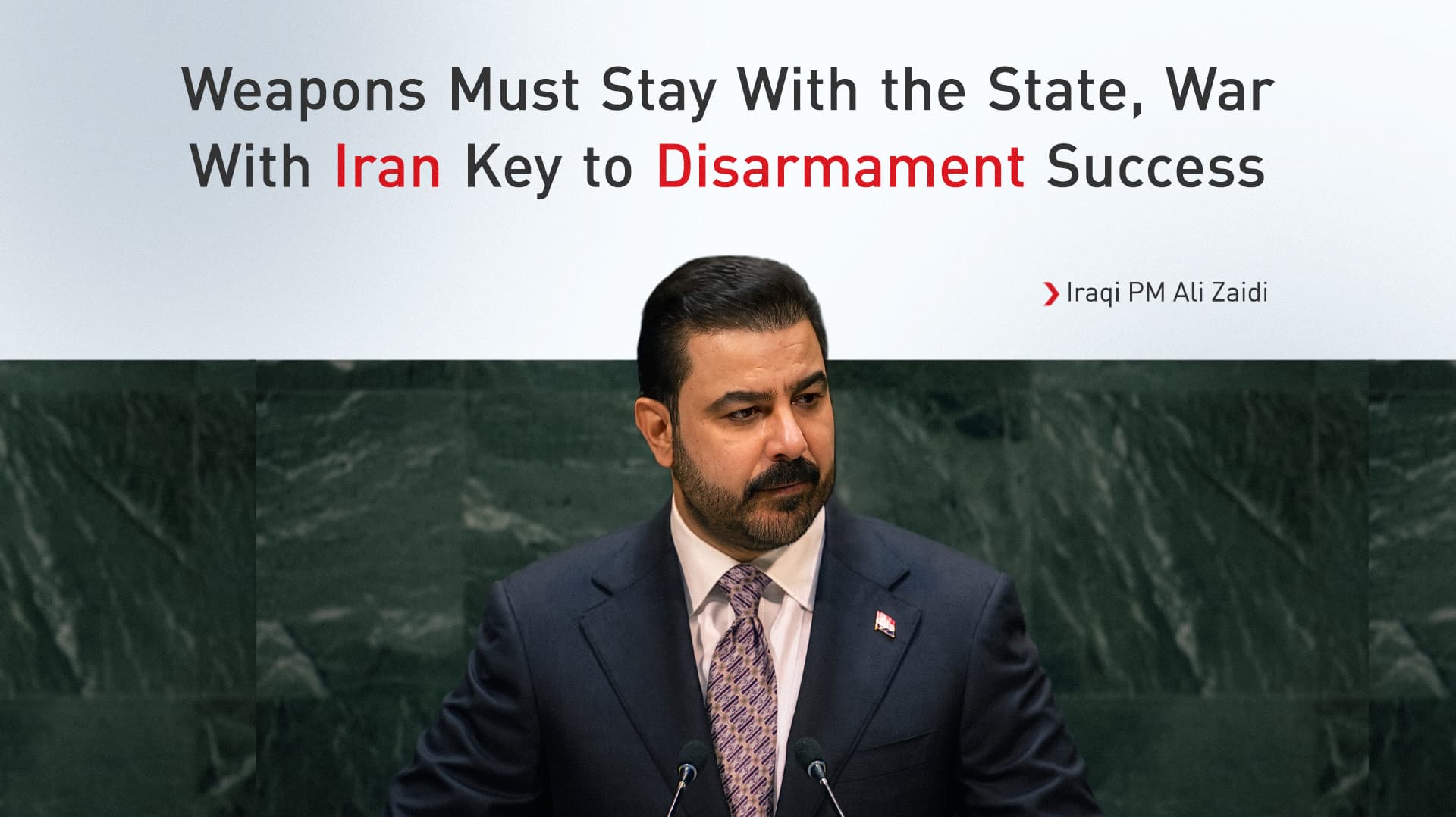
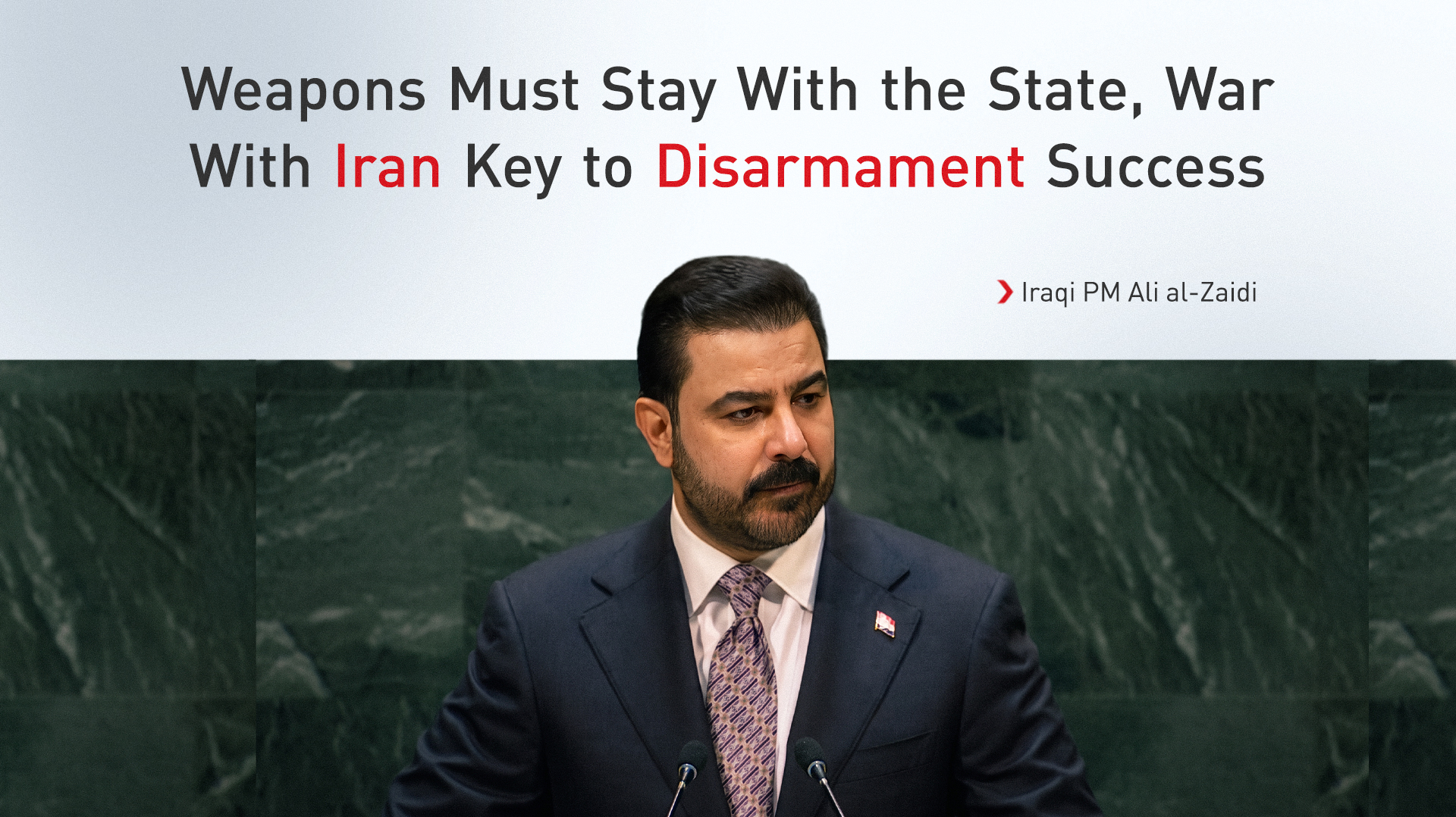
ERBIL () - Iraqi Prime Minister Ali al-Zaidi delivered one of his most consequential weeks of diplomacy since taking office in September 2026 at the United Nations General Assembly in New York, announcing a phased militia disarmament plan with a June 30, 2027, deadline, meeting President Donald Trump and Secretary of State Marco Rubio, and securing a landmark agreement with Türkiye for the gradual handover of the Bashiqa military base and an end to PKK presence in Sinjar.
"Our priority is for weapons and instruments of power to remain in the hands of constitutional institutions,"al-Zaidi said in his address to the UN General Assembly. "With the end of the international coalition's mission in our country, we look forward to our cooperation transitioning from military to economic."He added: "Our vision at this stage is to restore the authority of the law and strengthen state institutions,"framing the militia disarmament process not as a concession to external pressure but as an expression of Iraq's own constitutional and national interest.
Rubio Warns of Balkanization
Secretary of State Marco Rubio met with al-Zaidi on Tuesday night on the UNGA sidelines and delivered Washington's most explicit warning yet about the consequences of inaction on militia disarmament. Rubio warned that Iraq risks Balkanization unless its armed factions are brought under state control, telling reporters at the Palace Hotel in New York on Wednesday that Washington did not doubt al-Zaidi's commitment to disarming Iraqi armed groups, but called it a massive and difficult challenge. The State Department confirmed the two sides agreed on the importance of Iraq dismantling terrorist militias, preventing attacks from Iraqi territory, and fully exercising its sovereignty.
Al-Zaidi also attended a multilateral meeting of the Gulf Cooperation Council at the United Nations General Assembly on September 22, 2026, alongside President Trump and other world leaders, his first direct encounter with the American president since taking office.
Türkiye Agrees to Hand Over Bashiqa Base
In one of the most significant bilateral agreements to emerge from al-Zaidi's UNGA week, Türkiye agreed to the gradual handover of the Bashiqa military base to Iraq following a meeting between al-Zaidi and Turkish President Recep Tayyip Erdogan on the UNGA sidelines on Wednesday. The two sides reached an agreement on fully establishing state authority in Sinjar and ending the presence of outlawed foreign armed elements, in an apparent reference to the PKK, which has maintained a presence in the mountainous Sinjar region. They also agreed to expand bilateral trade and investment, implement signed agreements immediately, and accelerate joint strategic projects including the Development Road project.
The Bashiqa agreement is particularly significant for the Kurdistan Region, as the Bashiqa base housed Turkish forces and was a focal point of tensions between Ankara, Baghdad, and Erbil throughout the post-ISIS period. An agreement to hand it back to Iraqi state authority, combined with the commitment to establish state control in Sinjar and end PKK presence there, addresses two of the most sensitive sovereignty files in the Kurdistan Region simultaneously.
The Disarmament Plan
Under al-Zaidi's phased plan, the process would begin with a 90-day halt in militia attacks, during which US forces would also refrain from attacking the groups, creating a mutual de-escalation window before the weapons handover phase begins. Some factions are pushing for a further extension to the end of 2027. The plan faces strong resistance from multiple major factions including Kataib Hezbollah, Harakat al-Nujaba, and Kataib Sayyid al-Shuhada, all of which have refused to comply with the weapons handover process and have reframed it as reorganization rather than disarmament.
The Trump administration had previously warned al-Zaidi during his Washington visit that monthly dollar transfers to Iraq would be suspended if Iran-aligned groups did not disarm, a financial ultimatum exclusively confirmed through two Iraqi government sources. The plan's success remains heavily contingent on whether the US-Iran war ends, as holdout factions point to the ongoing conflict as justification for maintaining their armed posture. A war-ending agreement between Washington and Tehran would remove the primary political argument the groups have used to resist compliance.
The international coalition's military mission in Iraq officially concludes on September 30, 2026. Al-Zaidi's framing at the UN of the post-coalition relationship as a shift from military to economic cooperation signals that he wants the coalition's departure to open a new chapter rather than mark a rupture, with economic partnership replacing the security framework that has defined the US-Iraq relationship since 2003.