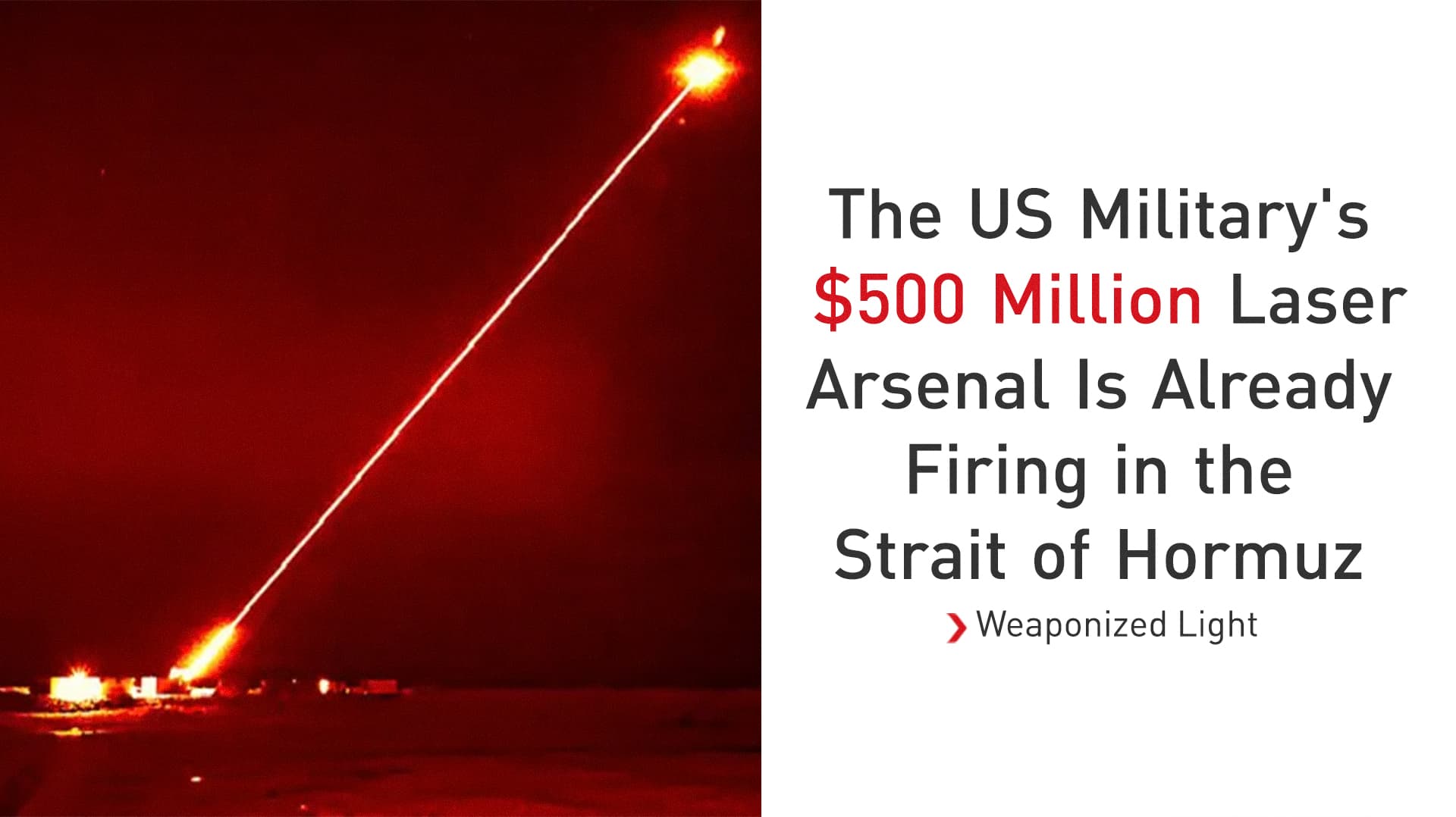
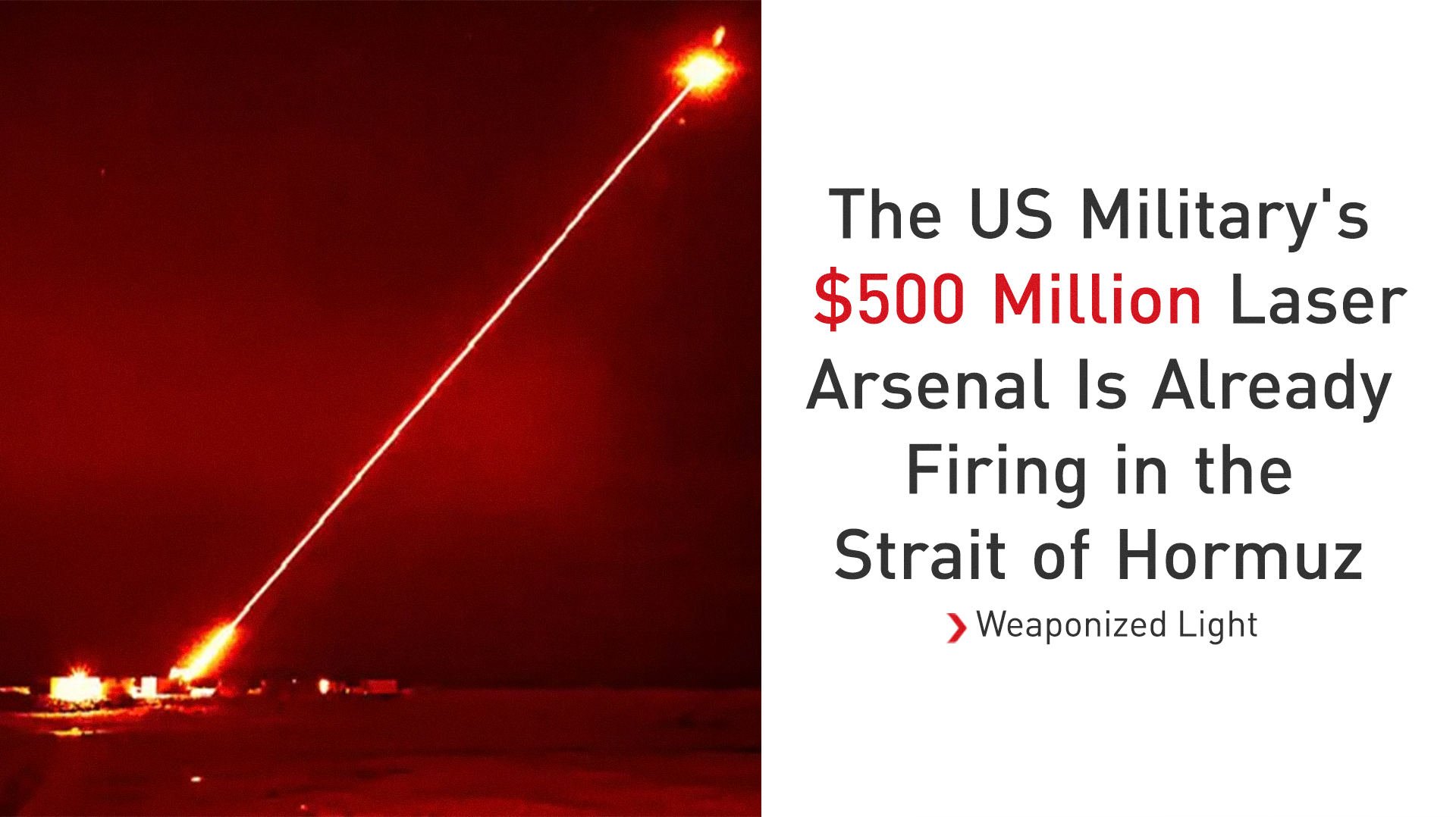
ERBIL () - The United States military has been deploying laser weapons in the Strait of Hormuz to destroy Iranian drones and incoming cruise missiles throughout the current conflict, the Department of Defense confirmed, as the Army awards a half-billion-dollar contract for war-ready laser systems and experts say the technology represents the most significant transition from laboratory to battlefield since President Ronald Reagan's Strategic Defense Initiative in the 1980s.
We can very specifically track and target drones and put the spot exactly where we want it, to disable its sensors or kill the drone itself,
Mark Neice, president of Directed Energy Consultants, which works with the US military, told the New York Post.
The lasers are taking out drones and incoming cruise missiles "at a much lower cost than using more expensive kinetic weapons like missiles,"the Department of Defense confirmed, a cost advantage that has become particularly significant given the documented strain on US precision munitions stockpiles after seven months of intensive operations against Iran.
The systems deployed in the Middle East are known as High-Energy Laser with Integrated Optical Dazzler and Surveillance, or HELIOS, systems, which focus a 60-kilowatt high-energy laser on a target. They are large and heavy, requiring mounting on battleships, and draw energy from generators or battery packs, convert it into photons, and concentrate those photons into a single beam that heats the target's surface until it explodes or melts. The beam is invisible to the naked eye, detectable only under infrared light.
"It's weaponized light that spends several seconds of what we call dwell time on the target to bring it down,"said Jared Keller, publisher of the Laser Wars newsletter. "The most significant development is the Army awarding a half-billion-dollar contract for building war-ready lasers that focus photons on a target to deliver catastrophic, destructive effects,"he added.
One of the most striking operational details of the laser weapons programme is its control system. Soldiers operate the systems using reconfigured Xbox game console controllers, a decision the military made because the gaming industry had already solved the problem of intuitive precision control. "If you've shot a Spartan laser in Halo, you can probably fire one of the cutting-edge weapons in real life,"Keller said. Defense Secretary Pete Hegseth attended a laser weapons demonstration at White Sands Missile Range in New Mexico in June 2026 and was able to shoot down a drone himself after only a few minutes of training using the controller.
Beyond the Middle East, the technology has been tested on the US southern border, where the Joint Task Force Southern Border has used laser systems to shoot down drug-dealer drones sent from Mexico, with at least 11 drones downed so far. "Anything we can do to eliminate the cartel threat, or even inconvenience them, is a plus. These look like they are being pretty effective,"said Brent Ziarnick, a senior fellow in defense studies at the American Foreign Policy Council.
The strategic implications of laser weapons for military logistics are significant. "Solid-state lasers have very few moving parts,"Ziarnick said. "Put enough energy through them, and it's possible to have a very good defensive system. You can, conceivably, not have to worry about ammunition stockpiles. It can change military logistics quite a bit."That characteristic is directly relevant to the Iran conflict, in which Pentagon concern about munitions stockpile depletion led to the polygraphing of nearly 50 Joint Chiefs officers over leaked reports of precision weapons shortfalls. A system that requires no physical ammunition and draws only on electrical power fundamentally changes the sustainability calculus of sustained high-tempo operations.
The technology does have limitations. Laser weapons require clear skies to function effectively and struggle to defend against drone swarms, a threat that Iran and its proxy forces have deployed extensively throughout the conflict. Boeing recently announced a Compact Laser Weapon System capable of taking out Group 3 drones weighing up to 1,300 pounds, expanding the range of targets the technology can engage.
The next frontier is space. Laser weapons are expected to play a role in the US Space Force, which Air Force Secretary Troy Meink publicly confirmed on September 14, 2026, has deployed active weapons into Earth's orbit, the first such public American acknowledgment. When asked directly whether that orbital capability included lasers, Neice told the New York Post: "Oh, absolutely."Keller described the current moment as having "more momentum in transitioning lasers from lab to battlefield than there's been since Reagan's Star Wars program,"adding: "I would even call Donald Trump the Laser President."