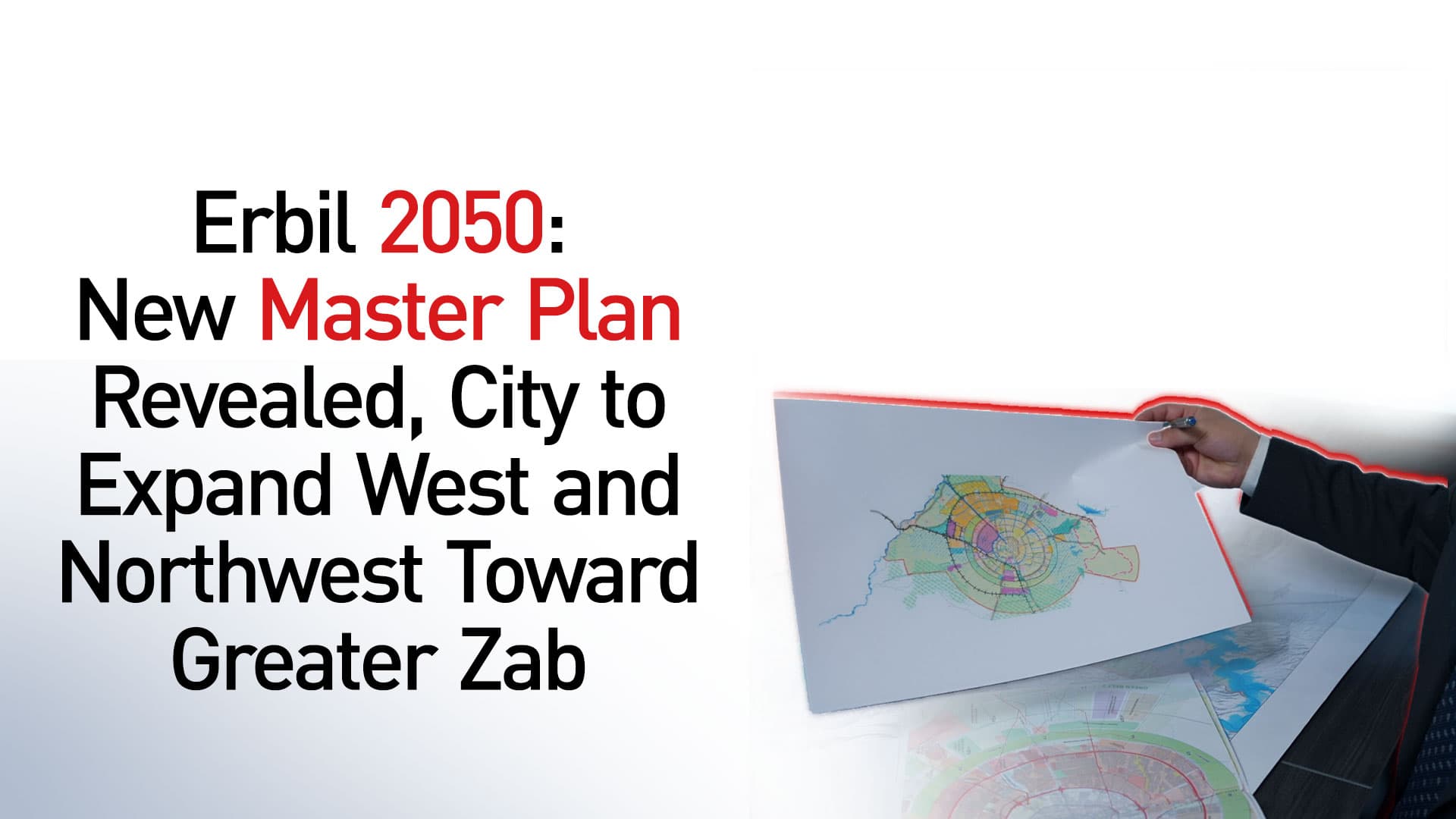
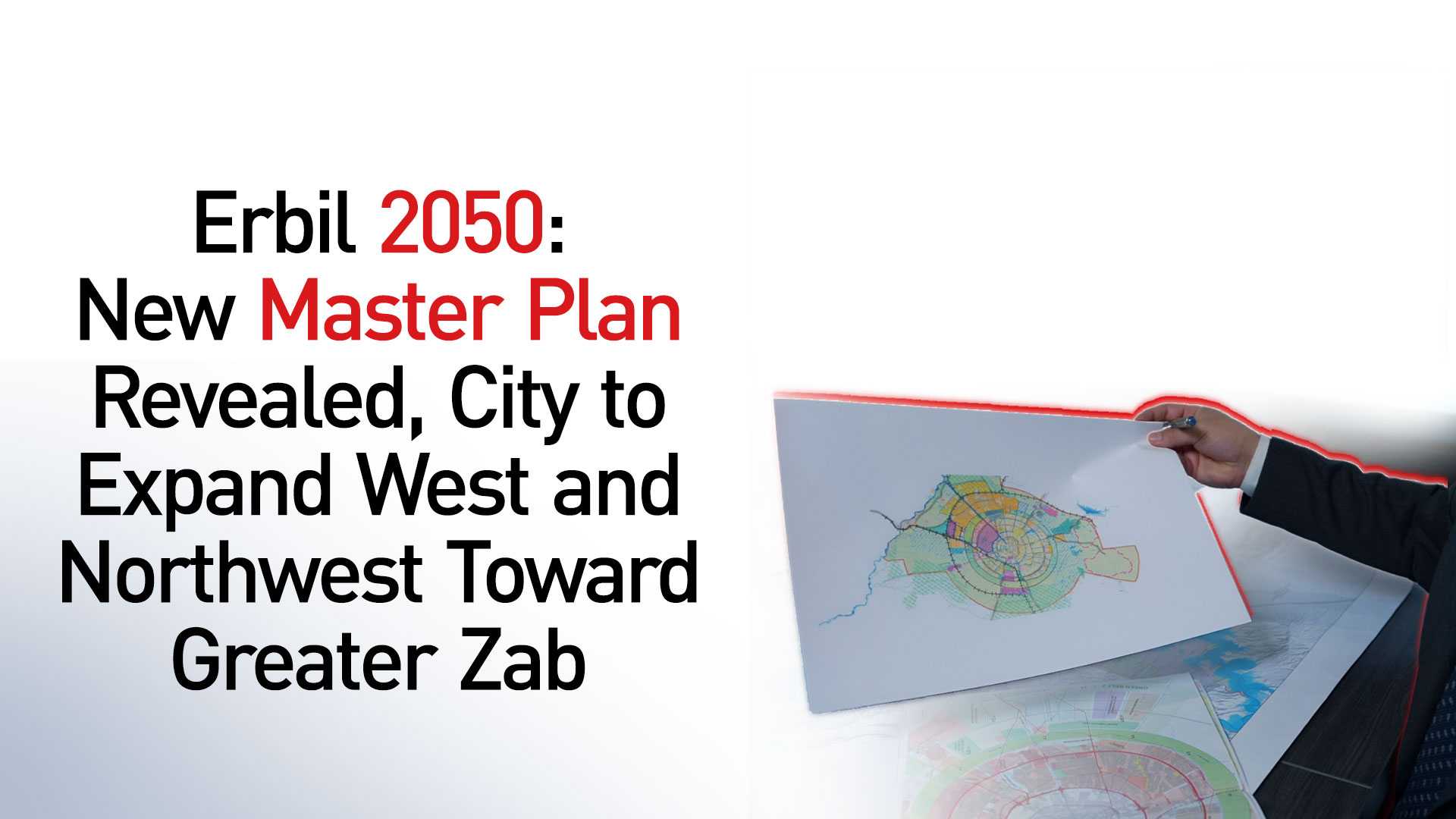
ERBIL () - The Kurdistan Region Government formally announced the approval of Erbil's new master plan on Wednesday in a ceremony attended by senior government officials, with the plan setting out the capital's development trajectory through to 2050 and directing the city's physical expansion toward the Greater Zab river in a westward and northwestward direction.
Sasan Awni, Minister of Municipality and Tourism of the Kurdistan Regional Government, told a press conference at the announcement ceremony: "The main subject of the master plan revision is to direct the growth of the city of Erbil until 2050, organized in a way that achieves sustainable development. Within this framework, 26 different visions have been designed across several fields and several strategies have been prepared for their implementation."
The minister confirmed that the preparation of the master plan was carried out scientifically, taking into account Erbil's history, past, current situation, and future development, with comprehensive reviews conducted across the sectors of water, drainage, electricity, environment, climate change, industry, economy, culture, transportation and logistics, flood protection, public services, infrastructure, identity preservation, and tourism.
On the direction of the capital's expansion, Awni was specific. "According to this master plan, the future expansion of Erbil will be toward the Greater Zab in the westward and northwestward direction,"he said, adding that the expansion direction was determined through a scientific Organization Potential Analysis resting on 19 distinct factors, including proximity to rivers and water sources, temperature levels, natural water flow patterns, underground water availability, soil gradient, agricultural land, green buffer zones, the location of waste sites and refineries, road networks, employment centers, railway stations, the airport, natural sites, and heritage sites.
The new Erbil master plan was first presented to KRG Prime Minister Masrour Barzani on December 15, 2024, and after incorporating observations was submitted to Erbil's Municipal Council on December 17, where it received approval. The implementation of the master plan aims to bring advances in economic, social, environmental, and quality-of-life dimensions to the capital over the coming years, with the stated objective of elevating Erbil to the standard of the world's advanced cities.
Erbil is one of the oldest continuously inhabited cities in the world, with the Erbil Citadel at its center recognized as a UNESCO World Heritage Site. The master plan's explicit attention to identity preservation and heritage site protection as one of its 14 reviewed sectors reflects the challenge of reconciling the capital's ancient core with the demands of a rapidly growing modern metropolis whose population has expanded significantly over the past two decades as a result of economic growth, migration from other parts of Iraq, and the displacement caused by the ISIS crisis of 2014.
The westward and northwestward expansion toward the Greater Zab, directed by scientific analysis of 19 factors rather than by speculative developer pressure or political convenience, represents a significant step toward evidence-based urban planning for a city that has seen rapid and sometimes uncoordinated growth. The plan's 26 strategic visions spanning 14 sectors give Erbil the most comprehensive urban development framework it has had in its modern history.