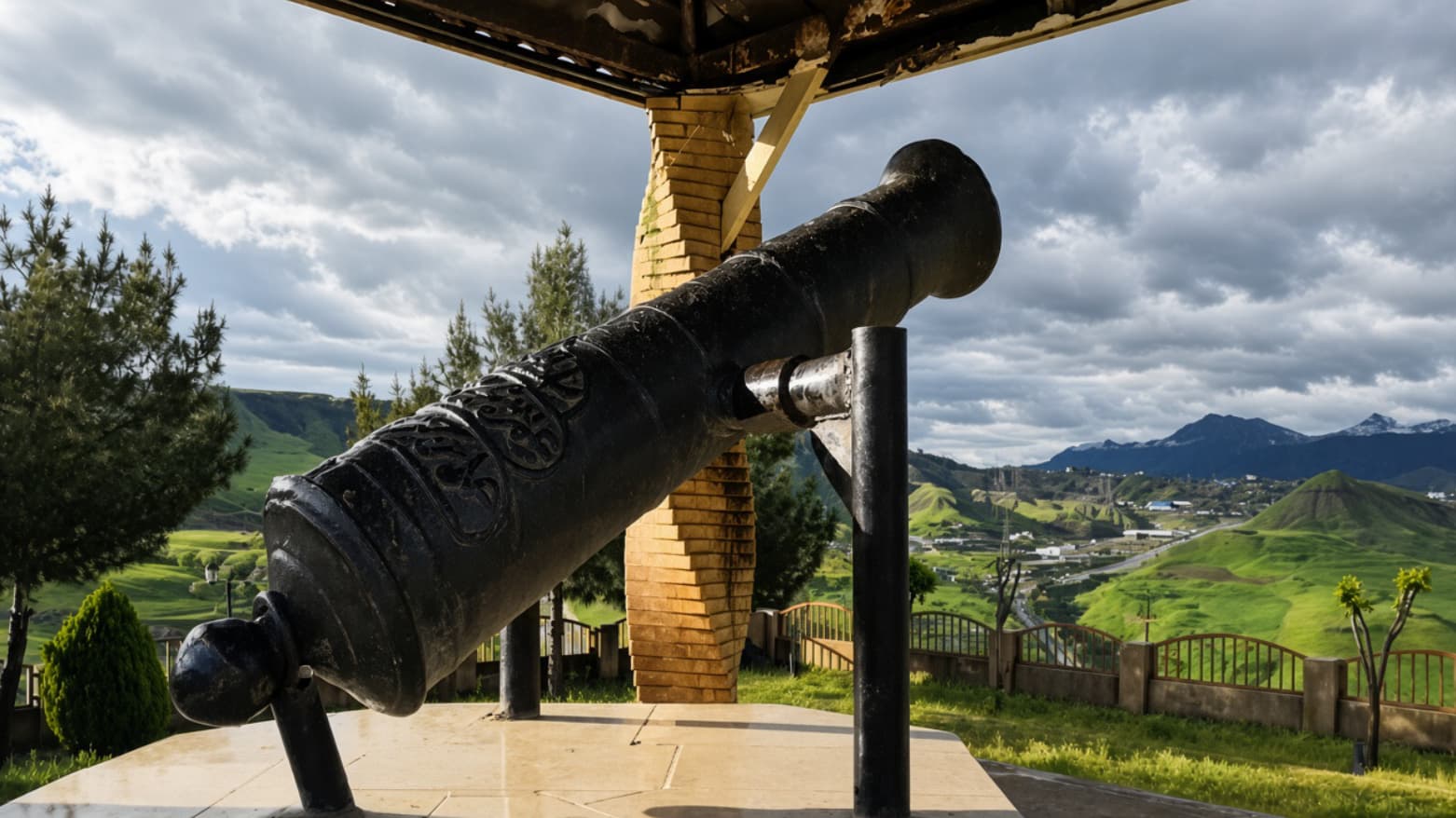
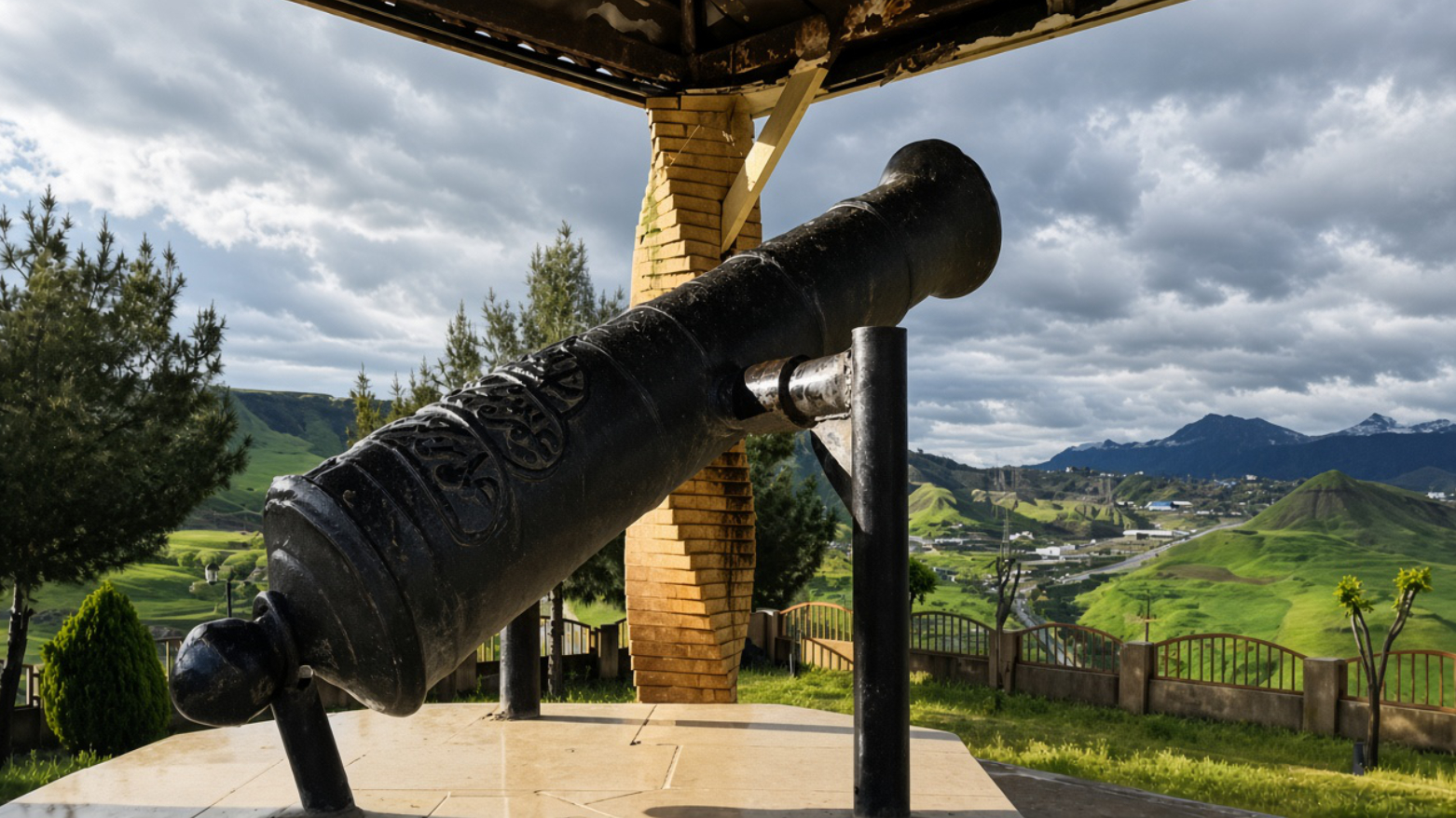
ERBIL () — A cannon believed to have been crafted during the Soran Emirate has become a historical landmark in Erbil’s Rawanduz district, offering a rare reminder of the emirate’s military power and the fate of its antiquities following its collapse.
The Ottoman campaign against the Soran Emirate in 1836 resulted in the destruction and confiscation of much of its military equipment. Some weapons were reportedly thrown into the Rawanduz Gorge, where a number of artifacts are believed to remain undiscovered.
The Soran Emirate expanded significantly between 1813 and 1836, extending its control from Rawanduz over large parts of Duhok, Erbil, and Mosul.
Although the cannon currently displayed in Rawanduz may give the impression that the emirate possessed only a small number of such weapons, historical records indicate that its army had 222 cannons, according to Rawanduz mayor Ahmed Qadir.
Qadir told that many of the cannons were destroyed or confiscated during the Ottoman campaign, while others were thrown into the Rawanduz Gorge.
He said only two cannons are currently known to remain — one in Rawanduz and another in Baghdad.
However, officials in the Kurdistan Region’s General Directorate of Antiquities have provided a different account of the number of surviving cannons.
Jamal Jamil Asaad, director of antiquities affairs at the directorate, told that 128 cannons made by Wasta Rajab are housed at Baghdad’s War Museum. He said the cannons are of different sizes, including large, medium, and small pieces.
The War Museum, established in Baghdad’s Adhamiya district in 1959, displayed military equipment, weapons, uniforms, and other artifacts from Iraq’s military history. The museum was damaged and looted following the events of 2003 and remained closed for an extended period, while efforts were later made to protect and relocate its collections.
confirmed that historical accounts put the Soran Emirate’s cannon inventory at 222. However, it could not independently verify whether more than 100 of those cannons remain in Baghdad, particularly given the reported looting of the War Museum.

Disputed fate of Kurdish antiquities
The uncertainty surrounding the cannons reflects a broader issue concerning antiquities originating from the Kurdistan Region and currently held in Baghdad.
Former members of the Iraqi Parliament's Culture, Media, Tourism and Antiquities Committee, Chia Taymur and Nahla Effendi, told that no officials from the Kurdistan Region had contacted them regarding efforts to recover such artifacts.
“No one informed us,” Taymur said.
The issue also raises questions over the legal authority governing antiquities in Iraq.
Iraq’s 2005 Constitution provides for shared federal and regional powers over the administration and management of antiquities. Article 114 lists antiquities among the matters subject to shared authority, while Article 115 gives regional authorities precedence in areas that are not exclusively assigned to the federal government when disputes arise.
Article 121 also grants regions legislative, executive, and judicial powers to exercise their authorities in accordance with the Constitution.
At the same time, Iraq’s Antiquities and Heritage Law No. 55 of 2002, enacted before the current Constitution, established a centralized system for the management of antiquities and required archaeological artifacts to be transferred to the National Museum in Baghdad.
Article 141 of the Constitution states that legislation enacted before its adoption remains in force only insofar as it does not conflict with the Constitution.
The differing interpretations of these provisions have contributed to an unresolved debate over the ownership, administration, and return of antiquities originating in the Kurdistan Region.
For now, the cannon displayed in Rawanduz remains one of the few visible reminders of the Soran Emirate’s military history, while the fate and location of many other cannons attributed to Wasta Rajab remain uncertain.