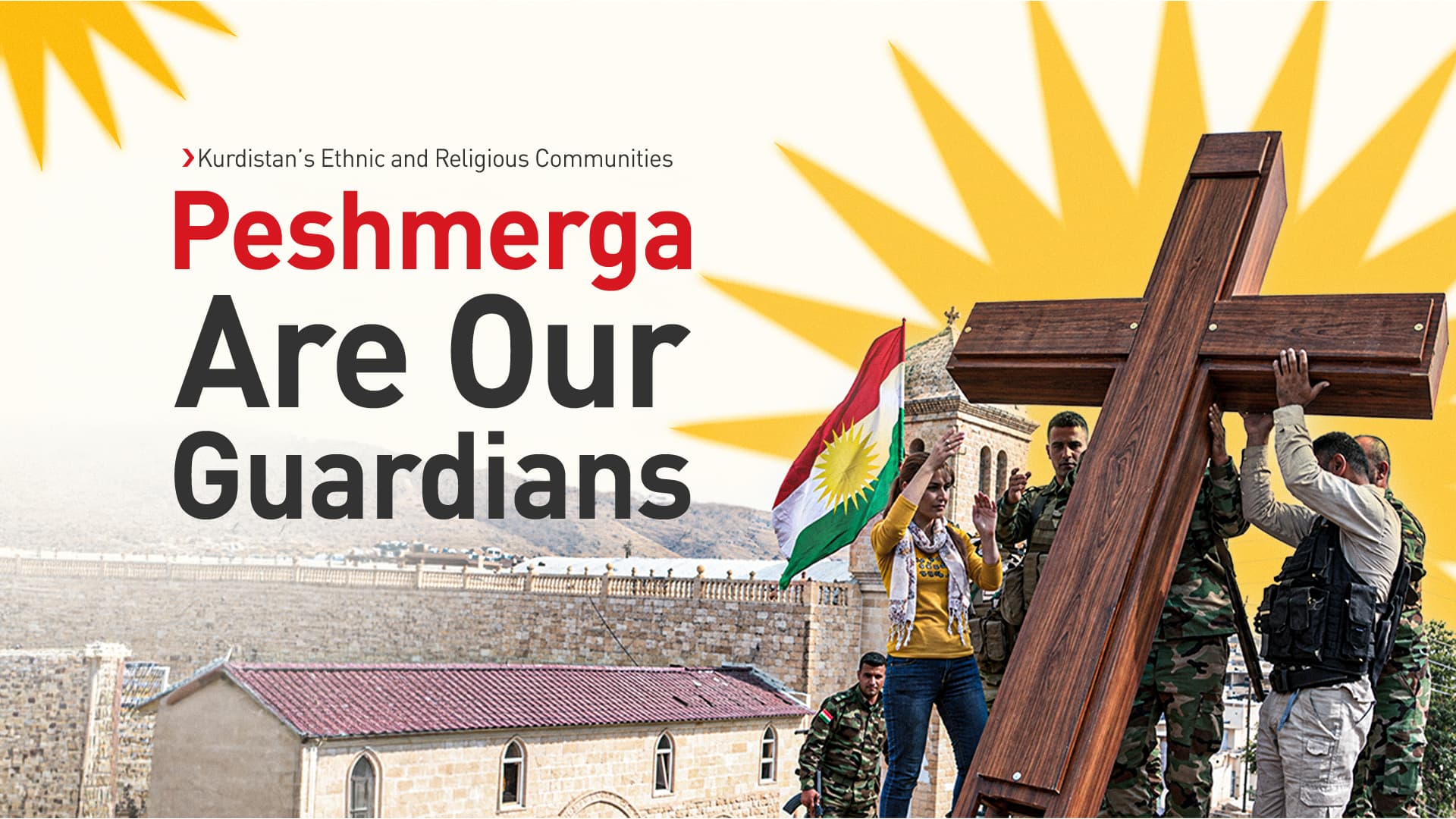
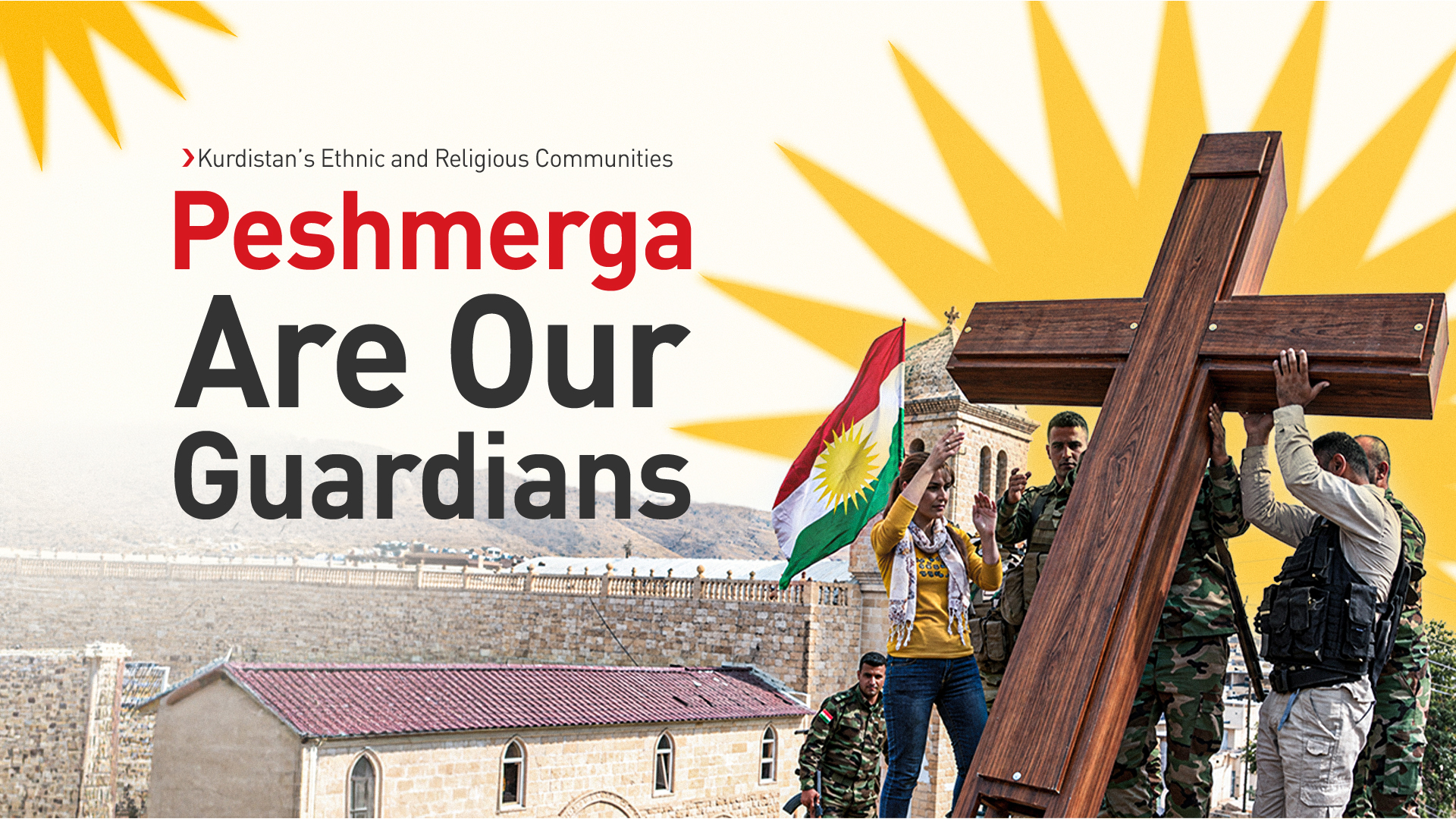
ERBIL () - Officials representing ethnic and religious communities in the Kurdistan Region have highlighted what they described as the Region's longstanding model of coexistence, pointing to the protection of religious freedom, political participation, mother-tongue education and the role of the Peshmerga in defending vulnerable communities.
Speaking to on Monday, Saoud Misto, Director General of Ezidi Affairs at the Ministry of Endowments and Religious Affairs, said the Peshmerga has played a historic role in protecting communities, particularly Ezidis, from the era of the September Revolution through the 1991 Uprising and into the present day.
Misto cited the operation to liberate Sinjar from ISIS under the leadership of President Masoud Barzani, saying more than 300 Muslim Kurdish Peshmerga were killed during the effort.
He said Ezidi representatives have repeatedly called on foreign governments and international institutions to support the Peshmerga, including during engagements with human rights bodies in Geneva, diplomatic missions and, more recently, the German parliament and government.
According to Misto, strengthening the Peshmerga contributes not only to physical security but also to the protection of freedom of expression, religious practice and the coexistence of the Region's diverse communities.
Aydin Marouf, KRG Minister of State for Component Affairs, told that ethnic and religious communities in the Region enjoy extensive government support and political participation.
He said the Kurdistan Regional Government has expanded protections for communities without discrimination and strengthened their representation within parliament and public institutions.
Marouf also described the Peshmerga as a constitutional military force that has protected areas inhabited by different communities during periods of conflict without distinction based on ethnicity or religion.
Officials also pointed to the restoration and protection of religious sites as evidence of the government's policy.
According to the supplied report, 273 churches and Christian shrines have been renovated across the Kurdistan Region, together with 325 Ezidi holy sites, including the Lalish Temple.
Religious sites belonging to Kakais, Mandaean Sabians, Zoroastrians and Failis are also protected, while official occasions associated with those communities have been incorporated into the government calendar.
Amir Osman, Director of Religious Coexistence at the Ministry of Endowments and Religious Affairs, said eight religious communities are officially recognized and that ethnic and religious groups are guaranteed the right to education in their mother tongues.
He said nine Turkmen schools currently serve nearly 2,000 students, while 50 Syriac schools enroll more than 6,600 students.
More than 24,000 students also receive education in the Ezidi dialect, he said.
Osman also pointed to the Catholic University in Erbil as an institution serving students from across the Region.
He said political participation was reflected in the allocation of government responsibilities to different communities, citing the Ministry of Transport and Communications being held by a Christian representative and the Ministry of State for Component Affairs by a Turkmen representative, alongside parliamentary quota seats.
Osman also highlighted Prime Minister Masrour Barzani's decision to upgrade Ankawa from a subdistrict to a district, allowing the predominantly Christian area greater administrative autonomy.
According to Osman, 36 organizations currently operate in support of coexistence across the Kurdistan Region.
Officials also emphasized the Kurdistan Region's role during periods of mass displacement and conflict.
Osman said the Peshmerga helped protect different communities during the fight against terrorism and that the Region sheltered around two million displaced people, including approximately 138,000 Christians from the Nineveh Plains.
He said around 350,000 Christians and more than half a million Ezidis currently live in the Kurdistan Region.
The supplied report did not independently verify those population figures, but they were presented by Osman as evidence of the security and stability available to ethnic and religious communities.
The Region's international profile on coexistence was also underscored by Pope Francis' visit to Erbil in 2021, during which he celebrated Mass at Franso Hariri Stadium.
Officials described that visit as recognition of the Kurdistan Region's religious diversity and relative stability.
Across the statements provided to, a common theme emerged: coexistence in the Kurdistan Region is being presented not simply as a social tradition but as a governing principle supported through security institutions, education, political participation and protection of religious practice.
The officials argued that preserving those structures is essential to maintaining the Region's diversity at a time when many communities across the wider Middle East continue to face insecurity and displacement.