ERBIL () - In Soran, a profession long dominated by men is beginning to look different.
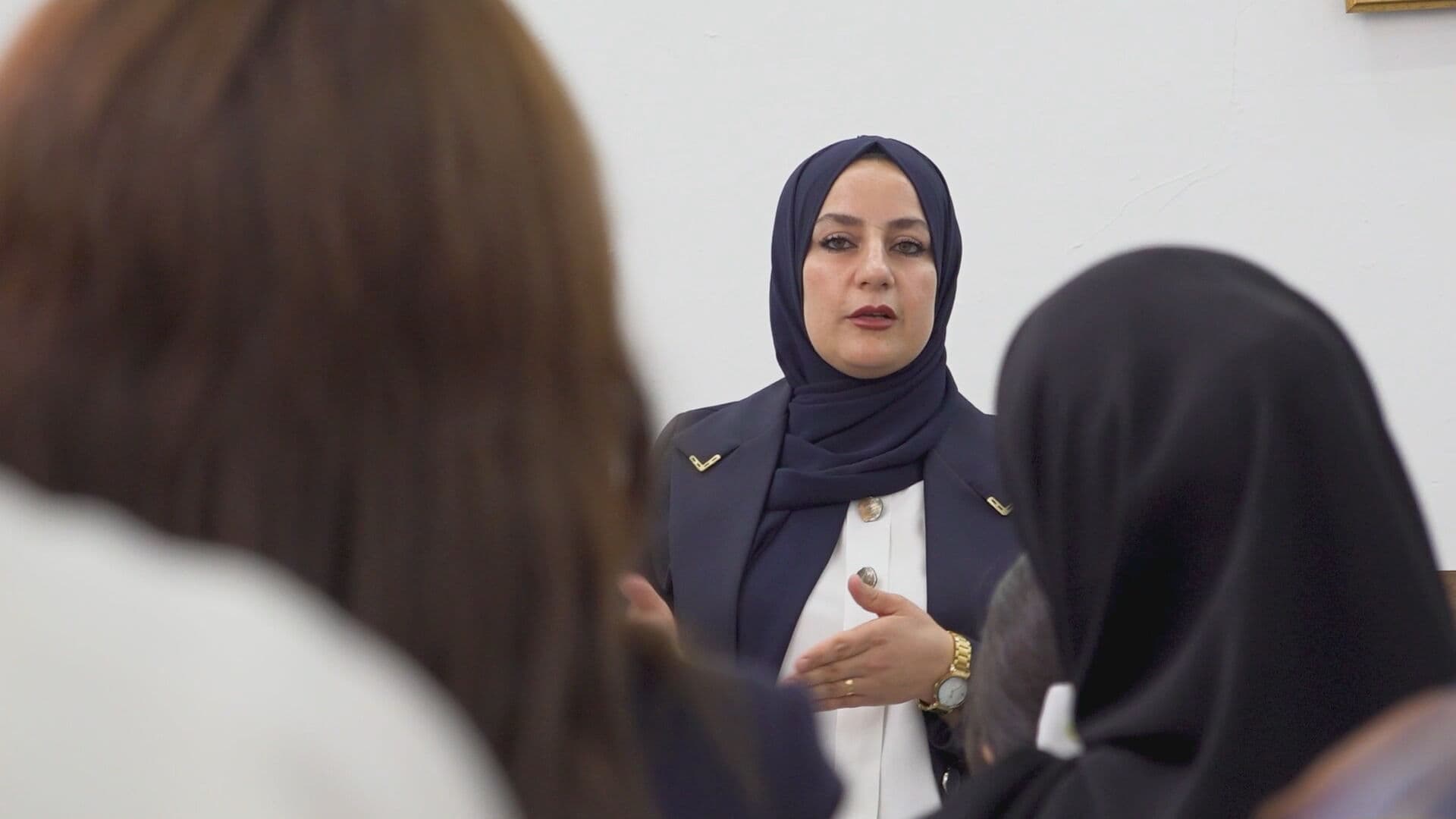
Mzhda Qadir has established herself in the local real-estate market, operating an agency with her husband and seeking to bring more women into a business that, until recently, offered them little visible space.
"For several years, I had wanted to enter the real estate business,"Qadir told's correspondent Bakir Sulaiman. "I noticed that no woman had been able to enter this field."
Her decision was not only commercial.
"Soran has not yet fully reached the point where women can pursue every kind of profession, so I wanted to break that barrier,"she said.
Qadir and her husband now jointly handle the sale and purchase of houses and land. Her husband also acts as an adviser as she builds experience in a sector defined by negotiation, competition and longstanding informal networks.
For Qadir, however, the central question is not whether the work has traditionally been associated with men.
"In my view, no profession is tied to gender,"she said. "It depends solely on your own determination."
Her entry into Soran's property market comes as the Kurdistan Regional Government has increasingly framed women's participation in economic and public life as part of a wider development strategy rather than as a standalone social issue.

Expanding Women's Access to Business
The Ninth Cabinet's governing program formally commits the KRG to opposing discrimination and strengthening women's role in society, the economy and political life.
The High Council for Women and Development has been tasked with advancing that policy through legal reform, institutional coordination, economic participation, education and social protection.
Economic empowerment has become a particularly visible part of that agenda.
According to official KRG figures published in March 2025, financial support had been provided to 8,000 rural women to help them establish businesses and entrepreneurial projects.
The initiative was designed in part to expand opportunity beyond major cities, where access to capital, formal employment and business networks can be more limited.
In August 2026, Kurdistan Region Board of Investment Chairman Mohammed Shukri said the institution would provide greater facilitation to women seeking either to establish businesses or expand existing enterprises.

He linked women's participation directly to productivity and wider economic growth.
At the local level, programs such as the one involving Qadir suggest how that policy can translate into professions that women have rarely entered before.
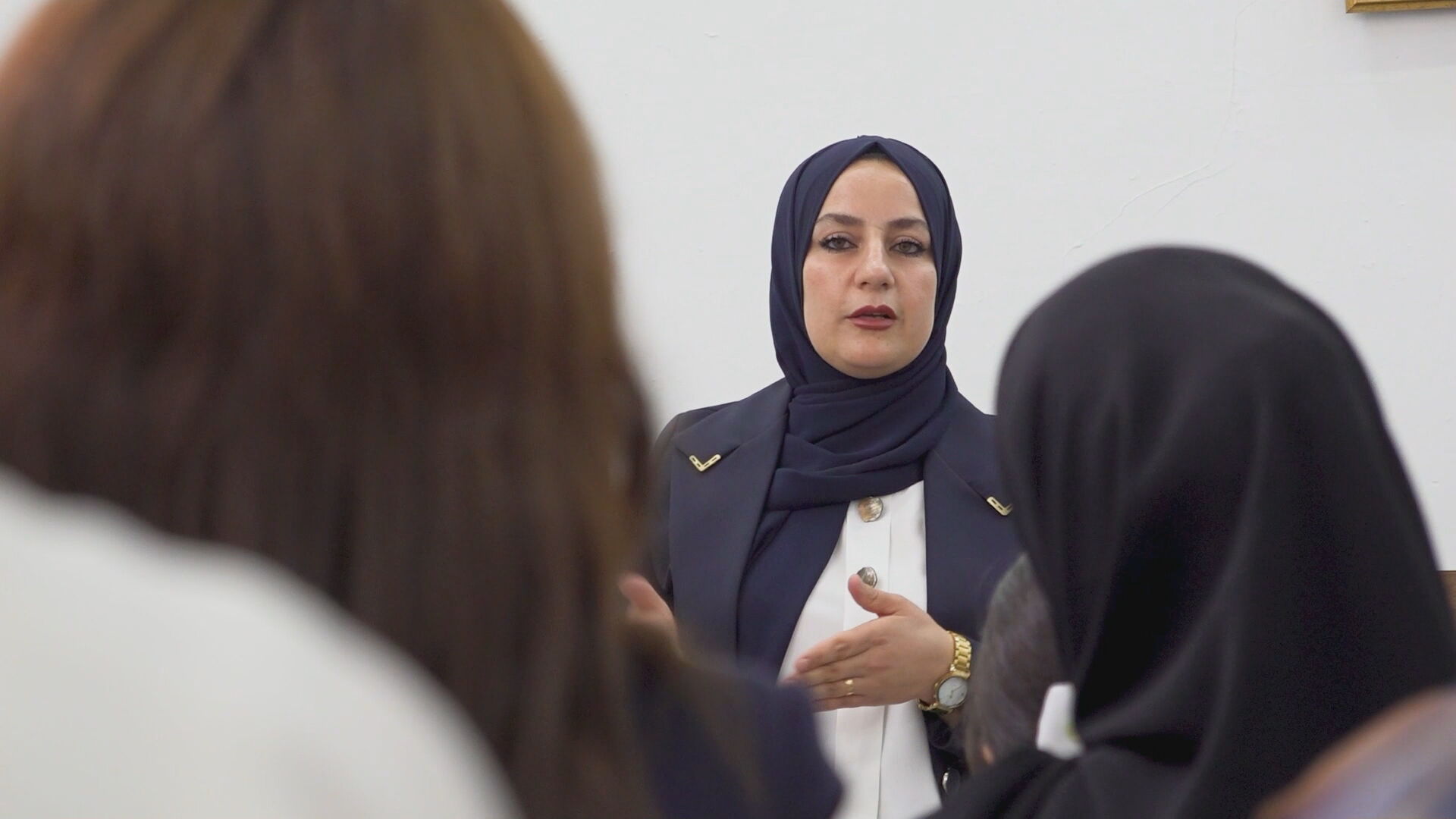
The Soran Women's Center is now working to introduce additional women to the real-estate sector, with Qadir and her husband conducting a seminar aimed at building practical knowledge of property transactions and business.
"This is a very important opportunity that encourages women in this area to move forward,"one participant told.
She said she wanted to strengthen her business skills because men remained much more visible in real estate.

From Market Access to Leadership Positions
The push to increase women's participation extends beyond private business.
Official KRG figures released in 2025 stated that women held more than 30% of key positions across government institutions, including parliament and the judiciary, while around 10% of positions in the security sector were held by women.
Those figures included 69 female judges, 58 prosecutors, 198 judicial investigators and 233 assistant judges.
More than 1,500 women were also registered as journalists with the Kurdistan Journalists Syndicate.
Institutional barriers have continued to fall.
In February 2026, Brigadier Chra Ahmed Latif became the first woman appointed to lead the Internal Security Forces Court/2, an appointment the Interior Ministry presented as part of its wider policy of expanding women's leadership within security institutions.
Read More: First Woman Appointed to Lead Internal Security Forces Court in Kurdistan Region
The broader economic environment has also created new openings.
The Ninth Cabinet says investment projects have generated more than 150,000 jobs, while factories and licensed industries account for another 25,000 positions.
Those figures are not broken down by gender, but they form part of a private-sector expansion in which the KRG says it wants women to play a larger role.
At Erbil's 2026 Summer Festival, more than 200 exhibition booths were provided free of charge to entrepreneurs and artisans, with women-owned businesses among the participants.
The initiative reduced one of the immediate barriers facing small businesses: the cost of accessing customers and commercial space.

Empowerment Beyond Employment
The KRG's women's policy also includes legal protection and social support.
The Kurdistan Region's Domestic Violence Act No. 8 of 2011 established protections against domestic abuse, while subsequent government measures have sought to strengthen enforcement and support services.
By 2025, according to KRG figures, the Region operated five shelters for women facing threats and another shelter for victims of human trafficking.
In 2023, the Council of Ministers called for stronger measures against violence and greater coordination among ministries, the General Directorate for Combating Violence Against Women and Family, the High Council for Women and civil-society organizations.
That wider framework reflects an effort to address women's participation from several directions at once: safety, economic independence, access to leadership and entry into professions traditionally dominated by men.

A Small Office, a Larger Shift
Qadir's real-estate office in Soran is therefore significant beyond the property transactions taking place inside it.
It reflects a gradual shift in the boundaries of what kinds of work women are expected, or permitted by social convention, to pursue.
The change is not uniform across the Kurdistan Region, and barriers remain, particularly in sectors where women have historically had little representation.
But the combination of government-backed economic programs, institutional appointments, business facilitation and local initiatives is beginning to make those barriers less fixed.
For Qadir, the transformation begins with something more personal: entering a field where women were largely absent and showing that participation is possible.
Her next step is to help others follow.
If more women do, Soran's property market may become one example of a broader transition taking place across the Kurdistan Region, one in which women are increasingly present not only as employees or beneficiaries of policy, but as business owners, decision-makers and participants in sectors that once seemed closed to them.

's correspondent Bakir Sulaiman contributed to this report.