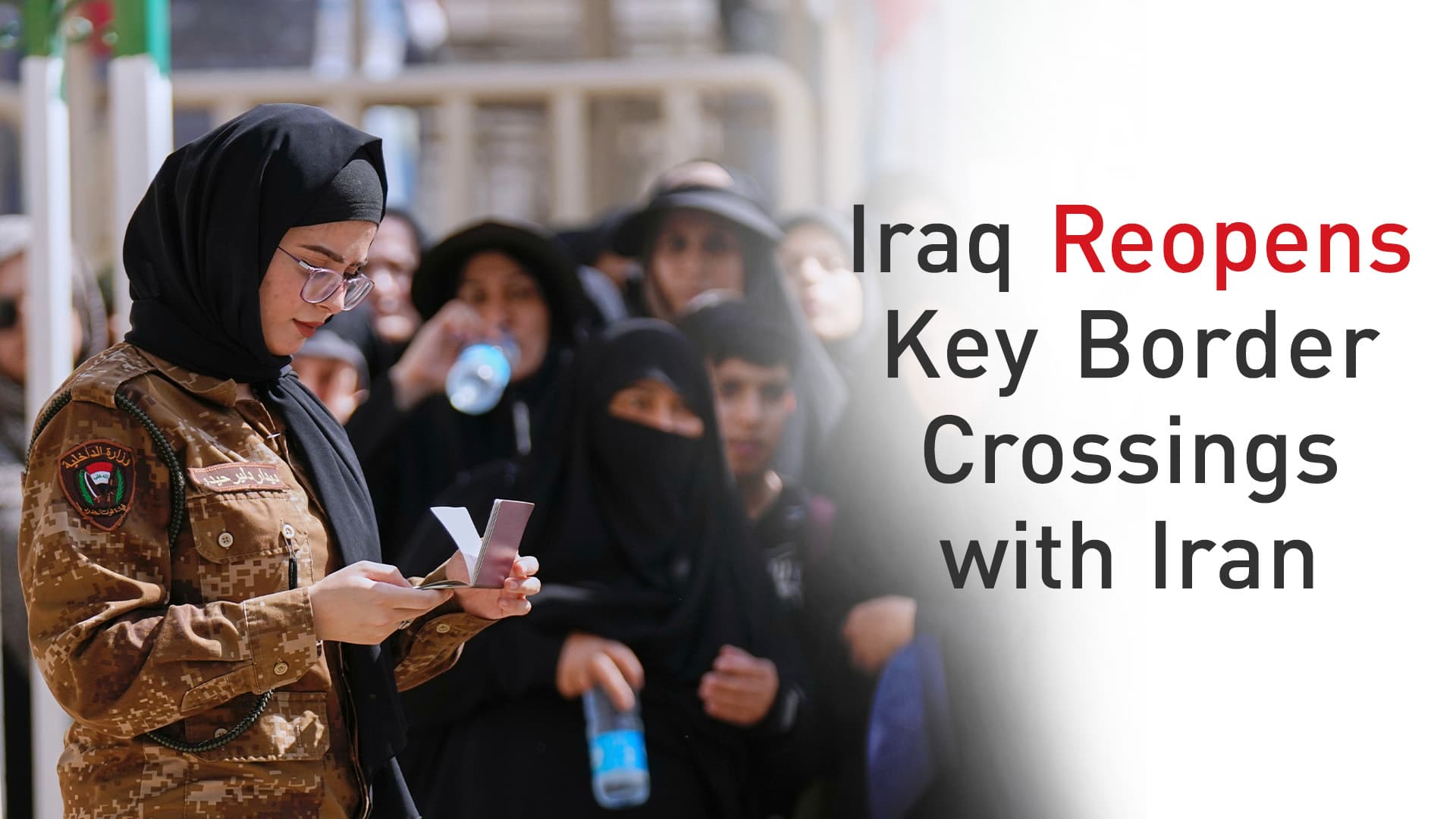
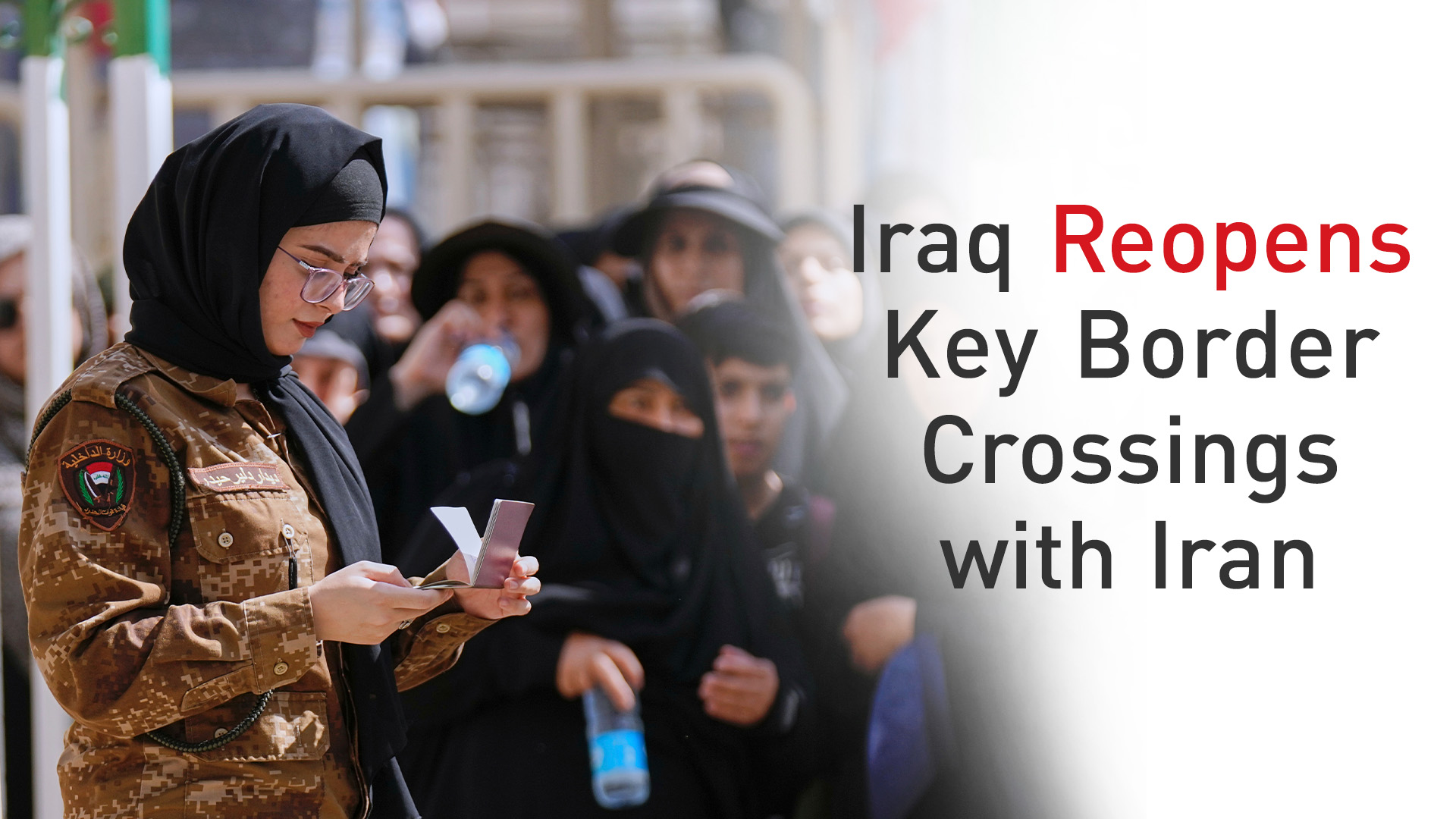
ERBIL () - Iraq has begun reopening three border crossings with Iran under a phased timetable ordered by Prime Minister and Commander-in-Chief of the Armed Forces Ali Faleh al-Zaidi, after authorities temporarily closed the facilities as part of a wider security review following a drone attack on Saudi Arabia's East-West oil pipeline.
Passenger traffic resumed at the Shalamcheh and al-Shib crossings at 6 a.m. Sunday, Sept. 13, while commercial operations at the three affected crossings will return in stages through Thursday, according to the Iraqi authorities.
Under the timetable, commercial traffic through Shalamcheh is scheduled to resume at 6 a.m. Monday, Sept. 14. Trade through the Mandali crossing is expected to restart at the same time on Tuesday, Sept. 15, followed by commercial traffic at al-Shib at 6 a.m. Thursday, Sept. 17.
The decision followed a review of conditions at the crossings and coordination among the Office of the Commander-in-Chief, the Border Crossings Authority and other relevant agencies.
Authorities said the measures were intended to complete regulatory requirements, introduce system upgrades and carry out renovation work while strengthening oversight and maintaining the movement of people and goods.
The Armed Forces Command stressed that cross-border traffic with Iran had not been completely interrupted during the closures. Passenger and commercial movements continued around the clock through the Zurbatiyah and al-Mundhariyah crossings, it said.
The Bashmakh International Border Crossing in the Kurdistan Region has also continued operating normally.
Bashmakh's Media and Communications Department said Sunday that passenger traffic and commercial freight were continuing without interruption, with the crossing fully prepared to receive travelers, traders and drivers.
Closures Follow Saudi Pipeline Attack
The reopening comes a day after Iraqi authorities shut Shalamcheh in Basra province, al-Shib in Maysan and Mandali in Diyala following a drone attack on Saudi Arabia's East-West oil pipeline.
Agence France-Presse reported Sunday that Baghdad had closed the three crossings after determining that the drones used in the attack originated from Iraqi territory.
AFP also cited two Iraqi security sources as saying drone launchers had been discovered near the al-Shib crossing in Maysan province.
On Saturday, AFP reported that an Iraqi security source described the closure as part of an intelligence effort to locate those responsible, prevent their escape and disrupt the possible movement of drones through the border area.
The Iraqi government's Security Media Cell said at the time that authorities had launched administrative and security reorganization at several crossings and intensified intelligence operations, investigations and inspections to determine how security breaches had occurred.
No group has claimed responsibility for the Saudi pipeline attack.
An alliance of Iran-aligned Iraqi armed factions operating under the name Islamic Resistance in Iraq denied involvement, according to AFP.
Saudi Arabia has nevertheless said the drones that struck its East-West pipeline originated from Iraqi territory.
The attack damaged facilities along the strategic oil route and prompted Riyadh to temporarily suspend operations.
Saudi Arabia subsequently agreed, at Baghdad's request, not to launch an immediate military response, giving the Iraqi government time to identify those responsible and take measures to prevent further attacks.
Maysan Security Leadership Removed
The border measures form part of a wider security response by Iraq's Prime Minister Ali Faleh al-Zaidi.
After authorities concluded that the drones had been launched from Maysan province, Zaidi dismissed the Maysan Operations Commander and ordered an investigation into the command.
The government later removed the province's police chief and referred senior security officials for investigation.
According to reporting by The Associated Press, Iraq publicly acknowledged that the attacks on the Saudi pipeline originated from its territory, while the Saudi government said it would withhold retaliation to allow Baghdad an opportunity to act.
The AP reported that the East-West pipeline has become increasingly important to Saudi oil exports amid disruptions to shipping through the Strait of Hormuz.
The developments have therefore placed significant pressure on Baghdad to demonstrate that Iraqi territory will not be used to widen regional confrontations.
Zaidi reinforced that position on Saturday, declaring that Iraq would not become "an arena for rivalries between states."
Speaking at a Police College graduation ceremony, the prime minister said Iraqi territory would not be used as a platform for attacks against neighboring countries.
"Attempts to undermine security will be defeated by the unity of the people and their support for the government and the armed forces,"he said.
Zaidi also emphasized the need to strengthen Iraqi state authority and security institutions, linking their effectiveness to political stability, economic development and public confidence.
Phased Return to Normal Operations
Sunday's reopening schedule suggests Baghdad is now moving from emergency closures toward controlled normalization at the affected crossings.
The government said the timetable was designed to allow security, administrative and technical changes to be completed without unnecessarily halting travel and trade.
Shalamcheh is one of the principal land links between southern Iraq and Iran, while al-Shib serves Maysan and Mandali connects Diyala with the Iranian border.
All three have significance for commercial activity as well as passenger movement.
The decision to reopen them gradually also reflects the government's attempt to balance two competing priorities: tightening control over sensitive border areas while avoiding prolonged disruption to trade and civilian travel.
AFP reported that the Security Media Cell announced the phased reopening after reviewing operations at the border crossings.
The latest measures leave Iraqi authorities with a continuing investigation into how the drone attack was organized, whether the border area was used for logistical support and whether security or administrative failures at the crossings contributed to the incident.
For now, Baghdad's response has combined dismissals, investigations, intensified intelligence activity and temporary border controls with a staged return to normal cross-border movement.
By Thursday, if the announced timetable proceeds as planned, passenger and commercial operations at Shalamcheh, al-Shib and Mandali are expected to be restored, while the broader investigation into the Saudi pipeline attack continues.